2026 Best Furniture Castor Options for Global Buyers?
In the bustling world of furniture, choosing the right Furniture Castor is essential for both functionality and style. These small yet mighty components significantly impact the mobility of furniture items. For global buyers, understanding the options available in 2026 can lead to better purchasing decisions.
Many factors influence the choice of Furniture Castor. Buyers should consider material, size, and load capacity. Each detail matters when ensuring that your furniture moves smoothly. Whether it’s for a home office chair or a heavy cabinet, the right castor can enhance usability. However, this choice can become overwhelming.
It is crucial to balance aesthetics with practicality. Not every fashionable castor will perform as expected. As buyers explore various styles, they may realize that some options do not meet their needs. A thoughtful selection process will lead to improved performance and satisfaction in the long run.
Types of Furniture Castors: A Comprehensive Guide for Buyers
Furniture castors play a crucial role in mobility and functionality. They come in various types, each suited for different furniture needs. Understanding these types helps buyers make informed decisions. The most common types are rigid, swivel, and locking castors. Rigid castors are perfect for straight-line movement. Swivel castors offer flexibility, allowing furniture to move in multiple directions. Locking castors are ideal for securing furniture in place.
Tips: Consider the surface where the furniture will be used. Soft wheels work well on carpets, while harder ones are better for wooden or tiled floors. Assess the weight capacity as well. Not all castors can support heavy pieces. Choosing the right type can prevent frustration down the line.
Finish and material also matter. Some castors are made of plastic, while others are metal or rubber. Plastic casters may scratch floors, whereas rubber can reduce noise. Aesthetics should not be overlooked; select castors that complement your furniture design. Remember, sometimes options may appear perfect but may not suit your specific environment. Evaluate your needs carefully.
2026 Best Furniture Castor Options Comparison
Factors to Consider When Choosing Furniture Castors for International Use
When selecting furniture castors for international use, several critical factors come into play. The type of flooring significantly influences your choice. Different surfaces, like carpets or hardwood, require specific castor designs. Make sure to select castors that offer appropriate grip or mobility to ensure smooth movement without damaging the floor.
Additionally, assess the weight capacity of each castor. Heavy furniture needs robust castors that can withstand stress. A standard castor might not support bulky items. Choosing castors with inadequate weight limits can lead to failure over time. Always check manufacturer guidelines regarding weight and use.
**Tips:** Think about the noise level of castors. Some materials are quieter, making them suitable for office environments. Consider using soft rubber castors to minimize sound when moving furniture. Also, don't overlook design aesthetics. Select castors that complement the furniture style while ensuring functionality. Small details like these can make a significant difference in user experience.
Top Brands of Furniture Castors Available in 2026
As 2026 approaches, the demand for furniture castors continues to rise globally.
Innovative designs and materials have become essential in this market. Research indicates that the global furniture castor market
is projected to reach $4.5 billion by 2027. Consumer preferences are shifting towards
products that offer high durability and aesthetic appeal,
driving various brands to adapt.
Several top brands are focused on enhancing functionality. For instance, castors with braking mechanisms and swivel designs
are becoming increasingly popular. Professional furniture makers emphasize the importance of weight capacity
and smooth operation. Industry reports suggest that castors made from high-quality plastics and metals exhibit
a significant advantage in terms of performance and longevity. Still, not all brands maintain these standards uniformly.
A key challenge lies in the inconsistency of quality across different manufacturers. Some castors may break under stress,
failing to meet user expectations. While many brands claim to offer high-performance options,
discerning the reliable ones can be daunting.
Standardization in testing and quality assurance could address these concerns, ensuring buyers make informed choices.
Comparative Analysis of Material Choices for Furniture Castors
When choosing furniture castors, material selection plays a crucial role in performance and durability. The most common materials include plastic, rubber, metal, and wood. Each has unique characteristics that cater to different needs. Plastic castors are lightweight and cost-effective, but they may not withstand heavy loads over time. Rubber options provide a quieter glide and better traction. However, they can wear out faster in high-traffic areas.
Metal castors exude durability and strength. They are perfect for heavy furniture. Yet, the downside is their susceptibility to scratches and corrosion. Wooden castors, though visually appealing, may have limitations in terms of load capacity. They can scratch delicate flooring surfaces. Evaluating these materials requires reflection on specific use cases and environments.
Every option has its trade-offs. For instance, while a rubber castor may offer a smooth ride, it could leave marks on certain floors. Conversely, a metal castor may be strong but could lead to a noisy experience on hard surfaces. It’s vital to assess furniture needs against material attributes, ensuring practical and aesthetic considerations align.
2026 Best Furniture Castor Options for Global Buyers
| Material |
Load Capacity (kg) |
Wheel Diameter (mm) |
Surface Type |
Price Range (USD) |
| Polyurethane |
300 |
75 |
Wood, Carpet |
15 - 25 |
| Nylon |
250 |
50 |
Tile, Concrete |
10 - 20 |
| Rubber |
200 |
60 |
Wood, Carpet |
12 - 22 |
| Metal |
400 |
80 |
Tile, Concrete |
20 - 30 |
| PVC |
180 |
55 |
Wood, Carpet |
8 - 15 |
How to Properly Install and Maintain Furniture Castors for Longevity
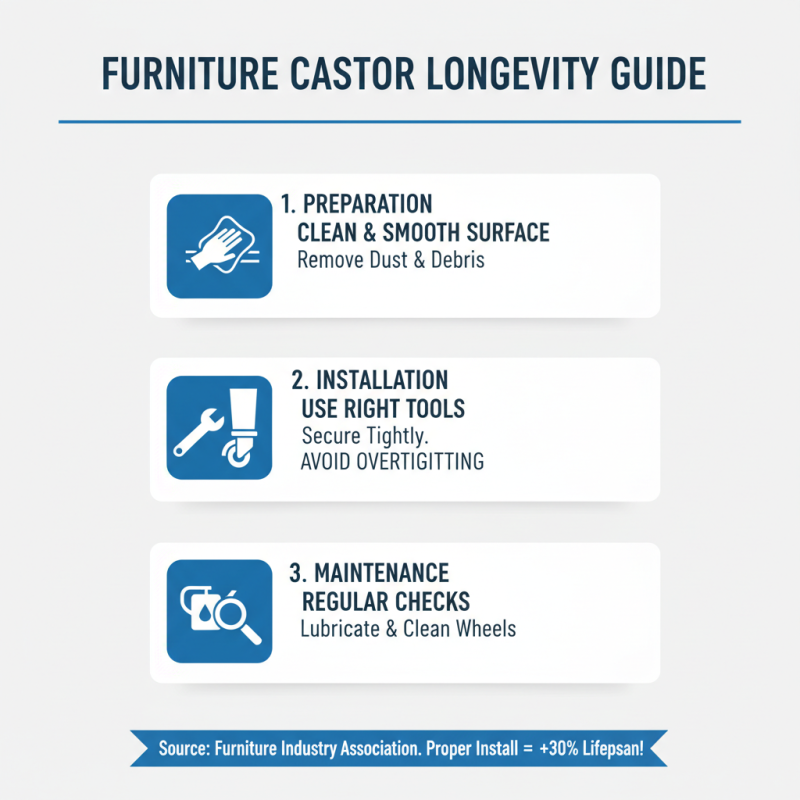
Installing and maintaining furniture castors properly is essential for ensuring their longevity and functionality. According to a report by the Furniture Industry Association, improper installation can shorten the lifespan of castors by up to 30%. To start, ensure the surface where the castors are installed is clean and smooth. Dust and debris can lead to uneven wear. During installation, use the right tools to secure the castors tightly, but avoid overtightening, which can damage the furniture and the castors.
Regular maintenance is just as important. Inspect the castors monthly for any signs of wear or damage. Cleaning them with a damp cloth can prevent dirt buildup that causes functionality issues. A study published in the Journal of Furniture Maintenance suggests lubricating the castor wheels every six months. This helps reduce friction and prolongs the life of the castor.
Tips: Always check load ratings before installation. This ensures your furniture can support the castors you choose. Replace any damaged castors immediately to avoid further issues. Maintain a routine cleaning schedule to keep your castors rolling smoothly. Regular attention to these details can make a significant difference.