How to Choose the Best Heavy Caster Wheels for Your Needs?
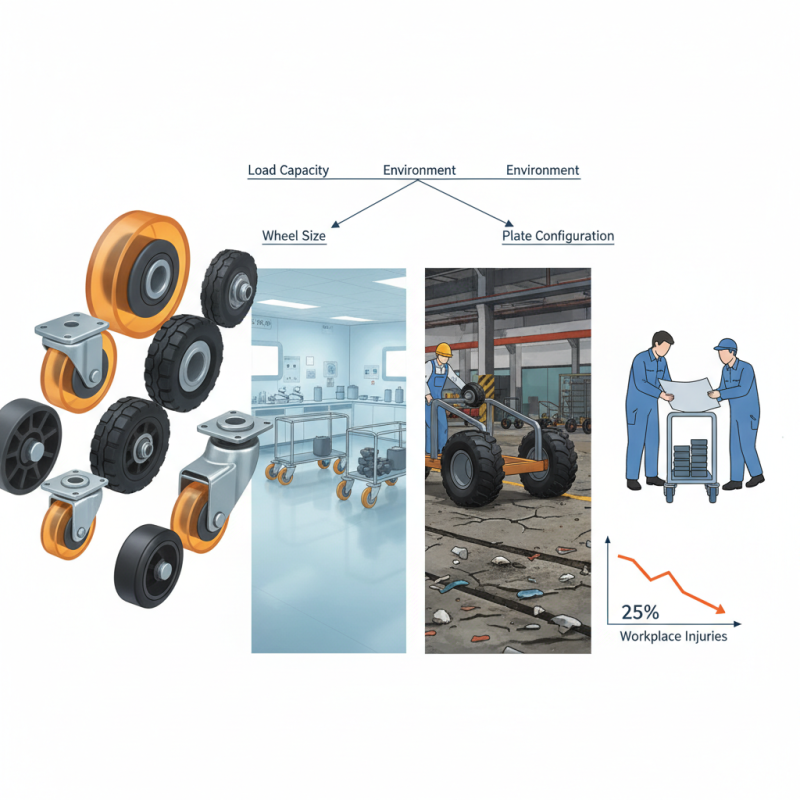
When selecting heavy caster wheels, it’s essential to understand your specific needs. The right wheels can significantly impact efficiency and safety. According to a report by the Material Handling Institute, the right caster selection can reduce workplace injuries by 25%. Heavy caster wheels support heavy loads, making them crucial in industrial settings.
Consider the environment where the wheels will operate. Different materials affect durability and performance. For instance, polyurethane wheels outperform rubber wheels in chemical environments. However, they may not last as long on rough surfaces. Understanding these differences can prevent costly mistakes.
Choosing the right heavy caster wheels is not just about load capacity; it’s also about the application. Many users overlook the importance of wheel size and plate configuration. These factors directly influence maneuverability and stability. Mistakes in selection can lead to operational inefficiencies. Reflecting on these aspects will help streamline your decision-making process.
Factors to Consider When Selecting Heavy Caster Wheels for Your Applications
When selecting heavy caster wheels, several factors are critical. The weight capacity is the first thing to consider. Each caster has a limit. Exceeding this limit leads to failure. Pay attention to the materials used in the wheels. Steel wheels offer durability, while rubber wheels provide smooth movement. Each material has its pros and cons.
It's essential to evaluate the wheel size. Larger wheels roll over obstacles more efficiently. However, they may be less stable in tight spaces. Think about the surface your caster wheels will be used on. Harder surfaces require different wheels than soft, uneven ones. The purpose of the caster can influence your choice as well.
Don't overlook the swivel or rigid options. Swivel casters allow for easy maneuvering. However, they can be less stable under heavy loads. Rigid wheels provide solid movement in straight lines but can be harder to steer. Be mindful of your specific needs. Sometimes, you may end up with wheels that don’t quite fit your application. Reflecting on these choices can lead to better decisions in the future.
Factors Affecting the Selection of Heavy Caster Wheels
Understanding Load Capacity Requirements for Heavy-Duty Caster Wheels
When selecting heavy-duty caster wheels, understanding load capacity is crucial. Each wheel has a rated load capacity that reflects its strength. For instance, an industry report states that a typical heavy caster can support somewhere between 600 to 1,200 pounds. Misjudging this can lead to accidents.
Assessing your needs accurately helps avoid overloading. An overloaded caster may fail, causing damage or injury. It's sometimes easy to underestimate your load requirements. If you're unsure, consider the maximum weight of your items plus any equipment used with the wheel.
Tips: Always consult weight ratings prior to purchase. A safety margin of 20% is advisable. For example, if your total weight is 1,000 pounds, choose wheels rated for at least 1,200 pounds. Regular inspections are also beneficial. Check for wear and tear frequently. This helps ensure optimal safety and performance. Ignoring this can lead to costly replacements.
Material Options for Heavy Caster Wheels: Pros and Cons
When selecting heavy caster wheels, the material is crucial. Common options include rubber, plastic, and metal. Each material has its pros and cons. For instance, rubber wheels are quiet and reduce floor damage. However, they may wear out faster under heavy loads. Metal wheels, on the other hand, offer durability and strength, but can be noisy and may scratch floors.
Plastic wheels are lightweight and resistant to chemicals. They can handle moderate loads well. Yet, they might not be suitable for rough terrains. Consider the surface where your casters will roll. Smooth surfaces favor rubber, while uneven terrains might demand metal wheels.
**Tip:** Always assess the load capacity. Oversized wheels may not fit in tight spaces.
Also, think about wheel diameter. Larger wheels roll easier over obstacles, but they can create height issues. Test different materials before making a purchase. It’s okay to make mistakes—learning helps refine your choices.
Evaluating Wheel Size and Design for Optimal Performance and Maneuverability
Choosing the right heavy caster wheels is crucial for efficient movement.
Wheel size significantly affects performance. Larger wheels typically roll over obstacles better,
providing smoother navigation. For instance, industry reports reveal that wheels 8 inches in diameter
can handle over 800 pounds. This is critical for heavy equipment in warehouses.
The design of the wheel also influences maneuverability. A wider wheel provides better surface area and stability.
However, this can reduce agility in tight spaces. Some applications require precision over strength.
Heavy-duty wheels might not always fit.
While heavy-duty options seem ideal, they can pose challenges.
Wheels with rigid materials may crack under constant stress.
It’s vital to assess the environment.
Smooth surfaces favor hard wheels, while uneven terrain better suits softer variants.
Finding the balance is key.
The Impact of Wheel Bearings on Caster Wheel Durability and Smoothness
When selecting heavy caster wheels, one must consider the wheel bearings. These small components play a crucial role in the wheel's overall performance. Poor quality bearings can lead to friction and reduced efficiency. This may result in unnecessary strain on equipment. When moving heavy loads, the last thing you want is to struggle with sticky wheels.
It’s important to understand the types of bearings available. Some are designed for smooth rolling, while others offer durability. For instance, ball bearings are common, but they may wear out quickly under heavy loads. Roller bearings can handle more weight but might not provide the same smoothness. The choice depends on your specific needs. A mismatch can lead to disappointment.
Moreover, consider the maintenance of wheel bearings. Regular checks can prevent issues. However, many people forget to do this, leading to poor performance. It's a simple step, yet often overlooked. Ensuring that bearings are properly lubricated can extend their life. Neglecting this can lead to costly replacements down the road.