2026 How to Choose the Best Caster Swivel Wheel for Your Needs?
Selecting the right Caster Swivel Wheel is essential for optimizing mobility and functionality in various applications. With countless options available, it can feel overwhelming. The ideal caster must align with specific needs, whether for furniture, carts, or industrial equipment. A well-chosen wheel enhances ease of movement and minimizes frustration.
Understanding key factors like weight capacity, wheel size, and material is vital. Each choice impacts performance differently. For example, softer wheels protect delicate surfaces but wear out quickly. On the other hand, harder wheels last longer but may not suit all environments. This dichotomy reveals the importance of careful consideration and research.
Using the right Caster Swivel Wheel is more than just a choice; it's a necessity that affects daily activities. Compromising on quality can lead to issues down the line. Balancing durability and functionality ensures efficiency. Reflecting on specific needs, including potential drawbacks, helps lead to a well-informed decision.
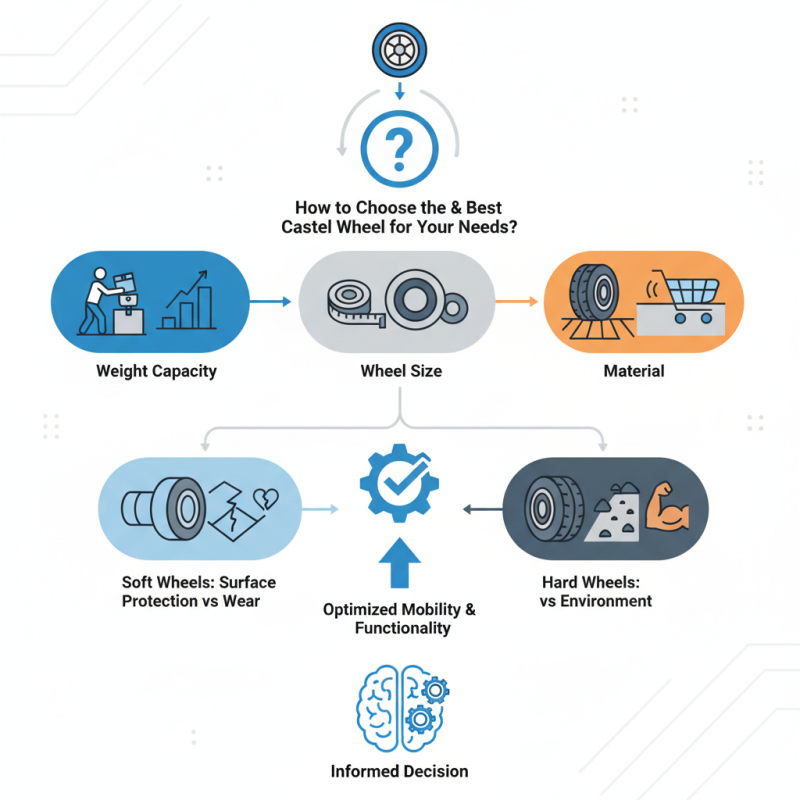
Understanding Caster Swivel Wheels: An Overview of Types and Uses
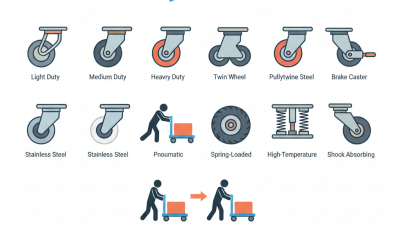
Caster swivel wheels play a vital role in various applications. Their mobility makes them essential in furniture, carts, and industrial equipment. Understanding the different types and their specific uses can greatly improve your workflow. For instance, soft wheels are ideal for fragile floors, while hard wheels excel on smooth surfaces.
The design also varies significantly. Some swivel wheels have a locking mechanism, providing stability when needed. Others allow for easy rotation, enhancing maneuverability. Keep in mind that the load capacity can impact your choice, particularly in heavy-duty environments. We often see mismatches between the wheel's specifications and the actual use case. This can lead to premature wear or failure, causing inconvenience.
It’s essential to identify your exact needs before purchasing. Consider the surface type, load weight, and required turning radius. Reflect on whether you need a wheel that locks or one that pivots freely. Each of these factors influences the overall performance of the caster swivel wheel. Experimentation with different styles is advised, as personal experience may highlight your preferences over time.
Key Factors to Consider When Selecting Caster Swivel Wheels
When choosing caster swivel wheels, several key factors should guide your decision. The wheel diameter is crucial. Larger wheels roll over obstacles more smoothly. They provide better stability on uneven surfaces. Smaller wheels, however, can be more maneuverable in tight spaces. Think about your environment. Will you use them indoors or outdoors? Different surfaces require different wheel materials. Rubber wheels are ideal for hardwood floors, while polyurethane wheels work well outdoors.
Load capacity is another essential factor. Each wheel has a specific weight limit. Ensure the combined weight of the objects does not exceed this limit. Consider swivel versus rigid casters. Swivel casters allow easier direction changes but may provide less stability under heavy loads. Their flexibility might feel overwhelming, especially if you're not used to them. You may find that managing swivel movement requires practice.
Lastly, think about the mounting type. Some applications need a plate mount, while others may require a stem mount. Take measurements to ensure compatibility. Testing different options may reveal what suits your needs best. Customizing your setup often leads to better performance. So, reflect on what works, but don't hesitate to experiment.
Comparison of Caster Wheel Types Based on Load Capacity
Assessing Load Capacity and Weight Distribution for Caster Wheels
When selecting caster swivel wheels, it's crucial to assess the load capacity and weight distribution. Each wheel has its limits. Overloading a caster can lead to failure, posing safety risks. Understanding your equipment's weight is the first step. Know the total weight your project demands.
Next, consider how weight is distributed across the wheels. Uneven weight can affect maneuverability. For example, if heavier items rest on one side, stability may be compromised. It's important to find the right size for your needs. A wheel that's too small may struggle under pressure.
Moreover, different environments can impact performance. Rough surfaces require tougher wheels. In contrast, smoother floors allow for more flexibility. Remember, not all casters handle the same weight equally well. Evaluate material types and design wisely, as they influence load tolerance. Taking time to reflect on these factors can prevent future setbacks.
2026 How to Choose the Best Caster Swivel Wheel for Your Needs? - Assessing Load Capacity and Weight Distribution for Caster Wheels
| Wheel Type |
Load Capacity (lbs) |
Wheel Diameter (inches) |
Material |
Weight Distribution Method |
| Rubber Caster |
300 |
4 |
Rubber |
Even Distribution |
| Polyurethane Caster |
500 |
5 |
Polyurethane |
Concentrated Load |
| Steel Caster |
800 |
6 |
Steel |
Even Distribution |
| Nylon Caster |
400 |
4 |
Nylon |
Even Distribution |
| Foam Caster |
250 |
3 |
Foam |
Concentrated Load |
Materials and Durability: Choosing the Right Wheel Composition
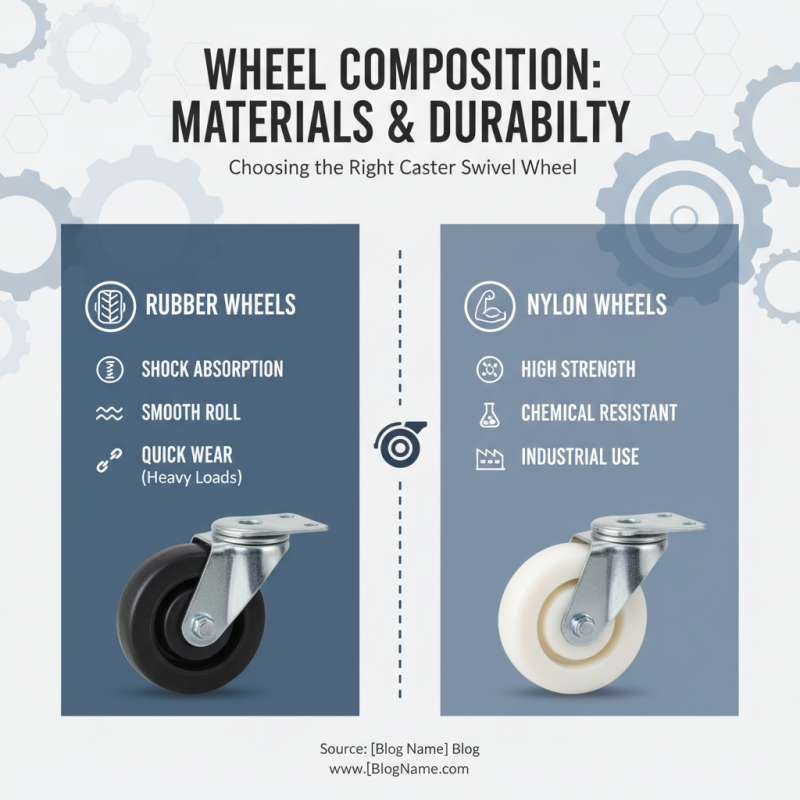
When selecting a caster swivel wheel, material composition matters significantly. Different materials offer various levels of durability, impact resistance, and noise control. For instance, rubber wheels provide excellent shock absorption. They roll smoothly on various surfaces but might wear out quickly under heavy loads. On the other hand, nylon wheels are known for their strength and resistance to chemicals, making them suitable for industrial settings.
Take time to evaluate your environment and needs. If your space has heavy machinery, consider a wheel that can withstand tough conditions. Metal wheels often excel here. However, they can be noisy and may damage floors. Remember, sometimes the most durable solution isn't the best for every situation.
**Tips:** Choose wheels based on surface type. Hard surfaces may require softer wheels to reduce noise and prevent damage. Regularly inspect wheels for wear and replace them when needed. Adapting to changing conditions can lead to better efficiency in your tasks. Always ask yourself: Does this wheel match my needs? Reassessing choices periodically ensures you stay on track.
Compatibility with Surfaces: Best Practices for Wheel Selection
Selecting the right caster swivel wheel involves understanding the compatibility with various surfaces. Different environments demand unique solutions. For instance, softer wheels work better on hard floors, reducing surface scratches. Conversely, harder wheels glide smoothly on carpets but can damage soft surfaces. According to the Caster and Wheel Manufacturers Association, about 70% of wheel-related issues arise from improper surface compatibility.
When assessing a wheel's suitability, consider its material. Polyurethane wheels provide shock absorption without marking floors. They are ideal for diverse surfaces. In contrast, rubber wheels excel on uneven terrains. However, they may not perform well on slick flooring. It's crucial to weigh the specific attributes of each material based on your needs. Many users often overlook weight capacity. Each wheel has a load rating. Exceeding this can lead to failures.
Finally, consult industry reports. These documents reveal performance ratings and user feedback. They highlight potential issues, such as wear and tear. Continuous use can lead to unexpected failures. Therefore, assess reports to avoid costly mistakes. Educate yourself thoroughly, and adapt your choices based on accurate data.