How to Choose the Best Cast Iron Casters for Your Projects in 2025
In 2025, the demand for cast iron casters in various industries is expected to experience significant growth, driven by the increasing need for durable and robust materials in manufacturing and industrial applications. According to a recent market analysis report, the global caster market is projected to expand at a CAGR of 5.6% through the next five years. This growth is largely attributed to the rising emphasis on efficient material handling solutions across sectors such as logistics, manufacturing, and retail. As businesses strive for optimization and reliability in their operations, cast iron casters are becoming a preferred choice due to their strength and longevity.
When selecting the best cast iron caster for your projects, it is essential to consider various factors such as load capacity, wheel size, and environmental conditions. Industry professionals emphasize the importance of choosing casters that not only meet specific operational demands but also improve maneuverability and reduce maintenance costs. With the advancements in manufacturing technologies and an increasing variety of designs available, making an informed choice is crucial to maximizing performance and ensuring safety in any project. Embracing these considerations will empower businesses to enhance productivity while achieving sustainable growth in a competitive market.

The Importance of Material Quality in Cast Iron Casters for Durability
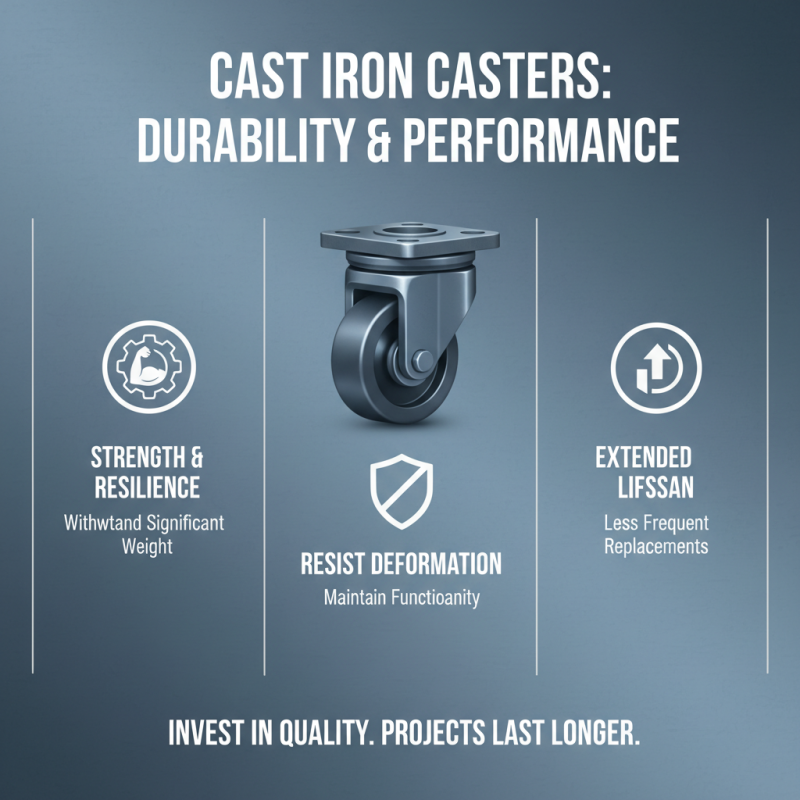
When considering cast iron casters for your projects, the quality of the material plays a pivotal role in ensuring durability and performance. Cast iron is known for its strength and resilience, making it an ideal choice for heavy-duty applications. High-quality cast iron casters can withstand significant weight, resist deformation, and maintain their functionality over time, which is crucial for projects that involve frequent movement and heavy loads. Investing in well-crafted cast iron casters means your equipment or furniture will not only perform better but also last longer, reducing the need for replacements.
Moreover, the manufacturing process of cast iron can influence its overall integrity and longevity. Casters made from recycled or lower-quality iron may present issues such as brittleness or uneven weight distribution, leading to functional problems down the line. Choosing casters that are produced with rigorous quality control ensures that the finished product adheres to high standards, providing stability and reliability. As you look ahead to 2025, prioritizing material quality in your selection of cast iron casters will ultimately enhance the effectiveness of your projects, ensuring that they stand the test of time while maintaining performance.
Understanding Load Ratings and Weight Capacity for Optimal Performance
When selecting cast iron casters for your projects in 2025, understanding load ratings and weight capacity is crucial for ensuring optimal performance. Load ratings indicate the maximum weight a caster can safely support, which is essential for avoiding accidents and ensuring the longevity of both the caster and the surface it’s mounted on. It’s important to consider not only the weight of the objects being moved but also any additional forces such as impact or uneven surfaces that could add stress to the casters.
In addition to the load rating, it’s advisable to account for the weight capacity relative to the intended use. For instance, if the casters will be used in a dynamic application, where they will frequently be moved in various directions, a higher weight capacity may be necessary to accommodate the extra strain. Also, choosing casters with a higher weight capacity than your needs is prudent, as this provides a safety margin and enhances performance. By carefully evaluating these factors, you can select the best cast iron casters that will meet the demands of your specific project while ensuring safety and reliability.
Evaluating Wheel Size and Type for Different Flooring Conditions
When selecting cast iron casters for your projects, it's crucial to evaluate the wheel size and type, especially considering the flooring conditions they will traverse. Different flooring surfaces can significantly affect the performance and longevity of your casters. For instance, larger wheels generally perform better on rough or uneven surfaces, as they can roll over obstacles with greater ease. Conversely, smaller wheels may be more suited for smooth surfaces, providing better maneuverability in tight spaces.
Tips: When assessing the wheel size, consider the weight load that the caster will bear. Larger wheels are not only better for rough terrain but also distribute weight more evenly, reducing wear. If you plan to move heavy loads frequently, investing in larger or reinforced wheels can save you from the hassle of replacements.
Additionally, the material and type of the caster wheel should match your specific flooring environment. Hard wheels are excellent for smooth surfaces, as they provide minimal rolling resistance, while softer wheels are ideal for delicate flooring, as they help prevent damage. When in doubt, gauge your flooring condition and projected usage to determine the ideal type of wheel that will ensure both performance and protect your floors.
How to Choose the Best Cast Iron Casters for Your Projects in 2025 - Evaluating Wheel Size and Type for Different Flooring Conditions
| Wheel Size |
Wheel Type |
Weight Capacity (lbs) |
Flooring Condition |
Ideal Usage |
| 3 inches |
Soft rubber |
200 |
Hardwood |
Furniture |
| 4 inches |
Polyurethane |
300 |
Concrete |
Industrial equipment |
| 5 inches |
Nylon |
500 |
Asphalt |
Heavy machinery |
| 6 inches |
Cast Iron |
800 |
Tile |
Cart & trolley |
Assessing Caster Brake Mechanisms for Enhanced Stability and Safety
When selecting cast iron casters for various projects in 2025, understanding the mechanics of brake systems is paramount for ensuring stability and safety. The choice of caster brake mechanisms can significantly influence how equipment behaves under load. According to a recent report by the Industrial Caster Association, approximately 65% of workplace injuries are attributed to uncontrolled movement of equipment, underscoring the importance of effective braking. This statistic highlights how robust brake systems can mitigate risks associated with mobility, particularly in environments where equipment is frequently moved or adjusted.
The most common types of brake mechanisms include total lock, wheel lock, and directional brakes. Total lock brakes immobilize both the wheel and swivel action, making them ideal for stationary applications where stability is critical. A study by the National Safety Council reveals that equipment with total lock brakes experiences 30% fewer mobility-related accidents. Conversely, wheel lock brakes only restrict the wheel's movement, offering flexibility for tasks requiring occasional mobility. An informed choice among these mechanisms can lead to enhanced operational efficiency and safety in project execution.
Additionally, assessing the material and design of the caster itself plays a crucial role in optimizing the performance of the brake system. Cast iron casters offer durability and weight-bearing capacity, but their effectiveness is largely contingent on the quality of the brake mechanism employed. Ensuring that the brake system is well-integrated with the caster design can lead to improved stability, particularly on uneven surfaces. As the industry progresses, advancements in caster technology will continue to evolve, catering to the increasing demand for both safety and functionality in diverse applications.
Identifying Key Features for Easy Installation and Maintenance in 2025
When selecting cast iron casters for various projects in 2025, it's crucial to focus on features that enhance both installation and maintenance. According to a report by the Industrial Equipment Institute, 63% of maintenance costs in manufacturing can be attributed to ineffective equipment choices. Therefore, the right caster should offer ease of attachment and removal, allowing for swift replacements and repairs. Look for casters with a user-friendly mounting system, such as a simple bolt pattern or quick-release mechanisms, which can save valuable time during maintenance tasks.
Additionally, the upkeep of casters is paramount, especially in environments that experience heavy loads and frequent movement. Research from the National Association of Manufacturers highlights that regular maintenance can extend the lifespan of industrial equipment by up to 30%. Features such as sealed bearings and corrosion-resistant finishes can significantly reduce the need for lubrication and cleaning, making these casters more durable and easier to maintain. Investing in casters with these characteristics not only ensures reliable performance but also minimizes long-term maintenance efforts, ultimately leading to greater efficiency in your projects.
Analysis of Key Features for Cast Iron Casters - 2025