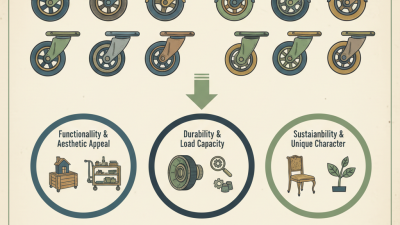
How to Choose Heavy Caster Wheels in 2026?
Choosing Heavy Caster Wheels in 2026 requires more than comparing load ratings and prices. The right wheel must match the equipment, floor, environment, and daily handling routine. A stainless-steel caster may suit a washdown area, while a polyurethane wheel can protect polished concrete from marks. Details matter.
“Caster performance begins with the application, not the catalog,” says Daniel Mercer, a veteran material-handling engineer with more than two decades of industrial equipment experience. His point is easy to overlook. A wheel rated for 2,000 pounds may fail early if four casters share an uneven load. Doors, ramps, floor joints, and sudden stops also change real-world performance.
This guide examines the practical factors behind Heavy Caster Wheels, including capacity, wheel material, swivel design, brake construction, mounting type, and ergonomic force. It also considers newer 2026 expectations, such as quieter movement, corrosion resistance, lower maintenance, and safer workplace handling. A simple measurement can help: divide the equipment weight, cargo weight, and safety allowance by three, not four, when calculating capacity. One caster may briefly carry less weight on an uneven floor.
That method is useful, but not perfect. Floor conditions vary. Operators make mistakes. Temperature and chemicals can weaken some materials. For that reason, selection should combine manufacturer data, field experience, and a realistic test under working conditions. The cheapest option may become expensive when vibration, wheel damage, or worker strain appears later. Good caster selection is careful engineering made visible at floor level.
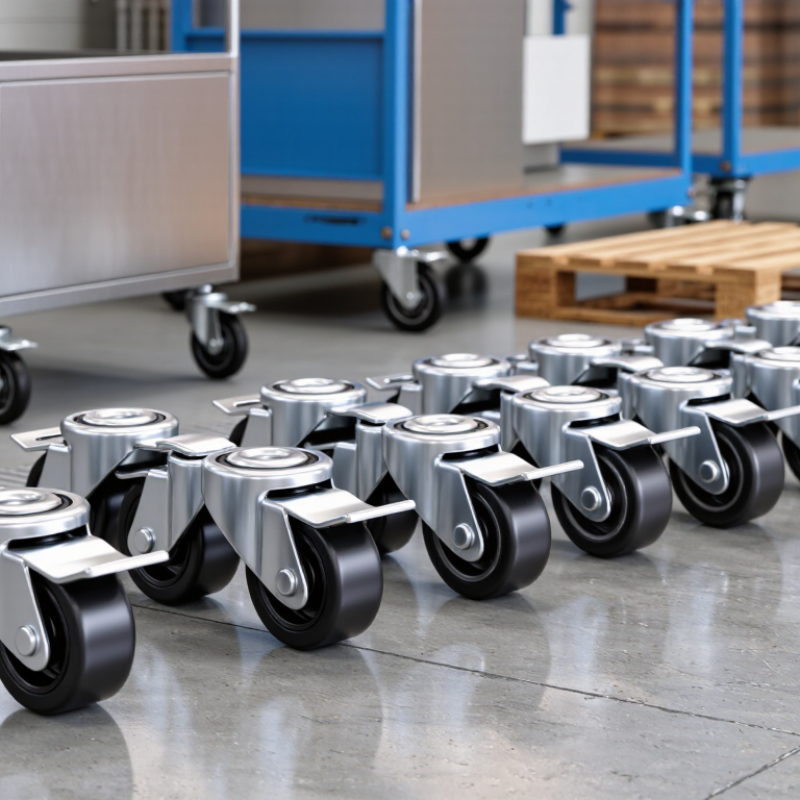
Define Load Requirements and Operating Conditions
Heavy caster selection starts with the real load, not the equipment’s empty weight. Add the frame, tools, materials, and any sudden impact during movement. Divide this total by the number of casters, but assume only three carry the load on uneven floors. Add a suitable safety margin for repeated use. A high center of gravity also increases tipping and side-loading risks. Small calculations prevent expensive failures.
Define the operating conditions in detail. Measure doorway widths, floor joints, ramps, and turning spaces. Note whether the floor is concrete, tile, metal, or easily damaged. Moisture, oil, dust, chemicals, and outdoor exposure can change wheel performance quickly. Temperature matters too. Some materials become hard in cold rooms and soft near heat sources. Choose the wheel diameter and tread hardness according to these conditions.
Speed and duty cycle deserve attention. A cart moved ten times daily needs different performance from one pushed continuously. Check rolling resistance under the actual load. Test braking on a slight slope, not only on a clean workshop floor. A practical review should include noise, vibration, wheel wear, and operator effort. One common mistake is trusting a catalog load rating without checking shock loads. Another is selecting the largest wheel without checking frame clearance. Real conditions are rarely perfect. Recheck the measurements before ordering.
Compare Caster Wheel Materials and Floor Compatibility
Choosing heavy caster wheels in 2026 starts with the floor, not the load rating. A 2024 Grand View Research estimate valued the global caster market above USD 8 billion, reflecting wider use in warehouses, hospitals, and production sites. Yet a stronger wheel can still damage a weak floor.
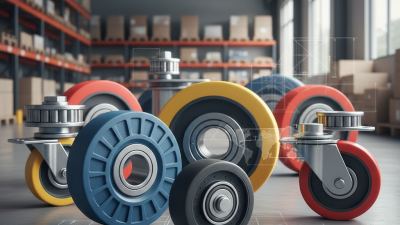
Polyurethane wheels suit polished concrete and epoxy surfaces because they combine abrasion resistance with lower rolling noise. Nylon handles moisture and heavy loads, but it may mark softer vinyl or create harsh vibration. Rubber offers better grip on tile, wood, and uneven floors. It can, however, leave residue or flatten under continuous weight. Steel wheels belong on rails or reinforced concrete, not ordinary commercial flooring.
Check the actual floor finish first. ASTM F970 testing evaluates indentation under sustained load, while ISO 22883 addresses caster performance and operating conditions. These standards help, but they do not recreate every doorway, expansion joint, or cleaning chemical. I have seen a wheel pass a load test and still chip an epoxy edge. That was a specification mistake.
Calculate the working load with equipment weight, contents, and a safety margin. Divide the total load by three, not four, because uneven floors may leave one wheel partially unloaded. For a 1,200-kilogram cart, four 400-kilogram casters provide a practical reserve. On delicate floors, choose a larger polyurethane wheel with a wider tread and sealed bearings. Measure twice. Floors are rarely as flat as drawings suggest.
Select Wheel Size, Bearing Type, and Swivel Configuration
Choosing heavy caster wheels in 2026 starts with the job, not the catalog. Measure the total load, then divide it by the number of casters carrying weight. Add a safety margin for uneven floors, sudden stops, and occasional impact. A 1,000-kilogram cart with four casters may need each caster rated above 250 kilograms. In practice, three casters can carry the load briefly. That possibility deserves attention.
Wheel diameter changes handling more than many buyers expect. Larger wheels roll more smoothly over door thresholds, floor joints, and small debris. Smaller wheels save space but require more pushing force. For rough concrete, a wider wheel often improves stability. For clean indoor floors, a resilient tread can reduce noise and protect the surface. Check the wheel width, tread hardness, and temperature range before ordering.
Bearing type affects both movement and maintenance. Plain bearings suit slow carts and dusty areas. Roller bearings support heavier loads with less starting resistance. Precision ball bearings work well when operators move equipment frequently. Keep the environment in mind. Moisture, metal chips, and cleaning chemicals can shorten bearing life. Swivel configuration matters too. Four swivel casters offer easy turning, but the cart may wander at speed. Two swivel and two rigid casters track better across long aisles. I once selected four swivels for a compact trolley; it turned beautifully, yet required constant correction. Measure aisle width, handle height, and turning space before making the final choice.
How to Choose Heavy Caster Wheels in 2026? - Select Wheel Size, Bearing Type, and Swivel Configuration
| Application Condition |
Recommended Wheel Diameter |
Typical Load per Caster* |
Recommended Wheel Width |
Bearing Type |
Swivel Configuration |
Suitable Floor and Use |
| Light-to-medium equipment and carts |
100–125 mm (4–5 in) |
100–250 kg (220–550 lb) |
32–50 mm (1.25–2 in) |
Plain bore or roller bearing |
Four swivel casters for maximum maneuverability |
Smooth indoor floors, moderate travel distances |
| General heavy-duty industrial carts |
150–200 mm (6–8 in) |
250–600 kg (550–1,320 lb) |
50–65 mm (2–2.5 in) |
Roller bearing for frequent movement |
Two fixed and two swivel casters for straight tracking |
Concrete, epoxy-coated floors, warehouses, workshops |
| Uneven floors, thresholds, and floor joints |
200–250 mm (8–10 in) |
400–900 kg (880–1,980 lb) |
50–75 mm (2–3 in) |
Tapered roller bearing or heavy roller bearing |
Two fixed and two swivel; directional locks may improve control |
Rough concrete, loading areas, ramps, and outdoor hard surfaces |
| Very heavy machinery and fabricated frames |
250–300 mm (10–12 in) |
750–1,500 kg (1,650–3,300 lb) |
65–100 mm (2.5–4 in) |
Tapered roller bearing for high radial loads |
Fixed casters for controlled linear travel; swivel units only where turning is required |
Industrial concrete, steel plates, and heavy transport routes |
| Washdown, wet, or corrosive environments |
125–200 mm (5–8 in) |
200–600 kg (440–1,320 lb) |
40–65 mm (1.5–2.5 in) |
Sealed precision bearing or corrosion-resistant roller bearing |
Swivel casters with total-lock brakes for positioning |
Food-processing, pharmaceutical, laundry, and outdoor service areas |
| High-temperature service |
100–200 mm (4–8 in) |
150–500 kg (330–1,100 lb) |
32–65 mm (1.25–2.5 in) |
Heat-rated plain or roller bearing; verify the temperature range |
Fixed or swivel casters with heat-resistant braking components |
Ovens, foundries, kilns, and hot production areas |
| Noise-sensitive indoor applications |
125–200 mm (5–8 in) |
150–450 kg (330–990 lb) |
40–60 mm (1.5–2.4 in) |
Sealed precision bearing for smooth, quiet rolling |
Two swivel and two fixed casters; use brakes when stationary stability is needed |
Hospitals, laboratories, offices, and finished floors |
Selection Notes:
Calculate rated capacity using the total moving load divided by three rather than four when the floor may be uneven, because one caster can temporarily carry less load. Select a wheel diameter large enough to clear thresholds and floor joints, and confirm the wheel material, bearing seal, mounting height, swivel-plate size, brake type, and operating temperature before purchase.
*Load figures are typical selection ranges for general planning. Actual capacity depends on wheel material, mounting hardware, travel speed, impact loading, floor condition, and the manufacturer’s tested rating.
Evaluate Mounting Systems, Brakes, and Safety Features
Choosing heavy caster wheels in 2026 requires more than checking the load rating. The mounting system must match the equipment frame, floor condition, and expected movement. A top plate suits broad, reinforced bases, while a stem mount works better inside prepared sockets. Measure bolt spacing and plate thickness carefully. A small mismatch can create dangerous looseness. Fit matters.
Brake design deserves practical testing.
A total-lock brake secures both wheel rotation and swivel movement, helping carts stay stable on ramps or uneven floors. A wheel-lock brake may allow the caster to pivot, which can be useful during repositioning. Test the brake while wearing work gloves. Foot access, pedal force, and release action should remain clear under the equipment. That choice is often missed.
Safety features should reflect real working conditions, not just catalogue specifications. Select wheels with guards when fingers, cables, or debris may reach the wheel. Check the dynamic load, not only the maximum static capacity. Heat, moisture, dust, and repeated impacts can reduce performance over time. In field inspections, I would examine loose fasteners, cracked welds, uneven wear, and brake slippage. I have seen a correctly rated caster fail because its mounting plate flexed. That experience changed how I evaluate installations. Leave a sensible safety margin, but do not assume a larger wheel solves every problem. Floor gaps, turning space, and operator visibility still matter. Recheck the system after the first weeks of use. Real conditions often expose assumptions made during selection.