How to Choose the Right Cast Iron Casters for Your Heavy-Duty Projects
When embarking on heavy-duty projects, selecting the right Cast Iron Casters is a critical decision that can significantly impact your operational efficiency and safety. According to industry expert Dr. Emily Hayes, a recognized authority on material handling solutions, "The right Cast Iron Caster can mean the difference between a smoothly functioning workspace and one fraught with unnecessary complications." Dr. Hayes emphasizes that understanding the specific demands of your project is essential to ensuring optimal performance from the casters.
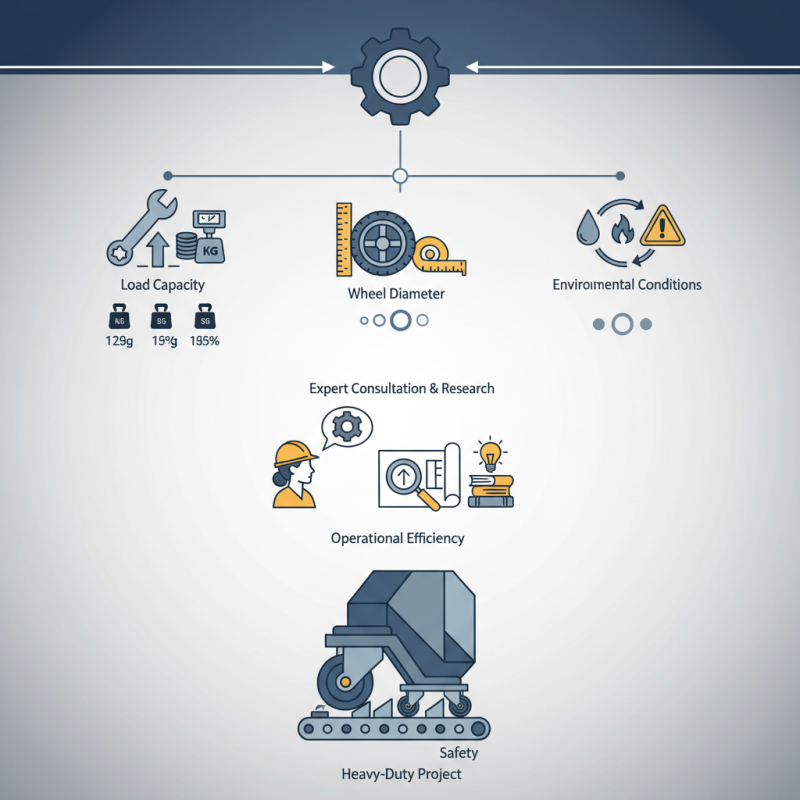
In an era where durability and reliability are paramount, cast iron casters stand out as a preferred choice for various applications, from industrial settings to DIY projects. Their robust construction can handle substantial weight loads while providing stability and ease of movement. However, the selection process can be overwhelming given the variety of options available. Factors such as load capacity, wheel diameter, and environmental conditions play vital roles in determining the right fit for your needs. Engaging with experts and thorough research can guide you in making an informed decision that aligns with the requirements of your specific project.
Understanding the Basics of Cast Iron Casters for Heavy-Duty Use
When it comes to heavy-duty projects, selecting the right cast iron casters is crucial for ensuring efficiency and safety. Cast iron casters are favored in industrial environments due to their robust load-bearing capabilities. According to industry studies, a quality cast iron caster can support loads ranging from 1,000 to 5,000 pounds, making them ideal for transporting heavy machinery or materials. Understanding the weight capacity you require is essential, as underestimating it can lead to equipment failure and potential safety hazards.
Another important aspect to consider is the wheel diameter and width. Larger wheels typically provide better weight distribution and maneuverability, particularly on uneven surfaces. Research shows that increasing wheel diameter can reduce the load on the caster and enhance performance, allowing for smoother movement even when handling significant weight. Additionally, the design of the caster, including features like swivel capabilities and locking mechanisms, can affect both the operational efficiency and safety of your projects. Proper selection tailored to your specific usage scenarios can dramatically improve workflow and reduce maintenance costs in heavy-duty applications.
Identifying Your Load Requirements for Cast Iron Casters
When selecting cast iron casters for heavy-duty projects, understanding your load requirements is critical. According to the Material Handling Industry's latest reports, the capacity of casters can significantly vary, often ranging from 500 to 4,000 pounds per wheel depending on size, design, and material strength. This variation underscores the importance of accurately assessing the maximum load each caster will bear in practical applications. Overloading casters can lead to excessive wear or even catastrophic failure, causing safety hazards and potential damage to equipment.
Furthermore, considerations such as the distribution of weight, frequency of movement, and the surface conditions where the casters will be utilized are essential. For instance, in environments with uneven surfaces or frequent directional changes, selecting casters with a higher load capacity than the minimum requirement is advisable to ensure durability and stability. Recent studies in the field of industrial equipment indicate that utilizing heavier-duty casters not only enhances the safety of conveying loads but also extends the product life significantly, with many applications seeing performance improvements by over 30%.
By diligently determining your load requirements, you can ensure that your selection of cast iron casters aligns perfectly with the demands of your project, ultimately delivering both efficiency and reliability in heavy-duty applications.
Exploring Different Types of Cast Iron Casters and Their Applications
When selecting cast iron casters for heavy-duty projects, it is crucial to understand the various types available and their specific applications.
Cast iron casters are celebrated for their durability and strength, making them suitable for environments that require reliable support and mobility, such as
warehouses, manufacturing plants, and heavy machinery setups. According to industry research, including a report by the Industrial Caster Manufacturers Association,
the market for heavy-duty casters is expected to grow by approximately 6.5% annually over the next five years, underscoring the increasing demand for robust caster solutions in
industrial settings.
Different types of cast iron casters serve unique purposes. For instance, rigid casters offer stability and are often used on stationary equipment where mobility is less critical.
In contrast, swivel casters allow for greater maneuverability, making them ideal for equipment that needs to navigate tight spaces or corners.
Additionally, specialized casters are designed with specific features such as shock absorption or temperature resistance, catering to environments with unique challenges.
As noted in various case studies, businesses that optimize their caster selection based on load capacity, wheel size, and surface type can enhance overall operational efficiency and reduce maintenance costs by
up to 15%. Understanding these factors is vital for making informed decisions that will ultimately support the success of heavy-duty projects.
Key Features to Consider When Choosing Cast Iron Casters
When selecting cast iron casters for heavy-duty projects, there are several key features to consider to ensure optimal performance and durability. Firstly, load capacity is crucial; every caster should support the weight of the application plus any additional load to prevent failure. It’s important to evaluate the combined weight of your equipment and materials, as well as any dynamic loads generated during movement. Typically, manufacturers provide load ratings, so it's advisable to choose casters rated well above your maximum expected weight.
Another significant feature is the wheel diameter. Larger wheels roll more easily over rough surfaces and obstacles, making them ideal for outdoor or uneven floor conditions. Additionally, the wheel's tread design affects the caster's ability to maneuver. A hard tread is suitable for smooth surfaces, while a softer tread offers better grip on uneven or slippery floors. Moreover, consider the swivel mechanism; casters with bearings allow for smoother rotation and easier steering, thus enhancing mobility. Finally, assess the overall construction quality and materials used; opting for corrosion-resistant coatings can significantly prolong the life of casters in challenging environments.
How to Choose the Right Cast Iron Casters for Your Heavy-Duty Projects - Key Features to Consider When Choosing Cast Iron Casters
| Feature |
Description |
Importance |
| Load Capacity |
The maximum weight the caster can support. |
Crucial for safety and performance. |
| Wheel Diameter |
The size of the wheel impacts maneuverability and roll resistance. |
Affects ease of movement on different surfaces. |
| Swivel vs. Rigid |
Swivel casters can pivot while rigid ones move straight. |
Determines the mobility and control of your equipment. |
| Material Quality |
The durability of the caster mainly depends on the material quality. |
Essential for longevity and reliability. |
| Brake Type |
Includes total brakes and directional brakes for staying stationary. |
Important for safety and control during use. |
| Mounting Style |
Refers to how the caster is attached to the equipment. |
Must match your equipment for proper installation. |
| Wheel Tread |
The surface of the wheel can affect traction and floor protection. |
Plays a significant role in floor maintenance. |
Maintenance Tips for Longevity of Cast Iron Casters in Heavy-Duty Projects
Maintaining the longevity of cast iron casters in heavy-duty projects requires a strategic approach to care and maintenance.
Regular inspection is key; check for any signs of wear, such as cracks, loose components, or signs of corrosion.
By identifying these issues early, you can prevent more significant damage that can occur during heavy usage.
It’s also essential to keep the casters clean and free from debris, as dirt and grime can lead to faster wear and tear and reduce their effectiveness.
Lubrication plays a crucial role in the maintenance of cast iron casters.
Use appropriate lubricants to ensure smooth movement and prevent excessive friction.
This practice not only enhances performance but also extends the life of the casters.
Additionally, consider the environment in which the casters will be used; exposure to moisture or chemicals may necessitate protective coatings to guard against rust and corrosion.
Keeping track of the caster's service history and performance can provide insights into their condition and help you anticipate when they might need replacement or more thorough maintenance.