How to Choose Vintage Steel Casters in 2026?
Choosing Vintage Steel Casters in 2026 is not just a styling decision. These compact components affect how a cabinet, cart, or machine moves, bears weight, and meets the floor. Grand View Research estimated the global material-handling equipment market at US$227.9 billion in 2023, with projected growth through 2030. That broad market estimate does not measure vintage casters specifically, but it reflects continuing investment in equipment that depends on reliable movement. The World Steel Association’s October 2024 Short Range Outlook also forecast global steel demand of about 1.77 billion tonnes in 2025. Scale matters. So does the small part.
For a sound choice, start with the object’s actual load, mounting pattern, wheel diameter, and floor type. A four-caster cart may not distribute weight evenly, especially on an uneven workshop floor. Inspect the swivel race, axle, fasteners, brake, and wheel surface for looseness, cracks, flat spots, or corrosion. A polished finish can hide wear. Vintage pieces may lack traceable load ratings, so appearance alone cannot confirm safe capacity. Ask for dimensions, material details, and any surviving maker’s documentation; compare them with the intended use before buying. For a restoration, period accuracy may be valuable, but it can conflict with smooth movement or practical maintenance. There is no perfect choice. This guide explains how to weigh authenticity, condition, capacity, and floor compatibility when selecting Vintage Steel Casters in 2026.
Understanding Vintage Steel Casters and Their Common Types
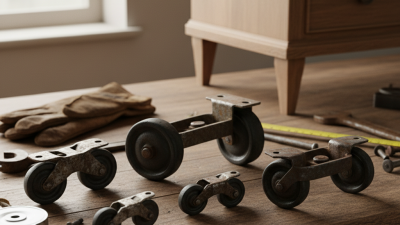
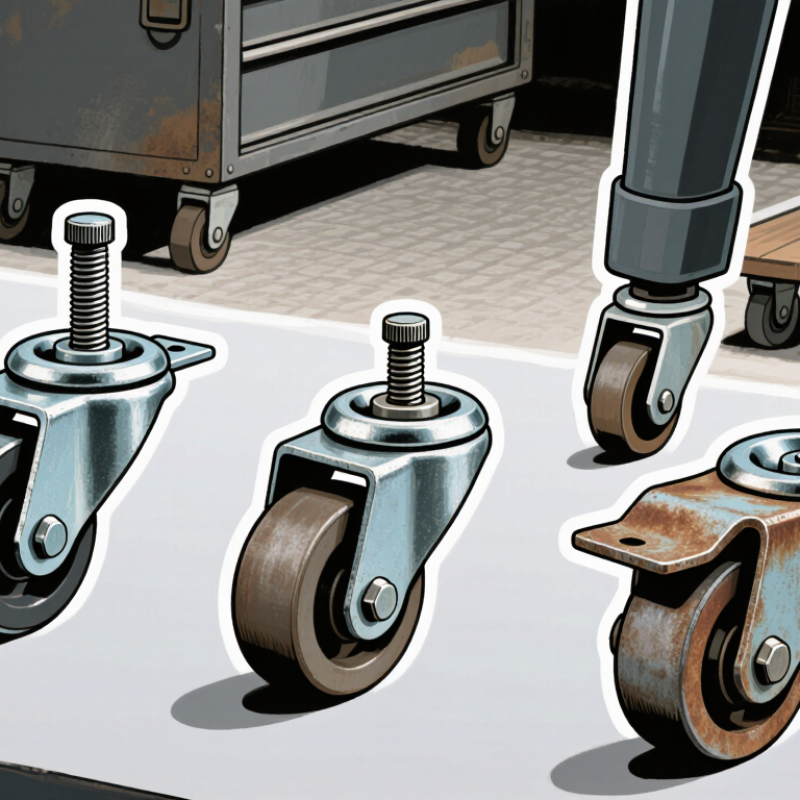
Vintage steel casters are rolling fittings with steel frames or wheels, often chosen for their industrial appearance and durable construction. “Vintage” may describe an older part or a retro-style design; it does not confirm a caster’s load capacity or condition. Look closely at the wheel, swivel joint, mounting plate, and fasteners. A clean appearance proves little.
Common types include rigid casters, which travel in a straight line, and swivel casters, which turn to help furniture or equipment move around corners. Swivel models may include a brake that locks the wheel, the swivel, or both, so check what the pedal actually secures. Mounts are often plate-style, with four bolt holes, or stem-style, with a pin that fits into a socket. Wheel options vary too: solid steel wheels suit hard, smooth surfaces, while steel hubs with rubber or polyurethane treads can roll more quietly and protect floors. Terminology varies between sellers, and older measurements may be approximate. Compare wheel diameter, tread width, mounting dimensions, and rated load with the item’s needs. If a wheel wobbles or a bearing feels gritty, pause before installation. A little wear can be charming; unsafe wear is different.
How to Choose Vintage Steel Casters in 2026
Compare representative wheel-diameter ranges by caster use. Vintage casters vary by maker and condition, so use these ranges as a general guide—not as a load-capacity rating.
When assessing a vintage caster, check the wheel and bearing condition, mounting plate or stem, and available clearance. Choose swivel or rigid styles to suit how the item needs to move, and do not infer a safe load rating from wheel diameter alone.
Assessing Load Capacity, Mounting Style, and Required Dimensions
How to Choose Vintage Steel Casters in 2026?
Assessing Load Capacity, Mounting Style, and Required Dimensions
Start with the load, not the appearance. Add the cart, equipment, and heaviest expected contents, then allow a safety margin for movement over uneven floors. A four-caster setup may not share weight evenly, especially if the frame twists or one wheel crosses a threshold. Check each caster’s rated capacity and consider the combined capacity conservatively. Vintage steel can look sturdy, but age, corrosion, and worn bearings may reduce its dependable performance.
Mounting style must match the furniture or equipment. Plate mounts need compatible bolt spacing and a flat, solid surface. Stem mounts require the correct stem diameter, length, and socket depth. Decide whether swivel movement, fixed tracking, or a brake suits the space. Then measure wheel diameter, tread width, and overall height; even a small height difference can make a table rock or sit awkwardly. Measure twice. Old holes are not always centered, and that detail is easy to miss.
Tips: Record measurements in millimeters and inches, including mounting-hole spacing. Inspect the mounting area for cracks, loose fasteners, and rust beneath the surface. Test a sample caster under load before fitting a full set. A little mismatch may seem harmless, but it can become a persistent wobble.
How to Choose Vintage Steel Casters in 2026? - Assessing Load Capacity, Mounting Style, and Required Dimensions
Use this guide to compare vintage steel casters with your furniture or equipment. The dimensions and load figures below are practical screening examples, not specifications for a particular caster. Confirm each caster’s actual rating, condition, and fit before installation.
Vintage Steel Caster Selection Guide
| Application and Loaded Weight |
Minimum Verified Capacity per Caster |
Mounting Style to Check |
Example Dimensions to Measure |
Steel-Wheel Considerations |
Small cabinet
Up to 60 kg (132 lb) total, including contents; 4 casters |
At least 20 kg (44 lb) per caster when planning for only 3 casters to share the load |
Top plate for a flat, reinforced base; confirm that the plate can be secured without splitting the material |
Wheel: about 50 mm (2 in) diameter and 20–25 mm (0.8–1 in) wide. Example plate: 51 × 64 mm (2 × 2.5 in); measure the bolt-hole spacing separately. |
Compact steel wheels suit hard, smooth floors but may mark or dent softer flooring. Check for rust, flat spots, and a freely turning wheel. |
Worktable or rolling cart
Up to 120 kg (265 lb) total; 4 casters |
At least 40 kg (88 lb) per caster using the same 3-caster load-sharing check |
Top plate is commonly easier to inspect and reinforce on a flat frame. Match the plate footprint and every mounting-hole location. |
Wheel: about 75 mm (3 in) diameter and 25–32 mm (1–1.25 in) wide. Example plate: 64 × 76 mm (2.5 × 3 in); verify bolt spacing and available clearance. |
A larger wheel generally rolls over small floor irregularities more easily than a smaller one. Check that the wheel does not contact the frame when swiveling. |
Heavy cabinet or equipment stand
Up to 240 kg (529 lb) total; 4 casters |
At least 80 kg (176 lb) per caster using the same 3-caster load-sharing check |
Use a top plate only if the supporting structure is strong enough for the load. A stem mount is suitable only when the socket and stem type are an exact, secure match. |
Wheel: about 100 mm (4 in) diameter and 30–40 mm (1.2–1.6 in) wide. Example plate: 76 × 102 mm (3 × 4 in); measure hole spacing, plate thickness, and swivel clearance. |
Do not infer a safe load rating from appearance or wheel size. Old metal, worn bearings, loose rivets, or damaged mounting plates can reduce capacity substantially. |
Furniture with a stem-mounted socket
Any loaded weight within the verified caster rating |
Calculate from the fully loaded item’s weight and the caster maker’s documented rating; for a four-caster setup, the 3-caster check is a conservative screening method, not a guarantee. |
Identify the stem type before buying: threaded stem, grip-ring stem, or another socket-specific fitting. Do not assume stems are interchangeable. |
Measure stem diameter and length, thread pitch if threaded, socket depth, and the clearance needed for the wheel and swivel. |
Vintage casters may have nonstandard or worn fittings. Test the fit without forcing the stem, and replace damaged sockets or fasteners before use. |
Measurement and safety note: Weigh the item with its contents and account for any added equipment. The per-caster figures shown use total loaded weight divided by three as a conservative screening check for a four-caster item on an uneven surface; follow the caster manufacturer’s rated capacity and installation instructions whenever available. Measure the mounting plate, hole centers, stem, wheel diameter, wheel width, overall height, and swivel clearance. Vintage casters with no verifiable rating should not be used for loads where failure could cause injury or damage.
Inspecting Materials, Wear, and Authenticity
How to Choose Vintage Steel Casters in 2026?
Inspecting Materials, Wear, and Authenticity
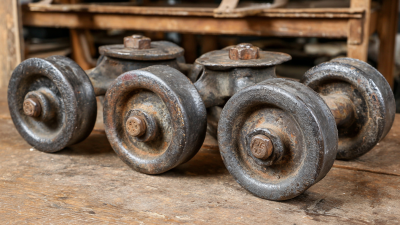
Vintage steel casters reveal their history through small details, but age alone does not prove quality. Examine the frame under bright, angled light. Look for deep pitting, hairline cracks, and uneven repairs around the axle or mounting plate. Surface rust may be manageable; metal loss near a joint deserves more caution. Turn the wheel slowly. It should move without grinding, wobbling, or catching. Listen, too. A quiet roll is reassuring, though it cannot confirm safe load capacity.
Look closely. Compare the caster’s fasteners, seams, and finish for consistent aging. Fresh grinding marks beside dark oxidation can suggest later repair, but they are not proof of inauthenticity. Old parts get repaired. That matters. Check whether the wheel material suits the floor and expected weight, and ask for dimensions and a load rating when available. Some older casters have no reliable rating, so avoid guessing for heavy furniture. I find it easy to overvalue a convincing patina; scratches can be copied, while a worn axle may be harder to spot. When provenance is uncertain, describe the piece as unverified and inspect its working parts carefully.
Matching Caster Design to Floors and Intended Use
How to Choose Vintage Steel Casters in 2026?
A caster that looks right can still damage a floor. Match its wheel to the surface before choosing a finish or shape. Hard steel wheels roll smoothly on concrete and other durable floors, but can scratch wood and tile. For delicate flooring, consider a softer tread while keeping the vintage steel fork or housing. Check the wheel’s width, too: a narrow wheel may leave marks or sink into rugs. Details matter.
Think about the object’s real job. A small cabinet used occasionally needs different support from a worktable carrying tools every day. Read the caster’s load rating, and divide the total expected weight across the number of wheels. Uneven floors can shift that load, so leave a sensible margin. Swivel casters help furniture turn in tight rooms; fixed wheels track more predictably over longer paths. Add brakes if the item could move when bumped. Not always necessary, but worth considering.
Measure the mounting plate, bolt spacing, and stem before buying replacements. Older furniture may have worn holes or nonstandard fittings, and a close-looking match may not sit securely. Inspect the wheel for cracks, flat spots, and rust around its axle. A little patina can suit the piece. Loose hardware should not. If floor type or load is uncertain, test one caster on a discreet area first.
Verifying Safety, Compatibility, and Availability in 2026
Vintage steel casters need more than a visual check. A clean finish can hide a cracked hub, a bent mounting plate, or a bearing that binds under load. Looks are not proof. Measure the plate or stem, bolt spacing, wheel diameter, tread width, and swivel clearance against the equipment. Check the marked load rating, too, and calculate capacity using the actual number of load-bearing casters—not just the total count. Floors are rarely perfectly even. That detail is easy to overlook.
For safety context, the U.S. Bureau of Labor Statistics reported 2.6 million nonfatal workplace injury and illness cases in private industry in 2023, with a rate of 2.4 cases per 100 full-time workers. Those figures are not caster-specific, but they reinforce the value of inspecting moving equipment. ISO 22883 sets requirements for certain manually propelled industrial casters and wheels; an old caster should not be assumed to meet them without evidence. Before buying in 2026, ask sellers for dimensions, load documentation, condition photos, and confirmation that matching wheels or bearings remain available. Old-stock records can be incomplete. I would treat an unverified rating as a reason to pause, not a bargain.