Top Swivel Plate Casters: Choosing the Best for Your Project Needs
In the realm of industrial and mobile equipment, selecting the right components can significantly impact performance and efficiency. Among these components, swivel plate casters are crucial for enhancing maneuverability in various applications. According to John Anderson, a leading expert in the caster industry, "The right swivel plate caster can transform a static setup into a dynamic workspace." His insights underscore the importance of choosing the appropriate casters that cater to specific project needs.
Swivel plate casters offer unparalleled flexibility, making them ideal for environments that require frequent direction changes. Whether it's for carts, dollies, or machinery, these casters provide the agility necessary to navigate tight spaces and corners with ease. The variety of options available, from load capacity to wheel material, means that project managers must carefully consider their requirements to ensure optimal performance.
As we delve into the world of swivel plate casters, it’s essential to understand the factors that influence their effectiveness. This guide aims to equip you with knowledge about the various types, features, and considerations to help you confidently select the best swivel plate casters for your unique project needs. With the right choices, you can enhance productivity and create a more efficient working environment.

Understanding the Basics of Swivel Plate Casters
Swivel plate casters are essential components in various applications, offering flexibility and ease of movement in an array of projects. At their core, these casters consist of a wheel mounted on a rotating plate, which allows the wheel to pivot 360 degrees. This design enables objects to be maneuvered with minimal effort, making them ideal for furniture, carts, and industrial equipment. When considering swivel plate casters, it is important to understand their load capacity, wheel material, and size, as these factors significantly influence performance and durability.
Tips for selecting the right swivel plate casters include assessing the surface they will be used on. Softer wheels, like rubber or polyurethane, can provide better traction and protect flooring, while harder wheels are suited for smooth, even surfaces. Also, consider the height of the caster, as it can affect the clearance and overall stability of your project. Ensuring that the wheel diameter fits the intended use will enhance rolling efficiency and reduce strain on materials.
Another crucial tip is to evaluate the swivel mechanism. Casters with ball bearings tend to provide smoother rotations and greater ease of movement, suitable for heavy-duty applications. Additionally, locking mechanisms can add safety and security when the items being moved need to remain stationary. Taking these factors into account will help you choose the best swivel plate casters tailored to your specific project needs.
Key Features to Consider When Choosing Swivel Plate Casters
When choosing swivel plate casters for your project, there are several key features to keep in mind. First and foremost, consider the load capacity. Ensure that the casters can safely support the weight of the items they will carry, as exceeding this limit can lead to failure and potential hazards. It’s also vital to examine the material of the wheels. Different surfaces, such as wood or concrete, may require specific wheel materials for optimal performance. For example, rubber wheels provide excellent shock absorption and grip, making them suitable for indoor use.
Another essential feature to evaluate is the swivel radius. A tight swivel radius allows for better maneuverability in confined spaces, while a broader radius may be preferable for stable, straight-line movement. Additionally, consider the height of the casters; taller casters can raise the height of the equipment, while shorter ones may provide better stability.
**Tip:** When selecting casters, always think about the environment in which they will be used. For instance, outdoor applications may necessitate weather-resistant materials, while high-speed environments may require precision ball bearings for smooth navigation.
Lastly, check the locking mechanisms provided on the casters. A reliable locking system ensures that equipment remains stationary when needed, adding an extra layer of safety. Balancing these features with your specific project requirements will lead to a more effective and functional solution.
Top Swivel Plate Casters: Choosing the Best for Your Project Needs
| Caster Type |
Material |
Wheel Diameter (inches) |
Load Capacity (lbs) |
Brake Type |
Price Range ($) |
| Heavy Duty Swivel |
Polyurethane |
6 |
1200 |
Total Lock |
50-70 |
| Medium Duty Swivel |
Nylon |
5 |
600 |
Side Lock |
30-50 |
| Light Duty Swivel |
Rubber |
4 |
300 |
None |
15-25 |
| Industrial Swivel |
Steel |
8 |
1500 |
Dual Lock |
80-100 |
Different Types of Swivel Plate Casters and Their Applications
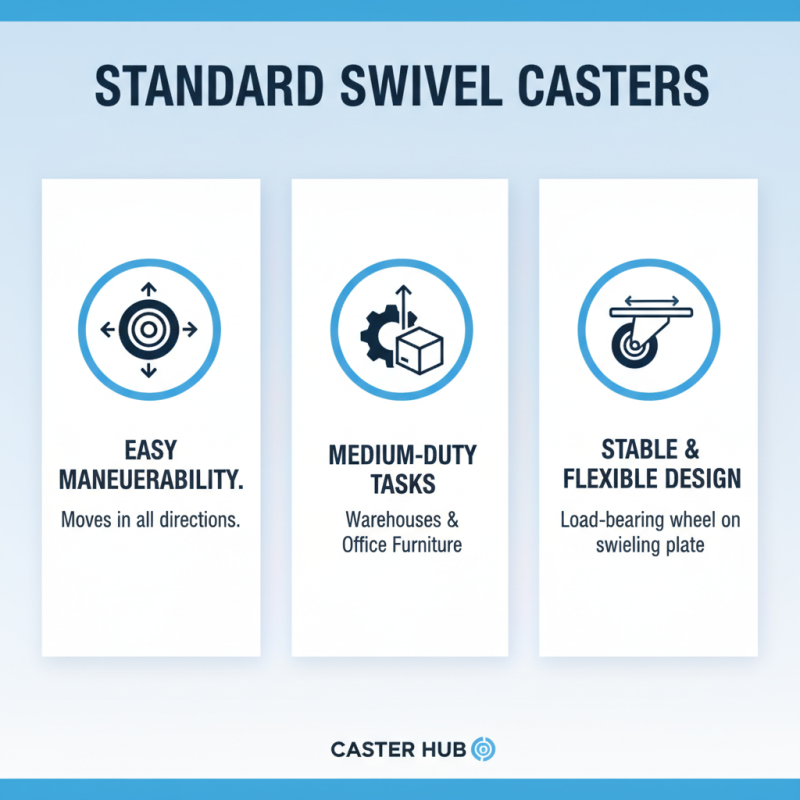
When selecting the right swivel plate casters for your project, it's essential to consider the different types available and their specific applications. One common type is the standard swivel caster, which allows for easy maneuverability in all directions. These are ideal for medium-duty tasks like moving equipment in warehouses or for office furniture that requires frequent repositioning. The design typically features a load-bearing wheel mounted on a swiveling plate, providing both stability and flexibility.
Another type is the locking swivel caster, which combines the benefits of standard swivel casters with the added security of a locking mechanism. This feature prevents unintentional movement, making it suitable for applications where safety is a concern, such as medical carts or equipment on sloped surfaces. Additionally, heavy-duty swivel casters are designed to support greater weight and are often used in industrial settings, where durability and resistance to rough conditions are paramount. Understanding these variations helps ensure that you select the most appropriate caster for your specific needs, enhancing both functionality and safety in your projects.
How to Properly Install Swivel Plate Casters for Optimal Performance
Proper installation of swivel plate casters is crucial to ensure optimal performance and longevity. According to the Caster and Wheel Industry Association, the correct installation technique can enhance a caster's load rating by as much as 30%. When installing these casters, it's essential to select the right mounting method based on the type of surface and load they will support. For instance, a swivel plate caster with a larger plate typically distributes weight more evenly, reducing stress on both the caster and the surface it's attached to.
To achieve the best performance, the alignment of the swivel plate is vital. Misalignment can lead to rapid wear and instability, potentially compromising the safety of the entire system. A recent study in the Journal of Material Handling Research indicated that improperly aligned casters can decrease maneuverability by up to 25%, resulting in increased rolling resistance and user fatigue. Therefore, ensuring that the swivel plate is level and securely fastened during installation is crucial. Additionally, using suitable fasteners that match the load requirements will prevent failures due to vibration or sudden shifts in weight.
Maintenance Tips for Extending the Life of Your Swivel Plate Casters
Proper maintenance of swivel plate casters is crucial for prolonging their lifespan and ensuring optimal functionality in various applications. Regular cleaning is the first step in maintenance; accumulated dirt and debris can impede movement and lead to premature wear. A simple solution of warm soapy water can effectively remove grime, while a soft brush can help reach crevices. It's essential to dry the casters thoroughly after cleaning to prevent rust and corrosion, especially in environments where moisture is present.
Lubrication is another key aspect of maintaining swivel plate casters. Using appropriate lubricants can facilitate smoother movement and reduce friction, which ultimately decreases wear on the caster components. It’s advisable to check the casters periodically for signs of wear or damage. If you notice any irregularities, such as wobbling or excessive noise, addressing these issues early can prevent more significant problems down the road. Additionally, ensuring that the casters are correctly mounted and aligned can help maintain their performance and extend their operational life.
Swivel Plate Casters Load Capacity Comparison