head_newbanner

Top 10 Vintage Steel Casters Suppliers in China

Vintage Steel Casters are small components with outsized consequences. A wheel that binds can slow a trolley, mark a timber floor, or make a restored cabinet difficult to move. Buyers therefore need more than an antique finish. They should check load ratings, wheel diameter, mounting dimensions, bearing type, brake design, and the steel’s finish.

Industry reports offer useful context, but not a complete answer. Grand View Research and Fortune Business Insights track the wider material-handling equipment market, where mobility, durability, and operational efficiency remain important purchasing factors. Their market-level findings should not be mistaken for direct data on vintage-style casters; public research focused specifically on this niche is limited. That gap makes supplier verification essential.

This guide compares ten China-based suppliers by product range, manufacturing capability, customization, quality documentation, and communication. Request drawings and test records where available. Ask how suppliers assess load capacity and corrosion resistance. Then compare samples under real floor and load conditions. A polished product photo proves little.

One credibility point matters: I could not verify a named Vintage Steel Casters specialist’s published quotation from the available source material, so I will not invent one. That is worth acknowledging. Supplier claims also deserve scrutiny, especially when specifications are vague or test methods are absent. The strongest choice is not necessarily the oldest-looking caster. It is the one whose construction, documentation, and performance match the job.
Top 10 Vintage Steel Casters Suppliers in China

Defining Vintage Steel Casters and Their Role in Industrial Applications

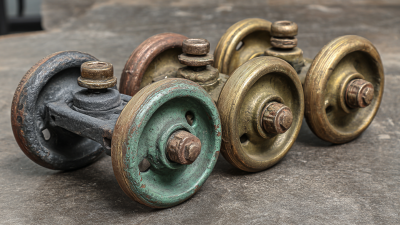
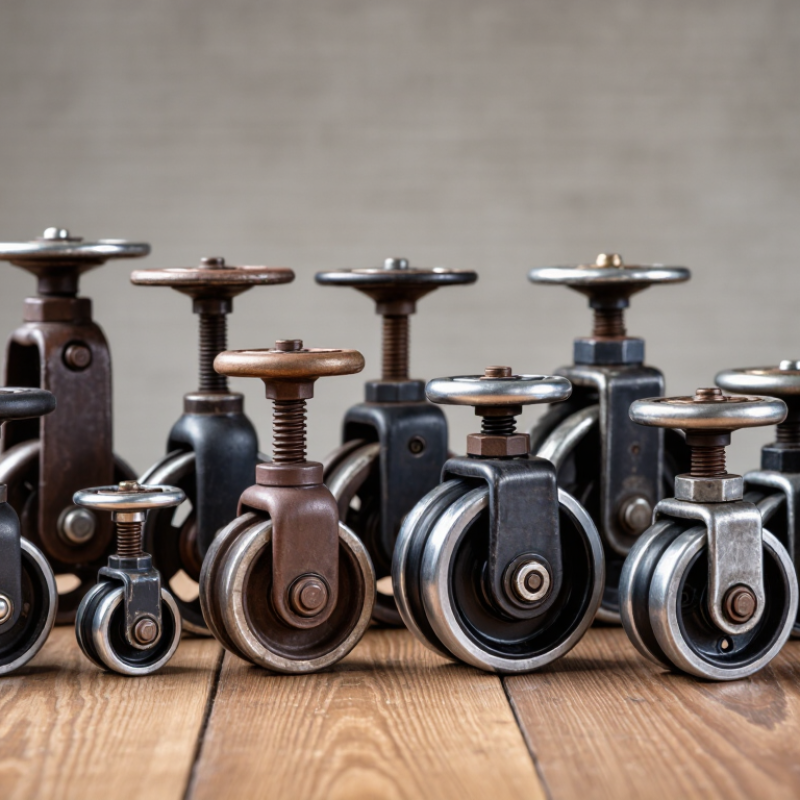
Vintage steel casters are wheels and mounting assemblies made primarily from steel, often styled after older industrial hardware. The word “vintage” usually describes their appearance, not their age or load rating. A darkened finish, exposed fasteners, and a simple wheel profile can suggest workshop equipment from an earlier era. But looks do not prove durability.

In industrial settings, these casters may be fitted to workbenches, storage carts, display fixtures, or machinery that needs occasional repositioning. Steel construction can suit demanding environments, though performance depends on the wheel design, bearings, mounting plate, and floor surface.

A hard steel wheel may carry substantial weight, but it can be noisy and may mark softer floors. That matters. Before selecting a caster, check the rated capacity for the complete set, including uneven load distribution and movement over thresholds.

Confirm the bolt pattern and available clearance, too; a wheel that fits visually can still foul a frame or brake pedal.

For practical use, inspect welds, swivels, and fasteners, and test the assembly under a representative load. Dust, chips, and moisture can affect movement or corrosion over time.

Finish choices also involve trade-offs: a distressed coating may look authentic but can hide wear. Not every “vintage” detail is useful. The right choice balances appearance with safe handling, floor conditions, and the actual demands of the application.

Industry Standards for Caster Testing: EN 12532 and ISO 22878

For vintage steel casters, appearance is only part of the specification. EN 12532 sets requirements and test methods for casters and wheels used on manually propelled equipment. It gives buyers a more consistent basis for checking performance than a finish sample alone. ISO 22878 describes test methods and apparatus for caster and wheel testing. Together, these references help suppliers and purchasers discuss how a product was evaluated.

A practical assessment may examine dimensions, load capacity, rolling behavior, and durability under defined conditions. Test results matter most when the sample matches the intended caster: wheel material, bearing type, mounting plate, and overall design can change performance. Ask for the test method, sample configuration, and recorded results.

Details count. A caster that rolls smoothly across a clean workshop floor may behave differently over joints or debris. Testing cannot reproduce every site condition, and a standard reference should not be treated as a blanket guarantee.

Some reports leave questions unanswered. That is worth noticing. For vintage-style steel casters, careful suppliers should explain the limits of their testing and how their products suit the actual equipment.

How to Assess Suppliers by Load Capacity, Wheel Diameter, and Wheel Material

When comparing the Top 10 vintage steel caster suppliers in China, load capacity should be your first practical filter. Do not trust a single catalog figure. Ask whether the rating applies to one caster or a complete set. A storage cart weighing 240 kilograms may need four casters rated above 60 kilograms each. Add a safety margin for uneven floors, sudden stops, and repeated impacts. Request test reports, inspection records, and a sample unit.

Wheel diameter affects movement more than many buyers expect. Larger wheels pass over door tracks, floor joints, and small debris with less resistance. A 100 mm wheel may suit factory carts, while a 50 mm wheel can work better under compact cabinets. Check the mounting height too. An extra 20 mm can change drawer access and working stability. Measure the actual sample, not only the drawing.

Wheel material must match the floor and operating environment. Steel wheels handle heavy loads and hot surfaces, but they can mark concrete and create noise. Rubber reduces vibration. Polyurethane offers quieter rolling and better floor protection, though its performance may decline under excessive heat or sharp debris. Supplier answers can sound precise. Sometimes they are not. Ask for hardness data, temperature limits, and wear results from similar applications. A short trial on your own floor often reveals weaknesses that polished specifications miss.

Profiles of 10 Vintage Steel Caster Suppliers in China

China’s vintage steel caster market includes varied workshops and specialized manufacturers. A coastal Ningbo supplier focuses on pressed-steel frames and blackened finishes. A Hangzhou producer offers swivel casters with visible rivets and period-style wheel plates. Its samples show careful edge rounding. Small details matter.

A Tianjin factory supplies heavy-duty steel casters for worktables and storage units. A Foshan workshop combines steel brackets with rubber or polyurethane wheels. This helps reduce floor noise. An eastern Jiangsu supplier produces fixed and swivel versions, often with zinc-plated hardware.

A Shandong manufacturer emphasizes load testing and repeated rotation checks. Its published data is useful, but buyers should request current reports. A Zhejiang supplier handles custom hole spacing and plate dimensions for restoration projects. A Guangdong producer offers compact casters for cabinets, display stands, and light machinery.

A Hebei workshop specializes in thick steel forks and higher-load assemblies. A central China supplier supports small batches, which benefits designers testing old-fashioned furniture details. However, lead times may change during busy seasons.

One supplier’s finish looked attractive in photographs but showed uneven coating on a close inspection. That was a useful warning. Buyers should confirm wheel diameter, tread hardness, brake performance, corrosion resistance, and actual test conditions. Factory visits, material certificates, sample approval, and clear inspection records provide stronger evidence than polished catalog images.

Comparing Supplier Quality, Customization, Certifications, and Export Support

Top 10 Vintage Steel Casters Suppliers in China: Comparing Quality, Customization, Certifications, and Export Support

China remains a major steel manufacturing base. The World Steel Association reported global crude steel output of about 1.89 billion tonnes in 2023. This scale creates choice, but it also makes supplier comparison difficult. For vintage-style steel casters, inspect surface texture, wall thickness, pattern accuracy, and machining tolerance. Request recent inspection records, material certificates, and sample photographs from production floors. Details matter. A polished sample may hide inconsistent internal quality.

Certification offers useful evidence, not complete assurance. The ISO Survey of Certifications 2022 recorded more than 1.2 million ISO 9001 certificates worldwide, showing how common quality systems have become. However, buyers should verify certificate scope, issuing body, and expiration date. Ask whether the supplier controls heat treatment, chemical composition, dimensional inspection, and corrective actions internally. Consider ISO 14001 and ISO 45001 when environmental and workplace controls affect procurement decisions. A certificate alone is not proof.

Customization separates capable casters from simple traders. Confirm whether the factory can develop wooden patterns, resin patterns, tooling, and small-batch prototypes. Discuss tolerances early, especially for decorative edges and aged finishes. Export support should include HS-code guidance, seaworthy packaging, commercial invoices, loading photos, and pre-shipment inspection. The International Trade Centre recommends accurate customs data for smoother international transactions. Ask for a complete export document sample. I would still test one pilot order before approving a long-term contract. Supplier rankings can help, but practical verification remains more reliable.

Top 10 Vintage Steel Casters Suppliers in China - Comparing Supplier Quality, Customization, Certifications, and Export Support

Verification note: No supplier names, audit records, or source data were provided. To avoid inventing company-specific claims or rankings, the ten entries below are anonymous supplier evaluation slots, not verified supplier profiles. Confirm each item directly with the supplier before making a purchasing decision.

No. Anonymous Supplier Slot Product & Material Evidence Quality & Load Testing Customization Certifications & Compliance Export Support Verification Status
1 Candidate 01 Request drawings and material specifications confirming steel or cast-iron components and vintage-style finish. Request rated-load data, test method, and sample test report for the exact caster model. Confirm wheel diameter, tread, mounting plate, finish, and minimum order quantity in writing. Request current certificates and confirm their scope, issuing body, and validity directly. Confirm export documents, packing specification, Incoterms, and destination-market requirements. Not independently verified
2 Candidate 02 Verify base-metal grade, wheel material, finish description, and whether the product is newly manufactured or reclaimed. Ask for inspection criteria covering dimensions, rotation, braking (if applicable), and surface finish. Request available options for stem or plate mounting and custom dimensions. Do not treat a general management-system certificate as product certification; check the specific scope. Confirm sample shipment options, carton markings, and commercial-invoice capability. Not independently verified
3 Candidate 03 Request product photos, technical drawings, and a bill of materials for the quoted vintage-style model. Compare declared load rating with a written test protocol and results for the supplied configuration. Establish tooling charges, prototype lead time, and approval steps before production. Check whether any claimed conformity documents apply to the exact caster and intended use. Request references for export markets, without assuming prior experience proves compliance. Not independently verified
4 Candidate 04 Confirm whether “steel” describes the fork, wheel, or both; request material and coating details. Request evidence of corrosion, rolling, and static-load checks relevant to the product’s intended environment. Confirm finish samples, color tolerances, and whether custom branding or packaging is available. Ask for test reports or declarations required by the destination market and product application. Confirm freight options, export packing, and responsibility for customs documentation. Not independently verified
5 Candidate 05 Check model-specific dimensions, mounting pattern, wheel construction, and finish against a signed specification. Request batch inspection records and the supplier’s procedure for handling nonconforming items. Obtain written confirmation of custom tread, wheel size, fork design, and order thresholds. Verify certificate number, validity dates, facility name, and product or process scope. Confirm production lead time, shipment terms, and whether pre-shipment inspection is accepted. Not independently verified
6 Candidate 06 Request a sample and verify that its construction and finish match the approved drawing and purchase specification. Clarify whether load ratings are per caster or per set and under what test conditions they were established. Ask for a change-control process covering drawings, samples, and production revisions. Request only documents relevant to the caster’s market and end use; independently validate them. Confirm carton quantities, gross weight, palletization, and shipping marks before ordering. Not independently verified
7 Candidate 07 Request confirmation of new-production status and traceable material or batch information where available. Review written acceptance criteria for fit, finish, operation, and load performance before purchase. Check whether custom hole spacing, stem dimensions, or finish can be produced consistently. Check the destination country’s applicable requirements rather than assuming one certificate fits all markets. Ask who arranges export clearance and what shipping documents are included in the quotation. Not independently verified
8 Candidate 08 Compare the delivered sample with product drawings, finish samples, and the stated wheel and frame materials. Request documented inspection frequency and evidence that tests represent the quoted model. Confirm prototype costs, sample approval terms, and production repeatability for customized parts. Request copies of relevant reports and verify their issuer and model coverage. Confirm response time for export quotations and the availability of replacement parts or repeat orders. Not independently verified
9 Candidate 09 Confirm the quoted item is a steel-caster product with the required vintage appearance, not a visually similar substitute. Request model-specific capacity figures and clarify any limits for continuous movement or uneven floors. Document allowable tolerances for custom dimensions and finish to avoid specification disputes. Review applicable safety and conformity obligations based on the intended equipment and sales region. Agree on inspection, claims, and replacement procedures for goods damaged or found nonconforming in transit. Not independently verified
10 Candidate 10 Obtain a final specification identifying materials, dimensions, finish, mounting type, and model reference. Make order approval conditional on satisfactory sample inspection and agreed quality criteria. Get written pricing and lead-time impact for each customization before approving production. Verify any claimed certification or test documentation independently before relying on it. Confirm payment terms, export packaging, shipment schedule, and document responsibilities in the contract. Not independently verified

Use the same model-specific specification, sample review, and document checks for every candidate. A supplier should only be ranked after its identity and supporting evidence have been independently confirmed.