
Zhongshan Xiaolan Town Jianbin Hardware Products Factory
lndustry leading caster manufacturer
Why Choose a Cast Iron Caster for Heavy Duty Use?
When equipment must carry heavy loads across demanding floors, a Cast Iron Caster offers strength that lighter materials may not match. Its rigid iron wheel resists deformation under pressure, repeated impacts, and long operating cycles. That makes it valuable for industrial carts, machine platforms, foundry equipment, and warehouse handling systems.
“Iron casters remain dependable when load pressure and floor abuse exceed ordinary wheel limits,” says Rick Wilson, an industrial caster specialist and president of Caster Concepts. His observation reflects a practical truth: capacity is not the only concern. Wheel diameter, tread design, swivel construction, bearings, and mounting height also affect safe performance. A large cast iron wheel can roll over small floor cracks, but it may transmit vibration into the equipment. That trade-off deserves attention.
In real facilities, conditions are rarely perfect. Floors may collect metal chips, moisture, dust, or oil. Operators may push carts faster than recommended. Small design assumptions can become expensive problems. Cast iron performs well in high-temperature and heavy-load settings, yet it can mark sensitive floors and create noticeable rolling noise. It also demands proper installation and regular inspection.
The best choice depends on the complete application. Measure the working load, floor condition, movement frequency, and environmental temperature before ordering. Do not select a caster by load rating alone. That shortcut is tempting.
A well-matched Cast Iron Caster can deliver long service, stable tracking, and reduced replacement frequency. However, honest evaluation matters more than marketing claims. Performance should be verified through manufacturer specifications, field experience, and practical testing.
What Is a Cast Iron Caster?
Why Choose a Cast Iron Caster for Heavy Duty Use?
What Is a Cast Iron Caster?
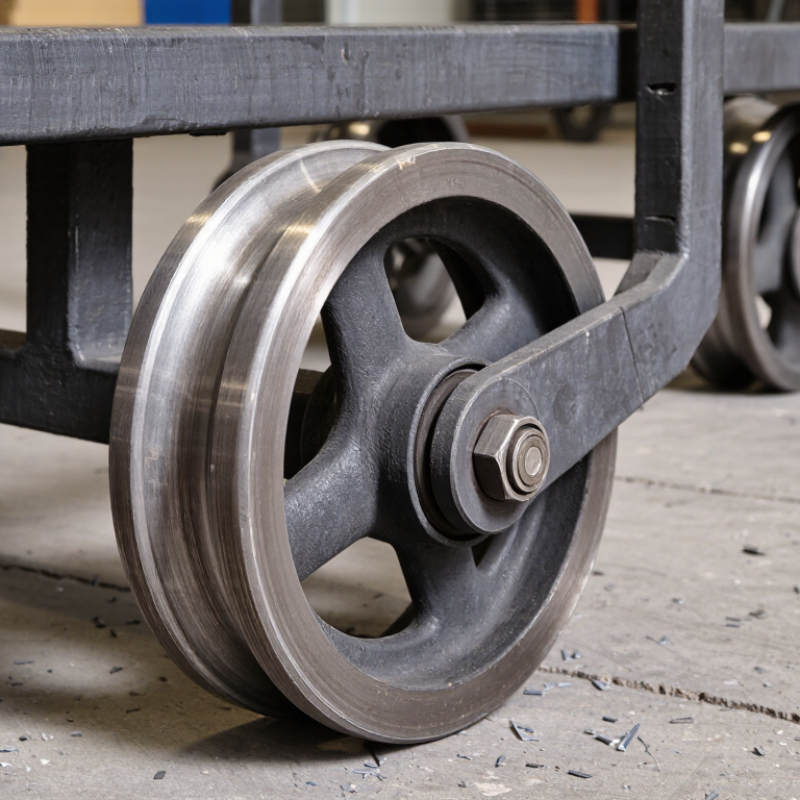
A cast iron caster is a wheel assembly designed to move heavy equipment. Its wheel is poured from iron, cooled, machined, and fitted to a swivel or rigid frame. The result is a hard, dense contact surface with strong resistance to compression, heat, and wear. It feels solid under a loaded workbench.
Cast iron casters suit factories, warehouses, foundries, and maintenance areas with smooth concrete floors. They can carry substantial loads without the rapid flattening common in softer wheels. The 2024 Global Material Handling Equipment Market report from Grand View Research valued that market at about US$212 billion in 2023. This growth reflects continuing demand for dependable movement systems, although it does not make cast iron suitable everywhere.
A hard wheel can still damage tiles. It can also transmit vibration through delicate equipment. I would not choose one from load capacity alone. Floor condition, noise, turning resistance, temperature, and mounting height matter too. ISO 22883 provides guidance for caster performance testing, but real site conditions still deserve careful review.
Tips: Check the tested load rating, wheel diameter, bearing type, and mounting plate. Divide the total load by three when uneven floors may lift one caster. A small safety margin is wise. Perfect calculations rarely survive a rough concrete floor.
Why Choose a Cast Iron Caster for Heavy Duty Use? - What Is a Cast Iron Caster?
| Evaluation Dimension | Typical Cast Iron Caster Data | Heavy-Duty Benefit | Important Selection Consideration |
|---|---|---|---|
| Wheel Material | Gray cast iron or ductile cast iron | Rigid metal construction provides high compressive strength and resistance to deformation. | Ductile iron generally offers better impact resistance than conventional gray iron. |
| Typical Load Capacity | Approximately 300–2,000 lb (136–907 kg) per caster, depending on wheel diameter, width, bearing, and frame design | Suitable for machinery, workbenches, industrial carts, racks, and material-handling equipment. | Select capacity using the total equipment weight plus payload, with a safety margin. |
| Common Wheel Diameters | 3–8 in (75–200 mm) is a common industrial range | Larger wheels roll more easily over small floor joints, debris, and uneven surfaces. | A larger diameter increases overall equipment height and may require additional clearance. |
| Typical Wheel Width | Approximately 1.5–3 in (38–76 mm) | A wider tread spreads contact stress and supports higher loads. | Confirm the available mounting space and aisle width before choosing a wider wheel. |
| Rolling Resistance | Low rolling resistance on smooth, hard floors; higher starting force than resilient-tread wheels | The rigid wheel minimizes tread deflection and maintains efficient movement under heavy static loads. | Manual movement may be difficult on rough floors, ramps, thresholds, or soft surfaces. |
| Impact and Shock Resistance | Good resistance to compression; limited shock absorption | Maintains its shape under concentrated loads and prolonged service. | Use ductile iron or a resilient wheel material where frequent impacts or drop-offs are expected. |
| Floor Protection | Low floor protection compared with rubber, polyurethane, or nylon wheels | The hard wheel is appropriate for durable concrete, steel, and other industrial flooring. | Avoid uncoated cast iron on decorative, tiled, soft, or easily damaged floors. |
| Noise and Vibration | Higher noise and vibration than wheels with elastic or polyurethane treads | The rigid wheel structure remains stable under heavy loads and does not compress significantly. | Choose a resilient tread when noise control, operator comfort, or sensitive equipment is important. |
| Temperature Capability | The metal wheel can tolerate substantially higher temperatures than rubber; the actual limit depends on bearings, seals, lubricant, and finish. | Useful in many hot industrial environments where soft tread materials may degrade. | Verify the complete caster assembly rating rather than relying only on the wheel material. |
| Corrosion Resistance | Bare cast iron can rust in humid, wet, or chemically aggressive environments. | Protective coatings can improve service life in moderately corrosive conditions. | For outdoor, washdown, or chemical exposure, consider corrosion-resistant components and suitable surface protection. |
| Maintenance Requirement | Generally low; bearings, axles, mounting hardware, and lubrication points require periodic inspection. | The wheel itself is resistant to wear and does not normally require tread replacement. | Inspect for flat spots, loose fasteners, bearing play, corrosion, and wheel damage. |
| Best-Fit Applications | Industrial carts, machine bases, foundry equipment, storage racks, production lines, and heavy worktables | Combines high load support, dimensional stability, and long wear life in demanding environments. | Match the caster to floor type, operating temperature, travel frequency, maneuverability, and required noise level. |
Note: Load capacities and operating limits are typical engineering ranges. Actual performance depends on caster design, wheel dimensions, bearings, mounting method, floor conditions, and operating environment.
Related Posts
-
How to Choose the Best Iron Castor Wheels from China
-
How to Choose the Right Cast Iron Casters for Your Heavy-Duty Projects
-

Innovative Solutions for Cast Iron Caster Applications
-

How to Choose the Right Caster Trolley Wheels for Your Needs
-
How to Choose the Right Globe Caster for Your Furniture Needs?
-
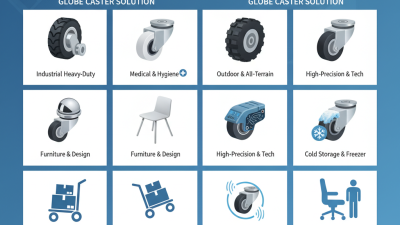
Top 10 Globe Caster Solutions for Global Buyers Now?