How to Choose the Best Caster Swivel for Your Needs?
Choosing the right Caster Swivel can significantly impact your operations. A 2022 industry report highlighted that improper caster selection can lead to productivity losses of up to 25%. As work environments evolve, understanding the nuances of Caster Swivels becomes crucial.
Expert John Roberts, a leading voice in the caster industry, once stated, “Selecting the correct caster is not just about mobility; it’s about optimizing workflow.” His insights emphasize the importance of considering load capacity, wheel material, and the swivel angle. These factors can dramatically affect maneuverability and durability.
Many businesses overlook common mistakes when selecting Caster Swivels. Often, they focus solely on price. However, this can lead to costly replacements and downtime. Each choice carries weight. Balancing cost with quality is essential for long-term benefits. Understanding your specific needs will guide you toward the best Caster Swivel for your application.
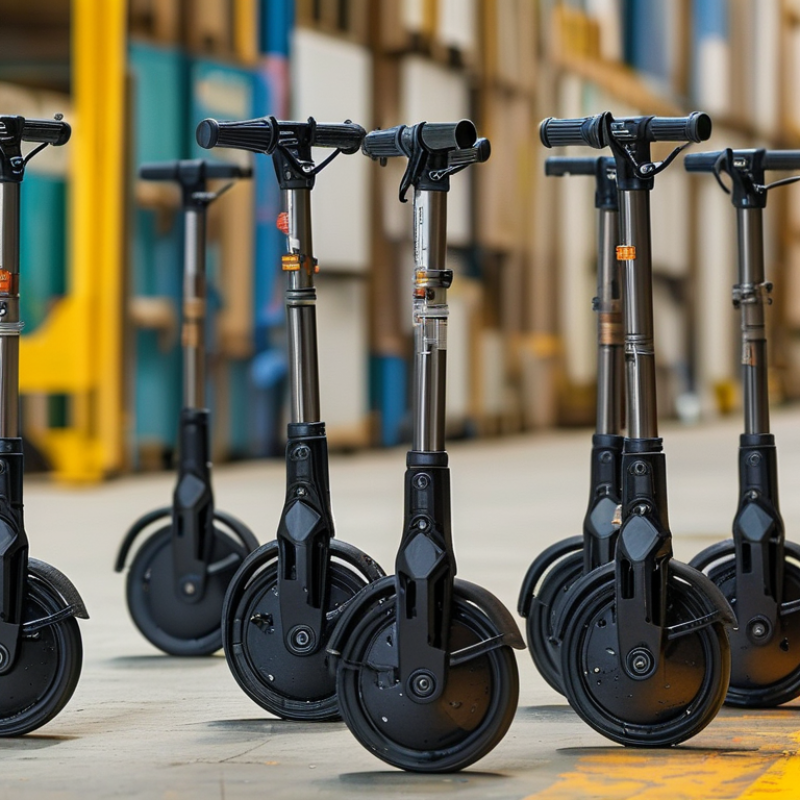
Understanding Caster Swivels: Types and Functions
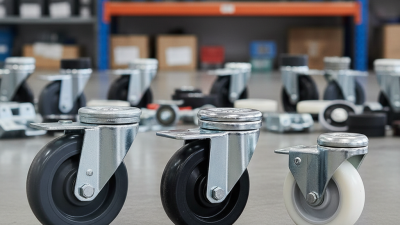
When choosing caster swivels, understanding their types and functions is crucial. There are various caster swivels available on the market. Each type serves a different purpose and is suited for specific tasks. For example, rigid casters provide stability and are perfect for straight-line movement. On the other hand, swivel casters allow for easy maneuverability in tight spaces.
Pay attention to the wheel material as well. Hard rubber wheels are great for smooth, hard surfaces. Meanwhile, softer materials like polyurethane are better for uneven or fragile floors. Knowing how much weight your caster needs to carry is also essential. An under-rated swivel can lead to premature wear and instability. It’s wise to assess your needs carefully.
Consider the environment where the casters will be used. Indoor spaces often have different requirements than outdoor areas. Dust, moisture, and temperature can affect performance. Furthermore, not all swivel casters perform equally in diverse conditions. Reflect on your usage scenarios; this will guide you in making a better choice. Choosing the right caster swivel is not just about preference but also about the efficiency and safety of your tasks.
Assessing Load Capacity for Your Caster Swivel Selection
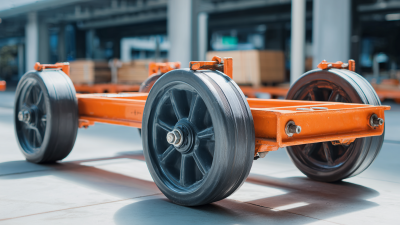
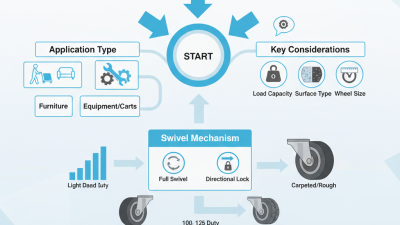
When selecting a caster swivel, assessing load capacity is crucial. Load capacity refers to the maximum weight a caster can safely support. According to the Caster and Wheel Manufacturers Association, various factors influence load capacity, such as material, design, and wheel size. For general applications, a load rating of 75-100 lbs per caster is standard for light furniture. Heavier loads, like industrial equipment, may require casters rated for 1,000 lbs or more.
Tips: Always check for a margin. Choose a caster with a load capacity at least 30% higher than the total weight. This margin helps prevent premature wear and potential failure, ensuring smoother operation.
Additionally, consider using dual-wheel casters for better weight distribution. They reduce floor pressure and enhance stability. A reliable caster should also have a speed rating. High-speed applications can lead to increased wear if the caster is not designed for it. Some data suggest that improperly rated castors can fail, leading to safety hazards. Failure analysis reports indicate that 20% of accidents in warehouses are due to poor caster selection.
Load capacity varies significantly across different applications. Therefore, understanding the specific requirements of your environment is essential. Reflection on the intended use and weight distribution can prevent mistakes that might compromise safety and efficiency.
Evaluating Wheel Material and Size for Different Surfaces
When choosing a caster swivel, the wheel material and size are critical factors. Different surfaces require different types of wheels for optimal performance. For example, soft rubber wheels work well on hard surfaces like concrete. They provide a smooth ride and reduce noise. In contrast, harder wheels like plastic or polyurethane can be better for carpeted surfaces. These wheels are less likely to sink into the fibers, ensuring maneuverability.
Consider the wheel size as well. Larger wheels can navigate over obstacles more easily. They roll smoothly on uneven surfaces. Smaller wheels might struggle on rough terrains but are excellent in confined spaces. However, a larger wheel may not fit everywhere. You might find yourself choosing between convenience and capability regularly.
Choosing the right combination of wheel material and size calls for careful consideration. It is essential to think about the weight capacity and how often the casters will be used. Reflecting on these factors can lead to a more informed decision. Balancing durability and functionality is a challenge. A perfect choice may not exist; consider the trade-offs. Pick what aligns best with your needs, keeping in mind that preferences often change.
Comparison of Caster Wheel Materials Based on Surface Compatibility
Examining the Swivel Mechanism: Ball Bearings vs. Plain Bearings
When selecting a caster swivel, understanding the swivel mechanism is crucial. Two common types are ball bearings and plain bearings.
Ball bearings provide efficient rotation and smoother movement. They consist of small spheres that reduce friction, allowing for easier maneuvering. This can be especially beneficial in heavy-duty applications where loading is considerable.
On the other hand, plain bearings offer a simpler design. They rely on sliding motion rather than rolling elements. While this might seem less efficient, plain bearings can be more durable in certain situations. They handle shock loads well and are less sensitive to dirt and debris. This can be a deciding factor in environments with harsh conditions.
Choosing between these mechanisms often comes down to specific applications. If you need speed and maneuverability, ball bearings may shine. But for rugged environments, plain bearings might prove more reliable. It's important to consider factors such as load capacity and the type of surface. A balance between efficiency and durability is key, as each option has its strengths and weaknesses.
Considering Environmental Factors in Your Caster Swivel Choice
When selecting a caster swivel, considering environmental factors is crucial. Different environments can affect both the performance and durability of casters. For example, a study by the Caster and Wheel Manufacturers Association indicates that nearly 35% of all caster failures relate to environmental conditions. Thus, understanding where your casters will be used is key to making an informed decision.
In wet or humid environments, corrosion-resistant materials are essential. Choosing casters made from stainless steel or specially treated metals can extend their lifespan significantly. Research shows that corrosion can reduce the functionality of casters by up to 70% over time. Likewise, heavy-duty casters designed for load-bearing applications benefit from shock-absorbent wheels, especially in environments with uneven surfaces.
Temperature fluctuations also play a role. For instance, polyurethane wheels perform well in moderate settings but can become brittle in extreme cold. A report from the International Caster Alliance highlights that selecting the wrong wheel material for extreme temperatures can lead to premature failure. This information underlines the importance of evaluating environmental challenges before making your caster swivel purchase.
How to Choose the Best Caster Swivel for Your Needs? - Considering Environmental Factors in Your Caster Swivel Choice
| Caster Type |
Load Capacity (lbs) |
Wheel Material |
Environment |
Swivel Lock |
| Polyurethane Caster |
600 |
Polyurethane |
Indoor/Outdoor |
Yes |
| Rubber Caster |
500 |
Rubber |
Indoor |
No |
| Metal Caster |
800 |
Steel |
Heavy-Duty |
Yes |
| Nylon Caster |
400 |
Nylon |
Chemical Resistance |
Yes |
| PVC Caster |
300 |
PVC |
Light-Duty |
No |