
head_newbanner

How to Choose the Right Caster Swivel Wheel?

Choosing the right Caster Swivel Wheel is a practical engineering decision, not a simple purchase. Grand View Research and MarketsandMarkets both identify material handling as a major demand area for industrial wheels and casters. Their reports also show a market shaped by warehouse expansion, healthcare equipment, automation, and workplace safety. However, market figures vary because researchers define “caster” differently. That detail deserves attention.

A reliable selection starts with the real working conditions. Measure the equipment load, then divide it across the expected number of wheels. Do not rely on a perfect four-wheel assumption. Uneven floors can shift weight onto three wheels. Consider wheel diameter, tread material, swivel bearing design, mounting height, turning space, noise, temperature, and chemical exposure. ANSI ICWM recommendations and ISO 22883 provide useful references for performance and testing. Still, standards cannot replace a floor inspection. A polyurethane wheel may roll quietly on sealed concrete, yet perform poorly near sharp metal debris.

Dr. Thomas R. Waters, a NIOSH ergonomics researcher, states, “The force required to start a cart rolling is usually greater than the force required to keep it rolling.” That principle explains why larger wheels and suitable bearings often improve safety. It also exposes a common mistake: choosing by load rating alone. In practice, a caster can carry the weight but still steer badly, vibrate, or damage flooring. No selection guide is perfect. Real testing remains valuable. A short trial with the actual cart, floor, speed, and operator can reveal problems that product tables miss.

How to Choose the Right Caster Swivel Wheel?

Understanding Caster Swivel Wheels and Their Main Functions

How to Choose the Right Caster Swivel Wheel?

A caster swivel wheel is more than a wheel beneath equipment. It is part of a complete caster assembly, including the wheel, fork, swivel raceway, and mounting plate or stem. The swivel mechanism allows the wheel to rotate around a vertical axis. This gives carts, worktables, and mobile racks smoother directional changes in narrow spaces. The wheel carries the load, while the fork and raceway transfer force into the equipment. A strong wheel cannot correct a weak mounting system.

Start with the real working load, not the empty equipment weight. Add stored materials, movement impact, and an uneven floor. Divide the estimated total load by the number of load-bearing casters, then include a safety margin. This calculation is often overlooked. Wheel diameter affects rolling effort, obstacle crossing, and floor contact. Larger wheels usually move more easily over thresholds, while softer materials protect delicate floors. Harder materials may roll efficiently on smooth concrete but create more noise. In my testing experience, a swivel caster can feel smooth indoors yet become difficult on rough surfaces. That result is not always a product failure; the wheel material, load balance, and floor condition may be mismatched. Check the swivel lock, bearing type, mounting dimensions, temperature range, and exposure to moisture before choosing. Small measurement errors can cause noticeable wobbling later.

Evaluating Load Capacity, Wheel Size, and Swivel Performance

How to Choose the Right Caster Swivel Wheel?

Evaluating Load Capacity, Wheel Size, and Swivel Performance

A caster must carry more than the equipment’s empty weight. Divide the total load by the number of casters, then add a practical safety margin. Uneven floors may place extra pressure on one wheel. A useful margin is 25% to 30%, although harsh environments may require more. Check the rating under real operating conditions, not only in a catalogue.

Wheel size changes how easily the equipment moves. Larger wheels roll over thresholds, floor joints, and small debris with less resistance. Smaller wheels save space but can feel unstable on rough surfaces. Hard wheels suit smooth floors, while softer wheels protect delicate flooring and reduce vibration. The wrong material can make a strong caster perform poorly. I have seen this overlooked during installation.

Tips: Test a sample caster before ordering the full set. Push it across the actual floor. Turn it under load. Listen for grinding or sudden swivel resistance. Inspect the mounting plate, axle, and bearing quality. A caster that swivels freely when unloaded may bind when carrying weight. Also check turning clearance around legs and nearby equipment. Measure twice. Rechecking the design may feel slow, but replacing unsuitable casters costs more time. Personal judgment still matters because published ratings cannot describe every floor, impact, or handling habit.

How to Choose the Right Caster Swivel Wheel?

Comparing wheel diameter, representative load capacity, and swivel performance helps match a caster to the working environment. Larger wheels generally roll more easily over uneven floors, while higher load capacity often requires a stronger swivel assembly.

Reference values are representative non-brand engineering ranges for common industrial swivel casters. Actual ratings depend on wheel material, bearing design, floor condition, operating speed, and duty cycle. For four casters, sizing should normally use the load carried by only three casters to allow for uneven floors.

Choosing the Right Wheel Material for Different Floor Conditions

How to Choose the Right Caster Swivel Wheel?

Choosing the Right Wheel Material for Different Floor Conditions

The floor should guide your wheel material choice, not appearance alone. Hard polyurethane wheels suit smooth concrete, sealed wood, and tile. They roll quietly and resist oils, moisture, and moderate wear. Rubber wheels provide better grip on uneven floors. They also reduce vibration near sensitive equipment. However, soft rubber can leave marks on light-colored flooring.

For rough concrete, steel or cast iron may carry heavy loads effectively. They tolerate debris and high temperatures, but they can damage tiles and create considerable noise. Nylon works well in damp areas and resists many chemicals. It may feel harsh on fragile floors.

I once selected a hard wheel for a warehouse with expansion joints. The load moved easily, but the vibration was worse than expected. That decision needed more testing.

Tips: Check the floor when it is clean and wet. A wheel that performs well in dry conditions may slip later. Measure the total load, then add a safety margin. Inspect wheel tracks after several days. Dark streaks, chips, or flat spots reveal a poor material match. Consider temperature changes, cleaning chemicals, and small floor gaps. When workers push equipment frequently, quieter rubber may improve comfort, even if it costs more.

Matching Caster Mounting Types to Equipment and Applications

Choosing the right caster swivel wheel begins with the mounting type, not the wheel diameter. The mount must match the equipment frame, load, and working surface.

A top plate mount spreads force across a broad area. It suits carts, platforms, cabinets, and heavy equipment with flat frames. A stem mount fits tubular legs and narrow machine bases. Threaded stems offer adjustable fastening, while grip-ring stems allow quicker installation. However, a stem can twist if the socket is weak. Equipment details matter.

Bolt-hole mounts provide a firm connection through a prepared frame. They work well on medical carts, workshop benches, and transport equipment. Use swivel casters where directional changes are frequent.

Add brakes when operators need the equipment to stay fixed during loading. A rigid caster can improve straight-line movement, but mixing rigid and swivel casters needs careful spacing.

In practice, I once selected a stem caster for a cabinet with a thin metal base. The wheel rolled smoothly, but the mount flexed under a full load. The mistake was focusing on mobility before checking frame strength. Now I inspect the mounting surface, fastener access, and center of gravity.

Confirm the rated capacity for each caster, not only the total load. Then test the equipment on the actual floor. Check turning effort, brake access, and vibration. A small mismatch can become a daily maintenance problem.
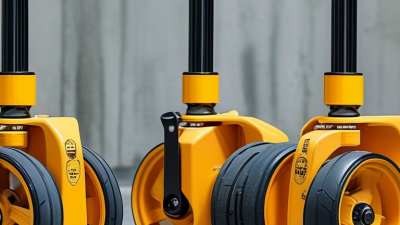
Comparing Brakes, Bearings, and Maintenance Requirements

How to Choose the Right Caster Swivel Wheel?

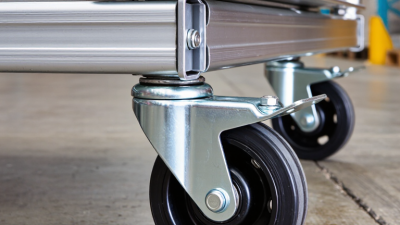
A swivel caster must match the cart, floor, load, and working conditions. The right brake improves control, but it cannot correct an overloaded frame. Start by comparing brake designs. A total-lock brake stops both wheel rotation and swivel movement. It suits carts that must remain still on ramps or uneven floors. A wheel brake stops rolling but allows the caster to pivot. This works better where operators need quick repositioning. Directional locks help long carts travel straight, though tight turns become harder.

Bearing choice affects starting effort, noise, and service life. Ball bearings usually roll smoothly under frequent movement and heavier loads. Plain bearings are simpler and often tolerate dust, moisture, and occasional use. In my workshop experience, a clean bearing can outperform a cheaper, poorly maintained one. Still, I once selected a sealed bearing for a damp area without checking chemical exposure. It failed earlier than expected. That mistake was avoidable.

Tips: Check the actual load, not the advertised maximum. Inspect wheels for flat spots and cuts. Remove hair, thread, and grit from the axle. Tighten loose fasteners, but do not over-tighten them. Test each brake under real floor conditions. Keep a simple inspection record. Small details matter.

How to Choose the Right Caster Swivel Wheel? - Comparing Brakes, Bearings, and Maintenance Requirements

Caster Configuration Typical Wheel Material Typical Load Range per Caster Brake Type and Function Bearing Arrangement Maintenance Requirement Best Use Conditions
Light-duty swivel caster Thermoplastic rubber or polypropylene 40–100 kg Optional side brake; usually locks the wheel only Plain bore or sintered bushing Inspect for hair, dust, and looseness; lubricate only if specified by the manufacturer Office equipment, small carts, displays, and light indoor loads
Medium-duty swivel caster Polyurethane on a polypropylene or steel core 100–250 kg Total-lock brake can stop wheel rotation and swivel movement Delrin, nylon, or other low-friction bushing Clean regularly; check axle nut, mounting bolts, tread wear, and brake engagement Material-handling carts, workstations, retail fixtures, and indoor industrial floors
Heavy-duty swivel caster Cast iron, forged steel, or polyurethane 250–600 kg Foot-operated total lock or directional lock; improves control during positioning Tapered roller bearing or precision ball bearing Periodic greasing may be required; inspect raceways, seals, wheel axle, and frame Industrial carts, machinery, warehouse equipment, and uneven indoor surfaces
Stainless-steel swivel caster Stainless steel, nylon, or corrosion-resistant polyurethane 80–300 kg Stainless total-lock brake; selected for corrosion resistance Sealed precision ball bearing or corrosion-resistant bushing Rinse and dry after exposure to salt or chemicals; inspect seals and fasteners Food-processing areas, laboratories, wash-down zones, and humid environments
High-temperature swivel caster Phenolic resin, high-temperature nylon, or heat-resistant metal 100–400 kg Heat-resistant brake; brake rating must match the operating temperature Heat-resistant plain bearing or high-temperature grease-packed bearing Allow the caster to cool before inspection; use only temperature-rated lubricants Ovens, kilns, bakeries, autoclaves, and other controlled high-heat applications
Shock-absorbing swivel caster Polyurethane or rubber tread with steel or aluminum core 150–500 kg Total-lock or directional brake; helps stabilize equipment on irregular floors Sealed ball bearing with resilient suspension components Inspect spring or elastomer components, fasteners, tread, and bearing seals Medical equipment, sensitive instruments, and carts used on rough floors
Outdoor pneumatic swivel caster Pneumatic rubber tire 100–300 kg Parking brake or total-lock brake; effectiveness depends on tire and floor contact Sealed ball bearing or roller bearing Check tire pressure, punctures, tread condition, bearing noise, and corrosion Outdoor paths, gravel, thresholds, and surfaces where impact absorption is important
Selection note: Choose the load rating with a safety margin. A practical calculation is (total equipment weight ÷ number of casters) × 1.25, because floors may be uneven and the load is not always distributed equally across every caster.