A small wheel can change how a cabinet moves, how a chair feels, and whether a floor stays marked. Furniture Castor selection is not just a matter of appearance. Buyers need to match the wheel, housing, and mounting method to the furniture and its daily use.
This guide compares ten common types, including swivel, fixed, locking, twin-wheel, rubber, nylon, and polyurethane castors. Each has trade-offs. A soft tread may roll quietly on hard flooring, while a harder wheel may suit some workshop or storage settings better. Details matter.
Before choosing, check the rated load, wheel diameter, fitting style, turning clearance, and floor surface. A castor that works well on smooth tile may feel less reliable on a thick rug. Moisture, cleaning routines, and repeated movement can also affect performance. Ask suppliers for clear specifications, and test a sample under realistic conditions when possible.
There is no perfect option. That is worth remembering. Product descriptions can make choices seem simpler than they are, and real floors are rarely identical to showroom floors. The following overview helps global buyers compare practical strengths and limitations, ask more precise questions, and shortlist castors that fit their furniture, operating conditions, and quality expectations.
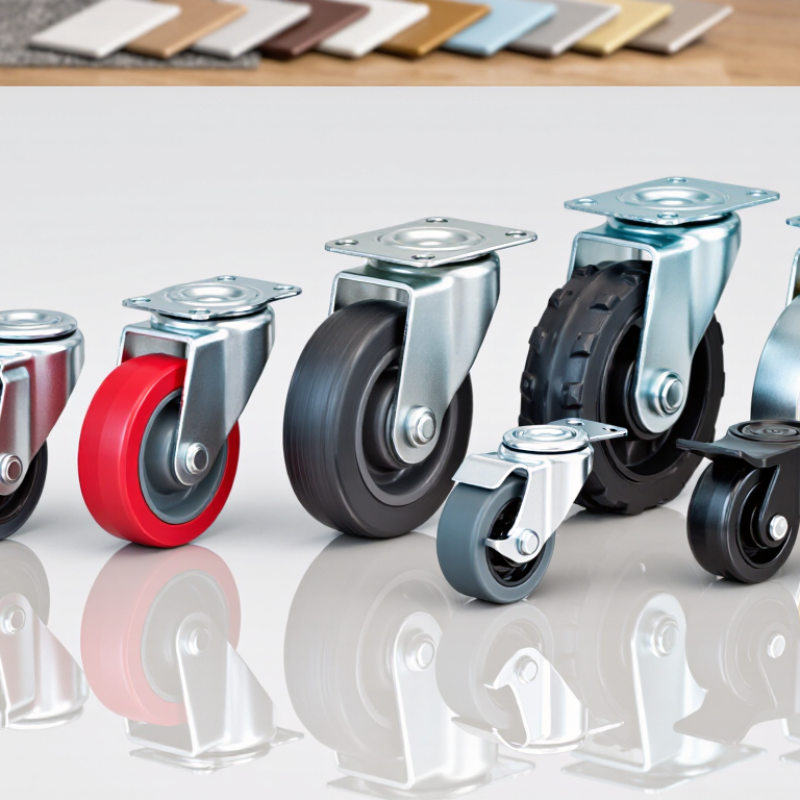
Top 10 Furniture Castor Types for Global Buyers
What Furniture Castors Are and How They Work
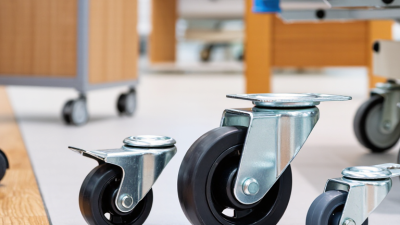
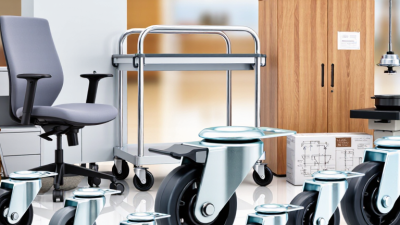
Furniture castors are wheel assemblies attached to chairs, cabinets, carts, and other movable items. A typical castor has a wheel, a supporting housing, and a fixing point, such as a plate or stem. The wheel rolls across the floor, while the housing carries the load. Swivel castors rotate to help furniture change direction; rigid castors travel in a fixed line. Small parts matter. Bearings and wheel materials affect how easily a castor moves and how much noise it makes.
As furniture moves, the wheel tread meets the floor and spreads pressure across a small contact area. Softer treads can be quieter and gentler on hard floors, while harder wheels may roll more easily on carpet. But floor surfaces vary, and there is no universal best choice. A wheel that glides on tile may struggle on a thick rug. Check the castor’s load rating and the furniture’s total weight. Weight may not divide evenly across every wheel, especially on uneven floors.
Tips: Match the wheel to the floor and the furniture’s use. Check mounting dimensions before ordering, and inspect screws or stems periodically for looseness. Test a sample under load when possible. It takes a little effort, but it can reveal noise, wobble, or poor movement before fitting a full set.
Top 10 Furniture Castor Types for Global Buyers
How Furniture Castors Are Classified by Wheel and Mounting Design
Furniture castors are best compared across two features: wheel design and mounting style. The wheel affects floor contact, rolling resistance, noise, and load distribution. The mount determines how securely the castor attaches to a chair, cabinet, or display unit. Grand View Research estimated the global furniture market at USD 766.2 billion in 2023, underscoring the scale of products that may rely on suitable mobility components. That figure is not a castor-market estimate, but it shows why clear specifications matter.
Wheel options include single or twin wheels, with materials such as nylon, rubber, and polyurethane. Hard wheels often roll easily on carpet; softer treads can help reduce noise and marking on hard floors. Twin wheels spread loads across a wider contact area, though they may collect hair or dust. Swivel castors turn freely; fixed castors track in one direction. Braked versions add control. ISO 22878 describes test methods for castors and wheels, useful when comparing performance claims. Real floors still vary.
Mounting types include top plates, threaded stems, grip-ring stems, and socket fittings. Plate mounts suit many furniture bases with a flat, drilled surface. Stems fit prepared sockets, but dimensions must match closely. Tips: Check load per castor, not just total load. Include stored contents and uneven weight. Then test the chosen wheel on the actual floor; a paper specification can miss a small, stubborn wobble.
| Furniture Castor Type | Wheel Design | Mounting Design | Common Applications | Selection Considerations |
|---|---|---|---|---|
| 1. Single-Wheel Swivel Plate Castor | One wheel in a fork; the wheel rolls while the fork rotates to change direction. | Flat top plate secured to the furniture base with fasteners. | Cabinets, storage units, worktables, and other furniture with a suitable flat mounting surface. | Check plate dimensions, fixing-hole layout, wheel diameter, load capacity, and clearance for swivelling. |
| 2. Twin-Wheel Swivel Plate Castor | Two smaller wheels share a central axle, creating a compact rolling assembly. | Flat top plate attached to the furniture base. | Office chairs, drawer units, and light furniture where compact movement is useful. | Confirm the castor is intended for the furniture’s total load and that the wheel material suits the floor. |
| 3. Hooded Twin-Wheel Castor | Twin wheels sit partly inside a cover or hood that shields the wheel assembly. | Commonly supplied with a stem; some designs use a plate mount. | Office chairs and furniture where a more enclosed, finished appearance is preferred. | Match the stem or plate connection to the furniture, and check that the hood does not rub against the base. |
| 4. Rigid Plate Castor | One wheel runs in a fixed fork and rolls in a straight line without swivelling. | Flat top plate secured to the furniture base. | Furniture that needs controlled, straight-line travel, often when paired with swivel castors. | Plan castor positions carefully: a rigid castor does not turn to follow changes in direction. |
| 5. Threaded-Stem Swivel Castor | Usually a single or twin wheel in a swivel fork. | Threaded stem screws into a matching threaded insert or socket in the furniture leg or base. | Furniture with prepared threaded inserts, including some chairs and mobile storage units. | Verify thread diameter, pitch, usable stem length, and the strength of the insert; do not assume threads are interchangeable. |
| 6. Grip-Ring Stem Castor | Typically a compact single or twin wheel with a swivel fork. | Straight stem with a retaining ring that fits into a compatible socket or receptacle. | Office chairs and furniture designed for press-fit stem installation. | Measure the stem and confirm the socket is designed for a grip-ring connection before ordering. |
| 7. Expanding-Stem Castor | Commonly a swivel wheel assembly; the wheel may be single or twin. | Stem includes an expanding sleeve or plug that tightens inside a hollow furniture leg. | Furniture with hollow tubular legs, where a suitable internal fit is available. | Check the leg’s internal diameter and shape, along with the expansion range and retention method. |
| 8. Bolt-Hole Mount Castor | Available with different wheel and fork configurations, including swivel designs. | Attached through a central mounting hole using a bolt or compatible fixing. | Furniture bases with a reinforced hole or a purpose-designed central mounting point. | Confirm the hole size, fastener arrangement, base strength, and whether the mounting point prevents rotation as intended. |
| 9. Socket-Mounted Stem Castor | Often uses a compact single or twin wheel. | Castor stem inserts into a separate socket fixed to the furniture; the socket may suit a particular leg or base design. | Furniture where a socket provides a replaceable or adapted connection between the castor and the structure. | Check compatibility among the castor stem, socket, and furniture attachment; sockets and stems must match in size and style. |
| 10. Ball-Wheel Furniture Castor | A ball-shaped wheel rolls within a housing, allowing movement in multiple directions. | Typically fitted in a housing with a plate or other design-specific attachment. | Some compact furniture and display applications that require low-profile, multidirectional movement. | Review the intended load, floor surface, and rolling behaviour; ball-wheel designs may perform differently from conventional wheeled castors. |
Swivel castors rotate freely, helping a chair or cabinet turn in tight spaces. Rigid castors travel in a straight line and suit furniture moved along clear paths. Brake castors stop the wheel from rolling, while total-lock castors secure both the wheel and swivel action. Twin-wheel castors spread contact across two small wheels, which can make light furniture easier to steer. Small details matter.
Single-wheel castors use one wheel and often fit compact furniture. Stem-mount castors attach through a socket or threaded opening; check the stem diameter before ordering.
Plate-mount castors fasten beneath furniture with a flat plate and screws. Rubber castors can reduce noise on hard floors, though softer compounds may mark some surfaces. Polyurethane castors usually resist wear and roll smoothly, but their hardness can feel less forgiving on uneven flooring.
For global buyers, compare mounting dimensions, wheel diameter, floor type, and load rating—not just appearance. A four-castor cabinet may not share its weight evenly, especially when one corner holds a heavy drawer. Allow a sensible capacity margin, and test the brake where users can reach it. One easy-to-miss detail: a brake may be awkward to operate when furniture sits close to a wall.
Matching castors means weighing load, floor surface, and how often furniture moves. For carpet, larger wheels roll more easily over pile and door thresholds. On tile or finished wood, softer polyurethane or rubber wheels can reduce noise and help protect the surface. Hard nylon wheels suit heavy loads on firm floors, but may mark delicate finishes. Swivel castors help tight turns; fixed castors track straighter over longer routes. Braked options matter for carts or chairs that must stay put. Size matters. A small wheel can snag on a grout line or cable cover.
The UK Health and Safety Executive’s 2022/23 workplace injury statistics attribute about 30% of non-fatal injuries to slips, trips, or falls on the same level. That is not a castor-specific finding, but it underlines why rolling furniture should move predictably and park securely. Check the maker’s rated capacity, then divide the total load across the castors; uneven floors can leave one wheel carrying more than expected. I still see buyers choose by price alone. It often costs more later.
Tips: Test a loaded piece on the actual floor, including thresholds and tight corners. Look for floor scuffs, wheel chatter, and drift when parked. If the room is humid or exposed to cleaning chemicals, confirm material compatibility before ordering.
HSE, Health and Safety at Work: Summary Statistics for Great Britain, 2023.
A caster’s stated capacity is only a starting point. Estimate the loaded cart’s total weight, then divide by three rather than four when it has four casters. Uneven floors can leave one wheel partly unloaded. Add realistic dynamic loads from thresholds, sudden stops, and frequent turns. A soft polyurethane wheel may roll quietly on hard flooring, while a larger diameter can cross small floor gaps more easily. Neither choice suits every environment. EU-OSHA’s 2019 report, drawing on the 2015 European Working Conditions Survey, found that 60% of workers reporting work-related health problems identified musculoskeletal disorders as their most serious problem. Caster selection cannot solve ergonomics alone, but lower rolling resistance and dependable brakes can support safer handling.
Tips: Ask suppliers for load-rating test methods, material specifications, brake details, and traceable batch records. Confirm whether ratings apply to static or moving loads. Test samples on your actual floor, with the real payload and route. A polished datasheet can still disappoint.
For international sourcing, specify wheel diameter, mounting dimensions, operating temperature, floor type, and exposure to moisture or cleaning agents. Request documentation against standards relevant to the intended application and destination market; do not treat a generic certificate as proof of suitability. Check packaging, replacement-wheel availability, and lead times before approving a large order. Small details matter. A brake that locks the wheel but not the swivel may still let a cart drift on a slope. Test that behavior rather than assuming the label tells the whole story.