head_newbanner

What Are the Top 10 Types of Stainless Casters?

Stainless Casters are built for environments where cleanliness, corrosion resistance, and dependable movement matter. They commonly appear in commercial kitchens, food-processing plants, laboratories, hospitals, and outdoor equipment. However, stainless construction alone does not guarantee the right performance. Wheel material, load capacity, mounting style, floor condition, and operating temperature all influence the final choice.

This guide examines the top 10 types of stainless casters used in demanding applications. It covers swivel casters, rigid casters, locking swivel models, plate-mounted casters, stem casters, threaded stem designs, shock-absorbing casters, high-temperature casters, hygienic casters, and heavy-duty stainless casters. Each type offers a different balance of maneuverability, stability, clearance, and maintenance needs. Small details matter. A loose brake can affect safety. A soft wheel may protect tile but wear quickly under heavy loads. A narrow fork may collect debris in a washdown area.

In practical equipment selection, manufacturers’ load ratings and installation instructions should guide the final decision. Stainless steel grades also deserve attention, since 304 and 316 stainless may perform differently in salty or chemically exposed environments. No list is perfect. The best caster depends on the equipment, workplace, cleaning routine, and expected service life. This overview provides a reliable starting point, while real-world testing remains valuable before large-scale installation.
What Are the Top 10 Types of Stainless Casters?

Stainless Caster Design, Materials, and Classification Standards

What Are the Top 10 Types of Stainless Casters?

Stainless casters are not one product family. Their design changes with load, floor condition, temperature, and cleaning routines. The ten common types include rigid, swivel, braked swivel, twin-wheel, shock-absorbing, leveling, high-temperature, conductive, pneumatic, and heavy-duty casters. Each type controls movement differently. A rigid caster tracks straight, while a swivel model turns around a vertical kingpin. Braked designs add parking control, but brake performance depends on floor contact and wheel material.

Material selection begins with corrosion exposure. Austenitic stainless steel, especially 304 and 316 grades, is widely considered for wet, saline, or chemical environments. The International Stainless Steel Forum reported approximately 58.4 million tonnes of global crude stainless steel production in 2023. That scale supports broad material availability, but it does not make every alloy suitable for every cleaning agent. It is a common mistake. Weld quality, bearing protection, and surface finish can matter as much as the steel grade.

Classification should follow measurable performance. ISO 22883 addresses caster and wheel test methods, including load and durability evaluation. EN 12527 and EN 12532 provide additional guidance for testing and application performance. A caster’s rated load should reflect four wheels, uneven floors, shock, and continuous duty. Static capacity alone is insufficient. In practice, a 316 housing may resist corrosion well, yet a poorly sealed bearing can fail first. The boundary between “stainless” and “reliable” is not always clean. Testing the actual floor, wash cycle, and load pattern remains the more honest design approach.

Top 10 Types of Stainless Casters

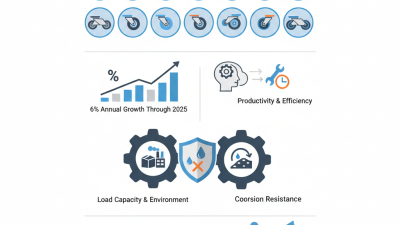
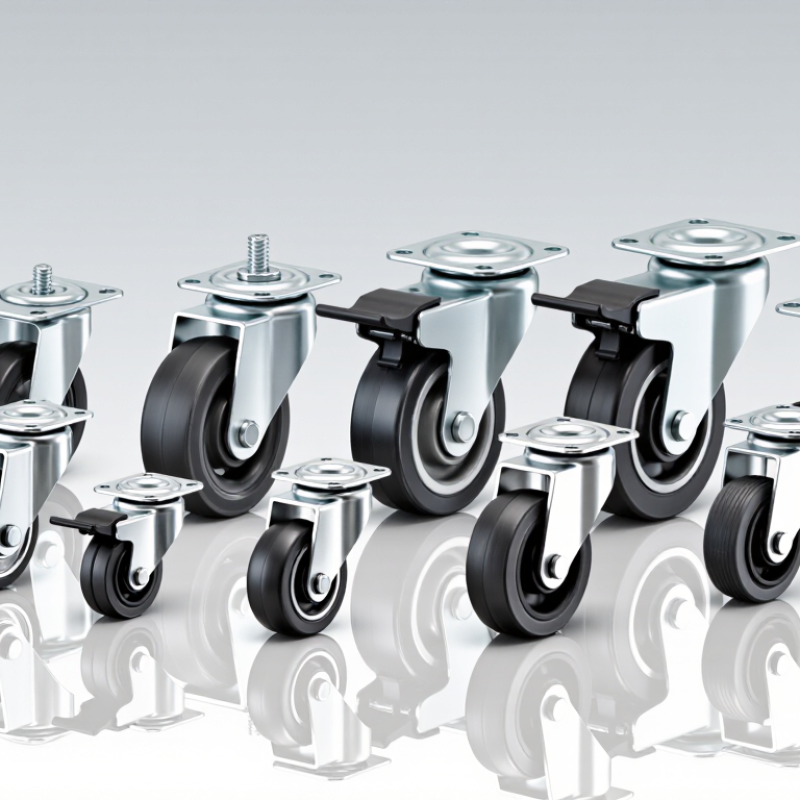
Stainless casters are commonly classified by mounting design, swivel control, braking system, wheel material, and application environment. The chart shows indicative load ratings per caster for common stainless-steel configurations; actual capacity depends on wheel diameter, tread material, bearing design, and floor conditions.

Design note: Rigid casters provide directional stability, while swivel, brake, total-lock, shock-absorbing, high-temperature, hygienic, and pneumatic designs address different mobility, safety, sanitation, and operating-temperature requirements. Stainless steel is commonly selected for corrosion resistance in wet, washdown, food-service, laboratory, and medical environments.

Top Ten Stainless Caster Types by Mounting Configuration

What Are the Top 10 Types of Stainless Casters?

Top Ten Stainless Caster Types by Mounting Configuration

Mounting configuration determines how securely a stainless caster meets its equipment. In practical installations, ten common types deserve attention. They include swivel top-plate, rigid top-plate, directional-lock top-plate, and total-lock top-plate casters. Stem-mounted options include threaded-stem, grip-ring-stem, expanding-stem, and square-stem designs. Bolt-hole and weld-on casters complete the group. Each configuration suits a different frame, tube, or machine base.

A top plate spreads loads across four bolts, making it useful for carts and processing tables. A rigid plate improves tracking on straight paths. Directional locks help long equipment move steadily, while total locks secure both wheel and swivel movement.

Threaded stems fit tapped holes and allow controlled height adjustment. Grip-ring stems suit tubular legs and quick assembly. Expanding stems fill hollow tubes, though poor tube measurements can cause looseness.

Bolt-hole casters use a single central bolt and work well where space is limited. Square stems resist rotation inside matching sockets. Weld-on models provide a permanent attachment for heavy frames, but installation requires careful alignment. Stainless steel helps resist moisture, cleaning chemicals, and surface corrosion. Still, it is not maintenance-free. Check fasteners, welds, wheel wear, and swivel play regularly. A perfect classification is difficult because suppliers may name similar mounts differently. Verify dimensions before ordering. Small errors matter.

Top Ten Stainless Caster Types by Wheel Material and Performance

Stainless casters are selected by wheel material, load behavior, and operating environment. A 2024 industrial caster market report estimates steady market growth through 2030, driven by food processing, healthcare, logistics, and clean manufacturing. However, market size does not determine the best wheel. Floor conditions usually matter more.

The ten leading types are stainless casters with polyurethane, nylon, polypropylene, rubber, phenolic, cast iron, aluminum, thermoplastic rubber, pneumatic, and stainless steel wheels.

Polyurethane wheels provide quiet rolling and strong abrasion resistance.

Nylon wheels handle moisture and many chemicals well.

Polypropylene wheels suit light loads and economical equipment.

Rubber wheels protect delicate floors, but they may develop higher rolling resistance.

Phenolic wheels tolerate heat and heavy static loads.

Cast iron wheels support extreme loads, yet they can mark concrete.

Aluminum wheels reduce weight.

Thermoplastic rubber improves grip and noise control.

Pneumatic wheels absorb shocks on uneven surfaces.

Stainless steel wheels offer excellent corrosion resistance and high-temperature stability.

Very few wheels perform perfectly. The ranking is not absolute. A technical review from the Food and Agriculture Organization emphasizes hygienic design, cleanability, and corrosion control in food facilities. That supports stainless construction, but wheel tread still needs careful selection.

In my field experience, a polyurethane wheel can feel ideal on smooth tile and disappointing on rough thresholds.

ISO 22883 also highlights caster testing for load capacity, rolling resistance, and endurance. Buyers should compare those test conditions with real use. Published ratings can mislead. Temperature, floor joints, cleaning chemicals, and uneven loading often change the result.

Specialized Stainless Casters for Hygiene, Heat, and Corrosive Conditions

What Are the Top 10 Types of Stainless Casters?

Specialized stainless casters support hygiene, heat, and corrosive conditions. The ten main types include fixed, swivel, braked swivel, shock-absorbing, high-temperature, hygienic, washdown, corrosion-resistant, conductive, and heavy-duty casters. Each design solves a different movement problem. Stainless steel also offers strong resistance to moisture, cleaning chemicals, and food acids.

The International Stainless Steel Forum reported global stainless steel production at about 58.4 million tonnes in 2023. That scale reflects stainless steel’s continuing industrial importance. However, material choice alone does not guarantee sanitation. EHEDG guidance emphasizes cleanable surfaces, limited crevices, and suitable drainage. Hygienic casters usually use sealed bearings, smooth wheel cores, and rounded frames. Washdown models need protection against repeated water exposure. High-temperature casters require heat-stable wheels and lubricants. Ordinary grease may fail beside ovens. Conductive versions help control static near sensitive equipment, but grounding still needs verification.

Tips: Match the caster to the cleaning method, floor temperature, load, and chemical exposure. Check wheel hardness before choosing a smooth epoxy floor. A softer wheel may roll quietly but wear faster. A harder wheel may mark floors. This trade-off is easy to overlook. The U.S. FDA Food Code 2022 also stresses cleanable, corrosion-resistant equipment surfaces. Inspect swivel races and seals regularly. Even premium stainless casters can develop hidden corrosion after harsh cleaning cycles.

What Are the Top 10 Types of Stainless Casters? - Specialized Stainless Casters for Hygiene, Heat, and Corrosive Conditions
No. Stainless Caster Type Typical Wheel Material Stainless Construction Typical Operating Temperature Typical Load Capacity per Caster Best-Suited Conditions and Applications Key Performance Characteristics
1 304 Stainless Steel Rigid Caster Polyurethane, nylon, rubber, or stainless steel 304 stainless mounting plate, fork, and axle components Approximately −20 to 180°C
(−4 to 356°F), depending on wheel material
100–600 kg
(220–1,320 lb)
Food-processing areas, commercial kitchens, laboratory equipment, material-handling carts, and general washdown environments Provides straight-line movement, good general corrosion resistance, and high structural rigidity. More economical than higher-alloy stainless constructions.
2 316 Stainless Steel Swivel Caster Polyurethane, nylon, phenolic resin, or rubber 316 stainless swivel raceway, fork, plate, and fasteners Approximately −30 to 260°C
(−22 to 500°F), depending on wheel, bearing, and lubricant
100–700 kg
(220–1,540 lb)
Coastal facilities, chemical-processing areas, pharmaceutical plants, and locations exposed to chlorides or saline moisture Offers improved resistance to chlorides and many chemicals compared with 304 stainless steel. The swivel design allows multi-directional movement.
3 316L Hygienic Caster Solid polyurethane, nylon, or elastomeric tread 316L stainless steel with polished or electropolished surfaces, enclosed raceways, and sealed components Approximately −20 to 120°C
(−4 to 248°F), depending on seals and wheel compound
80–500 kg
(175–1,100 lb)
Hygienic production rooms, dairy and beverage processing, medical equipment, cleanrooms, and pharmaceutical manufacturing Low-carbon 316L stainless steel supports corrosion resistance and cleanability. Crevice-reduced geometry and sealed races help limit soil and moisture retention.
4 High-Temperature Stainless Caster Phenolic resin, forged steel, stainless steel, or high-temperature polymer 304 or 316 stainless fork, plate, axle, and heat-resistant bearings Approximately 150 to 260°C
(302 to 500°F), with intermittent ratings sometimes higher
100–800 kg
(220–1,760 lb)
Ovens, bakeries, industrial washers, autoclave-loading equipment, heat-treatment areas, and hot carts Uses heat-stable wheel compounds and high-temperature grease or dry-running bearings. Load capacity normally decreases as temperature rises.
5 Stainless Phenolic Caster Heat-resistant phenolic resin 304 or 316 stainless steel fork and mounting hardware Approximately −20 to 260°C
(−4 to 500°F), subject to load and exposure duration
100–900 kg
(220–1,980 lb)
Hot ovens, bakery racks, industrial furnaces, and applications requiring low rolling resistance at elevated temperatures High heat tolerance, good dimensional stability, and resistance to many oils and solvents. Phenolic wheels can be noisy and may mark delicate floors.
6 Stainless Nylon Caster Solid nylon or glass-filled nylon 304 or 316 stainless frame, swivel head, axle, and fasteners Approximately −30 to 90°C
(−22 to 194°F)
100–700 kg
(220–1,540 lb)
Wet environments, food-service equipment, clean production areas, and applications requiring low water absorption Lightweight, non-marking, resistant to water and many chemicals, and easy to wash down. Nylon may be noisier and less shock-absorbing than rubber or polyurethane.
7 Stainless Polyurethane Caster Polyurethane tread over a nylon, aluminum, or steel core 304 or 316 stainless fork and mounting plate with sealed bearings Approximately −30 to 100°C
(−22 to 212°F)
100–1,000 kg
(220–2,200 lb)
Hospitals, food plants, warehouses, clean manufacturing, and applications requiring quiet movement and floor protection Quiet operation, good abrasion resistance, high load capacity, and lower floor marking than many rubber wheels. Performance depends strongly on tread hardness and chemical exposure.
8 Stainless Silicone-Rubber Caster High-temperature silicone rubber 304 or 316 stainless fork, plate, and corrosion-resistant bearings Approximately −40 to 230°C
(−40 to 446°F), depending on wheel design
50–400 kg
(110–880 lb)
Hot-food equipment, bakery carts, cleanrooms, medical environments, and areas requiring soft, non-marking contact Maintains flexibility across a wide temperature range, rolls quietly, and protects floors. It generally has lower load and abrasion resistance than polyurethane or metal wheels.
9 Stainless PEEK- or High-Performance Polymer Caster PEEK or another high-temperature engineering polymer 316 stainless fork, axle, and sealed or high-temperature bearing arrangement Approximately −40 to 250°C
(−40 to 482°F), formulation-dependent
100–600 kg
(220–1,320 lb)
Medical sterilization equipment, semiconductor facilities, chemical-processing areas, and high-temperature clean applications High resistance to heat, wear, radiation, and many chemicals. These casters are typically more expensive and may transmit more vibration than elastomeric wheels.
10 All-Stainless Steel Caster Machined or forged stainless steel wheel 316 or 304 stainless wheel, fork, plate, axle, and hardware Approximately −60 to 300°C
(−76 to 572°F), depending on bearings and lubrication
200–1,500 kg
(440–3,300 lb)
Heavy industrial equipment, corrosive washdown zones, metal-processing areas, and applications requiring maximum structural durability Very high load capacity, strong resistance to cuts and severe impact, and excellent temperature capability. It is typically noisy and requires suitable flooring to avoid damage.
Performance ranges are typical engineering values rather than universal limits. Actual capacity and temperature ratings depend on wheel diameter, tread hardness, bearing type, mounting method, duty cycle, floor condition, chemical concentration, and exposure time.

How to Select the Best Stainless Caster for Each Application

What Are the Top 10 Types of Stainless Casters?

How to Select the Best Stainless Caster for Each Application

Stainless casters are not interchangeable. The best choice depends on load, flooring, moisture, temperature, and movement frequency. The World Stainless Association reported 58.4 million tonnes of stainless steel production in 2023. That scale reflects its importance in hygienic and corrosive environments. A practical shortlist includes rigid, swivel, total-lock, directional-lock, plate-mount, stem-mount, twin-wheel, shock-absorbing, high-temperature, and hygienic casters. However, wheel material often matters more than the stainless housing.

Begin with the maximum working load. Divide it by three, not four, because uneven floors may leave one caster unloaded. Then add a safety margin for impacts and poor handling. ANSI/ICWM-2018 provides recognized caster and wheel performance tests, but laboratory ratings cannot reproduce every site condition. That is easy to forget. For wet cleaning, 304 stainless may be suitable; chloride exposure often justifies 316 stainless. The final choice still needs corrosion testing.

Use rigid casters for straight travel and swivel models for tight turns. Total-lock versions secure both wheel rotation and swivel movement. Directional locks improve control in long aisles. Twin-wheel designs carry higher loads within limited height. Shock-absorbing models protect fragile equipment on uneven floors. High-temperature casters need heat-rated wheels and lubricants. Hygienic designs should support drainage and easy cleaning, especially where NSF/ANSI 2 requirements apply. A small pilot test is wise. Real floors can be surprisingly unforgiving.