
Zhongshan Xiaolan Town Jianbin Hardware Products Factory
lndustry leading caster manufacturer
Top 10 Types of Furniture Castor Wheels for Global Buyers
Choosing the right Furniture Castor Wheels is not a minor purchasing detail. It affects movement, stability, floor protection, noise, and product life. Global buyers often compare wheel diameter, load capacity, braking systems, materials, and mounting styles. Yet catalog specifications can hide practical problems. A wheel rated for 100 kilograms may perform poorly on uneven flooring or under repeated shock.
Caster engineer Michael D. Schaefer explains, “A wheel is only as useful as the floor it meets.” This simple observation deserves attention. A polyurethane castor may glide quietly across polished concrete, while a hard nylon wheel can leave marks or create noise on sensitive surfaces. Threaded stems, plate mounts, twin wheels, locking brakes, and shock-absorbing designs each solve different furniture needs. The best choice depends on the furniture’s weight, center of gravity, movement frequency, and working environment.
This guide examines ten common types of Furniture Castor Wheels for global buyers. It considers real purchasing concerns, including installation space, moisture exposure, rolling resistance, and replacement access. Small details matter. A loose mounting plate can ruin an otherwise strong design. A brake may stop rotation but not swiveling. That distinction is easy to miss.
There is no universal winner. Even experienced buyers sometimes prioritize appearance over performance. That mistake can be expensive. By comparing each castor type carefully, purchasing teams can make more reliable decisions and ask better questions of suppliers. The goal is not simply smoother movement. It is safer, quieter, longer-lasting furniture.
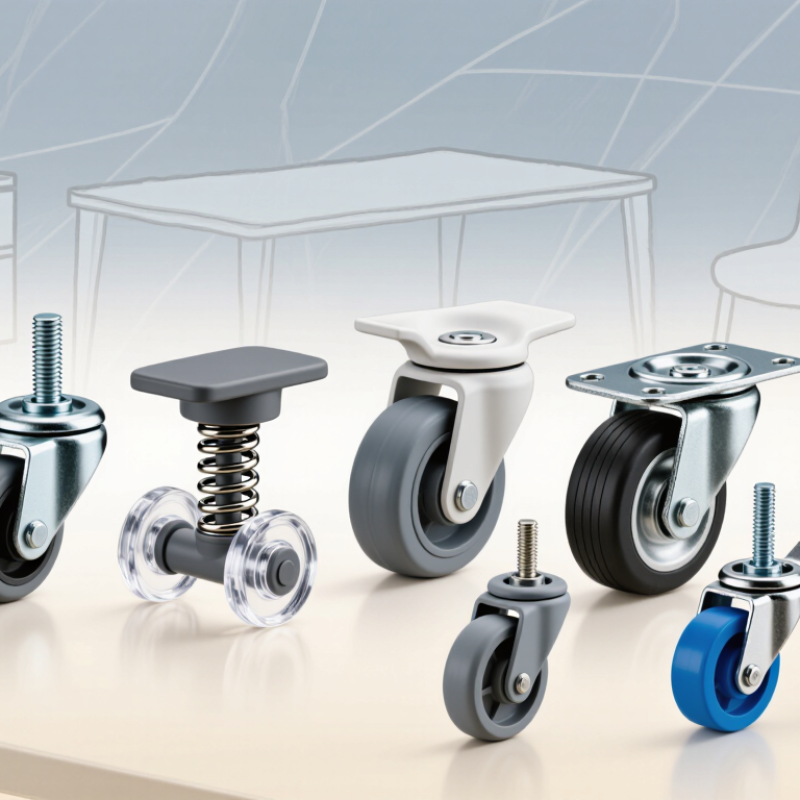
Furniture Castor Wheels: Purpose, Structure, and Key Terminology
Furniture castor wheels do more than move a chair, cabinet, or service trolley. They transfer weight, protect flooring, and control movement in crowded spaces. A castor usually includes a wheel, axle, bearing, fork, and mounting plate or stem. Swivel castors turn freely, while rigid castors move in one direction. Locking models can secure both rolling and swiveling.
Wheel material affects noise, grip, and floor contact. Soft tread wheels suit wood, vinyl, and other delicate surfaces. Hard wheels may roll easily on carpets or rough flooring. Twin-wheel castors spread the load and often improve stability. Threaded stems fit prepared sockets, while plate mounts need screws and a flat fixing area. Check dimensions carefully. A small mismatch can cause wobbling, uneven wear, or unsafe loading.
Tips: Match the castor to the real working load, not only the product label. Divide the total furniture weight by three when four wheels are used, because floors are rarely perfectly even. Measure mounting height, wheel diameter, and plate holes before ordering. Test turning, braking, and noise on the actual floor. A perfect specification sheet may still fail in daily use. I have seen attractive wheels collect dust quickly under low cabinets. Clearance matters more than appearance.
Top 10 Types of Furniture Castor Wheels for Global Buyers - Furniture Castor Wheels: Purpose, Structure, and Key Terminology
| Castor Type | Basic Structure | Typical Mounting Method | Wheel Material | Swivel / Locking Function | Typical Load per Castor | Recommended Floor Surfaces | Common Furniture Applications | Key Terminology and Buying Considerations |
|---|---|---|---|---|---|---|---|---|
| Single-Wheel Swivel Castor | One wheel mounted in a fork with a vertical swivel raceway. | Top plate, stem, or threaded stem. | TPR, polyurethane, nylon, or rubber. | 360° swivel Optional total-lock or wheel-lock brake. |
Approximately 25–80 kg | Hard floors, laminate, tile, and low-pile carpet, depending on tread material. | Office chairs, small cabinets, mobile tables, storage units, and light display furniture. | Swivel raceway: bearing path that enables rotation. Check wheel diameter, mounting height, plate size, and brake access. |
| Twin-Wheel Castor | Two closely spaced wheels share one fork, distributing the load over a wider contact area. | Grip-ring stem, threaded stem, or top plate. | Polyurethane, nylon, or polypropylene. | 360° swivel Wheel brake or total-lock brake available. |
Approximately 30–100 kg | Hard floors and carpet; twin wheels can reduce localized floor pressure. | Task chairs, office seating, filing units, bedside tables, and compact indoor furniture. | Twin wheel: two-wheel configuration. Confirm the combined rated load and whether the rating applies to one castor or a complete set. |
| Rigid Plate Castor | One wheel fixed in a non-swiveling fork attached to a horizontal mounting plate. | Four-bolt or two-bolt top plate. | Rubber, polyurethane, nylon, or steel-core composite. | Fixed direction No swivel or steering function. |
Approximately 40–150 kg | Hard floors, workshop floors, and carpet when straight-line movement is required. | Long cabinets, movable benches, platform furniture, and furniture bases used in straight runs. | Rigid castor: improves tracking but requires a separate swivel castor for turning. Match plate dimensions and hole spacing. |
| Threaded-Stem Swivel Castor | Swivel fork with a threaded stud that screws into a threaded insert or mounting socket. | Threaded stem, commonly metric or imperial depending on the market. | TPR, polyurethane, nylon, or rubber. | 360° swivel Optional wheel brake. |
Approximately 25–75 kg | Hard indoor flooring and carpet, selected according to tread softness. | Office chairs, stools, ottomans, lightweight tables, and modular seating. | Thread size: verify diameter and pitch. Also check usable stem length, thread engagement, and the strength of the furniture insert. |
| Grip-Ring Stem Castor | Swivel fork with a stem carrying a retaining ring that locks into a pre-drilled socket. | Grip-ring stem inserted into a compatible mounting socket. | Nylon, polyurethane, TPR, or rubber. | 360° swivel Brake versions are available for many designs. |
Approximately 25–70 kg | Hard floors and carpet in indoor applications. | Office chairs, light cabinets, carts, and ready-to-assemble furniture. | Grip ring: retaining ring that holds the stem in the socket. Confirm stem diameter, ring position, socket depth, and insertion force. |
| Expanding-Stem Castor | Swivel castor fitted with a stem that expands inside a hollow furniture leg or tube. | Expandable rubber, plastic, or metal sleeve inserted into a tubular leg. | Polyurethane, nylon, TPR, or rubber. | 360° swivel Brake option depends on the design. |
Approximately 30–100 kg | Hard indoor floors and carpet. | Metal-frame chairs, tubular-leg tables, portable racks, and hospitality furniture. | Expanding plug: sleeve grips the inside of a tube. Measure internal tube diameter and wall condition before selection. |
| Total-Lock Brake Castor | Swivel castor with an integrated brake that locks both wheel rotation and swivel movement. | Top plate, threaded stem, or other stem mounting. | Polyurethane, TPR, rubber, or nylon. | Wheel + swivel lock Usually foot-operated. |
Approximately 40–125 kg | Hard floors and carpet; soft treads help reduce marking. | Medical-style furniture, workstations, serving tables, display units, and mobile storage. | Total lock: prevents rolling and swiveling. Distinguish it from a wheel-only brake, which may still allow the castor to pivot. |
| Soft-Tread Floor-Safe Castor | Swivel or rigid fork fitted with a resilient tread designed to reduce noise and surface marking. | Plate, threaded stem, grip-ring stem, or expanding stem. | TPR, polyurethane, or non-marking rubber. | Swivel or rigid Brake options vary by configuration. |
Approximately 30–100 kg | Wood, engineered wood, laminate, tile, vinyl, and other finished hard floors. | Premium seating, residential furniture, conference tables, and interior display fixtures. | Non-marking tread: helps reduce black streaks but does not guarantee zero marking. Check hardness, color stability, and chemical resistance. |
| Heavy-Duty Furniture Castor | Larger wheel and reinforced fork or plate designed for higher loads and frequent movement. | Heavy-duty top plate or reinforced stem. | Polyurethane, steel-core polyurethane, nylon, or rubber. | Swivel, rigid, or braked High-load brake options available. |
Approximately 100–300 kg | Concrete, tile, industrial flooring, and other firm surfaces; wheel material determines floor protection. | Large storage cabinets, commercial worktables, movable partitions, equipment furniture, and heavy display units. | Load rating: calculate total furniture weight plus contents. A common practice is to divide the total by three when four castors are fitted to allow for uneven floors and load distribution. |
| Concealed or Recessed Castor | Low-profile castor partially enclosed inside a furniture base or mounting housing. | Recessed plate, internal bracket, or specially shaped mounting socket. | Nylon, polyurethane, TPR, or rubber. | Swivel or directional Some designs include a concealed brake. |
Approximately 25–100 kg | Hard floors and low-pile carpet, subject to clearance and wheel tread. | Modern cabinets, sliding storage units, designer tables, plinth furniture, and compact interiors. | Mounting height: the vertical distance from the mounting surface to the floor. Check base clearance, wheel exposure, service access, and installation space. |
Related Posts
-
Why Choose Furniture Castor Wheels for Global Sourcing?
-

What is Heavy Caster Wheels Benefits and Best Options?
-

Exploring the Versatile Applications of Best Furniture Castors in Modern Workspace Design
-
How to Choose the Best Furniture Castor Wheels for Your Home or Office
-

Understanding the Challenges of Heavy Caster Wheels in Industrial Applications
-

What is Iron Castor Wheels and Why You Should Choose Them for Your Projects