
Zhongshan Xiaolan Town Jianbin Hardware Products Factory
lndustry leading caster manufacturer
What Are the Best Heavy Castor Wheels from China?
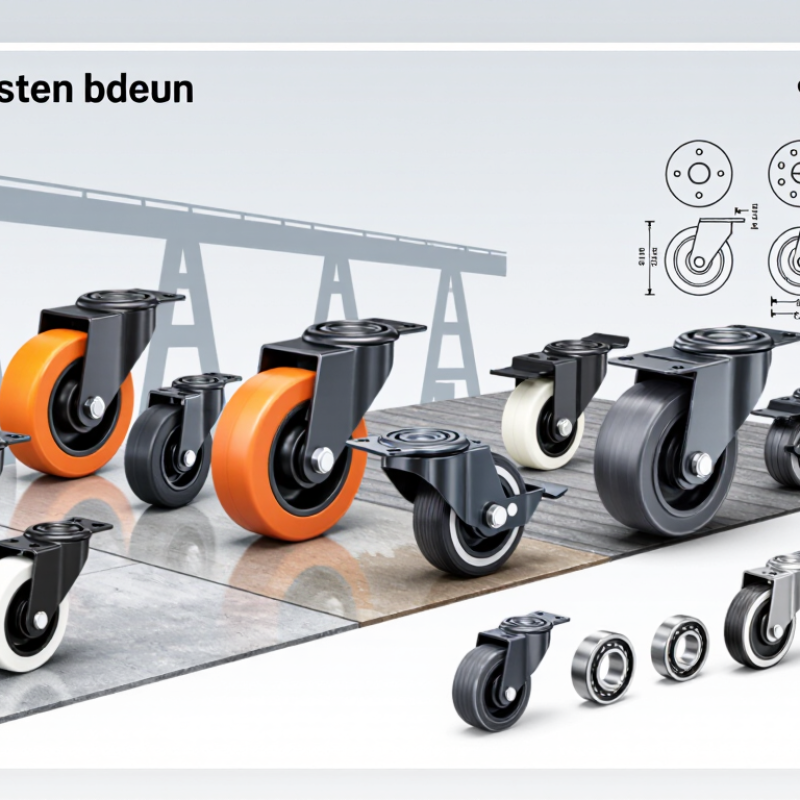
Choosing Heavy Castor Wheels from China starts with the job, not the catalog. A wheel moving a loaded machine across smooth concrete faces different demands from one crossing workshop thresholds each day. Capacity, wheel diameter, tread material, bearing type, and mounting plate all affect performance. Small details matter.
A 200 mm polyurethane wheel may roll quietly on a factory floor, while a harder nylon tread can suit some heavier loads. But neither choice is automatically right. Check the rated capacity per wheel and account for uneven load distribution, frequent turning, and floor conditions. A product listing rarely explains every operating limit.
When comparing Chinese manufacturers, ask for dimensional drawings, material specifications, load-test information, and samples where practical. Inspect welds, swivel movement, brake engagement, and the plate holes against your equipment. Confirm that stated test results apply to the exact model being quoted. Clear answers are a useful sign; vague claims deserve follow-up.
Price alone can mislead. So can polished photos. A dependable supplier should explain trade-offs, provide consistent product details, and discuss packaging and delivery expectations. Even then, a sample may not reveal years of wear. That uncertainty is worth acknowledging. The best Heavy Castor Wheels are the ones whose verified specifications match your real working conditions, not simply the boldest numbers on a product page.
What Heavy-Duty Castor Wheels Are and How They Work
What Are the Best Heavy Castor Wheels from China?
What Heavy-Duty Castor Wheels Are and How They Work
Heavy-duty castor wheels support equipment and help it move across floors. A typical assembly includes a wheel, axle, bearing, and metal fork. A swivel unit turns around a vertical stem or mounting plate, while a fixed unit travels in a straight line. Together, these parts guide carts, machinery, and storage racks through work areas. Small details matter. Bearing quality affects rolling effort, and wheel material changes grip, noise, and floor wear.
The stated load capacity is only part of the decision. Check whether it applies to one wheel, and consider how weight is distributed across the full set. Uneven floors, thresholds, and frequent turning add stress. A wheel that rolls smoothly on concrete may feel different on tile or a rough loading bay. Real floors are rarely perfect. That detail is easy to overlook when choosing from specifications alone.
Tips: Measure the mounting plate and wheel diameter before ordering. Match the wheel tread to the floor, then test a loaded unit over the actual route. Listen for rattling and watch for wobble. A brief test can reveal problems a catalog figure will not.
| Wheel Type | Typical Wheel Diameter | Indicative Load Capacity per Caster | How It Works | Best-Suited Conditions | Key Trade-Off |
|---|---|---|---|---|---|
| Polyurethane on iron or steel core | 100–250 mm (4–10 in) | About 300–1,000 kg | A resilient polyurethane tread rolls around a rigid core. A swivel assembly turns the wheel to change direction; a fixed caster rolls in a straight line. | Concrete floors, warehouses, carts, and equipment where a balance of load capacity, floor protection, and quieter rolling is needed. | Capacity and floor protection depend on tread hardness, wheel width, temperature, and floor condition. |
| Nylon or polyamide | 100–200 mm (4–8 in) | About 250–1,000 kg | A hard, low-deformation wheel transfers load through its hub and bearings to the caster frame. | Hard, smooth floors; wet or washdown areas when the wheel and bearing materials are suitable; applications needing low rolling resistance. | Hard wheels can be noisy and may mark or damage delicate floors. They perform poorly on rough surfaces. |
| Cast iron | 125–250 mm (5–10 in) | About 400–1,500 kg | A rigid metal wheel carries heavy loads with little tread compression. Grease fittings or sealed bearings may support wheel rotation. | Heavy machinery and industrial equipment on smooth, hard floors where high heat resistance and load capacity matter. | Very hard and noisy; can damage floors and is less suitable for uneven surfaces. |
| Forged steel | 100–200 mm (4–8 in) | About 500–2,500 kg | A forged steel wheel and heavy-gauge caster frame carry concentrated loads. A swivel raceway allows the caster to pivot when steering. | Extreme-load industrial equipment operating on strong, smooth concrete or steel surfaces. | High floor pressure, noise, and rolling resistance make it unsuitable for many finished floors. |
| Rubber or pneumatic | 150–300 mm (6–12 in) | About 100–500 kg | A rubber tread or air-filled tire deforms under load, helping absorb impacts and travel over small surface irregularities. | Outdoor use, uneven ground, thresholds, and situations where shock absorption and reduced vibration are priorities. | Generally lower load capacity and higher rolling resistance than hard industrial wheels; pneumatic tires require pressure checks. |
| Heavy-duty caster frame and brake options | Selected to match the wheel and load | Must be rated for the intended load and operating conditions | A swivel caster rotates on a bearing raceway; a rigid caster does not swivel. A wheel brake stops wheel rotation, while a total-lock brake can lock both the wheel and swivel. | Choose swivel casters for maneuverability, rigid casters for directional stability, and brakes when equipment must remain stationary. | Brakes and swivel mechanisms do not increase the wheel’s rated load capacity. Check mounting plate, fasteners, bearings, and frame ratings. |
| Selection note: Capacity figures are broad, indicative ranges—not specifications for a particular product. Confirm the manufacturer’s rated capacity, test method, wheel size, mounting type, speed, floor surface, temperature, and duty cycle. For a four-caster unit, do not assume each caster always carries exactly one quarter of the total load; uneven floors and load distribution can shift weight. Include an appropriate safety margin. | |||||
Related Posts
-
Top 10 Heavy Caster Wheels for Industrial Use
-
2026 Top Caster Swivel Types for Global Buyers?
-
What Types of Caster Trolley Wheels Are Available?
-
How to Choose the Right Globe Caster for Your Furniture Needs?
-
How to Choose Stem Swivel Casters for Global Sourcing?
-
Exploring the Impact of Heavy Caster Wheels on Industrial Efficiency: Trends and Innovations