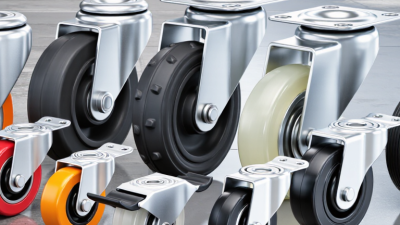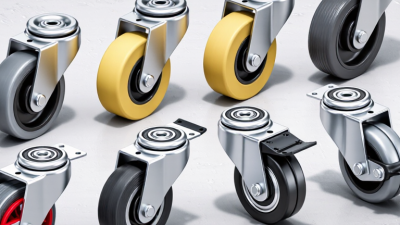
Choosing Caster Trolley Wheels starts with the trolley’s real working conditions, not just its advertised load capacity. A wheel that rolls smoothly across a warehouse floor may struggle on rough concrete or a ramp. The surface matters. So do moisture, temperature, noise limits, and how often the trolley turns. Small details, such as a threshold at a doorway, can change which wheel performs best.
Rubber wheels absorb vibration and offer quieter movement, making them useful on hard floors. Polyurethane wheels often balance floor protection with load handling, though their performance varies by formulation and wheel design. Nylon and polypropylene wheels are typically firm and easy to clean, but can feel noisy on uneven surfaces. Pneumatic wheels cushion bumps outdoors, while solid versions avoid punctures. Steel or iron wheels suit some heavy-duty settings, but may damage floors and are not appropriate everywhere. There is no universal winner.
A practical comparison should also consider wheel diameter, bearing type, swivel or fixed mounting, and the trolley’s total weight when loaded. Check the manufacturer’s stated capacity, and allow for uneven load distribution rather than assuming every wheel carries an equal share. If possible, test a sample on the actual route. That step is easy to overlook. Even a carefully chosen wheel can disappoint when the floor, load, or handling differs from the expected conditions. The right choice is usually a trade-off, and it deserves a second look.
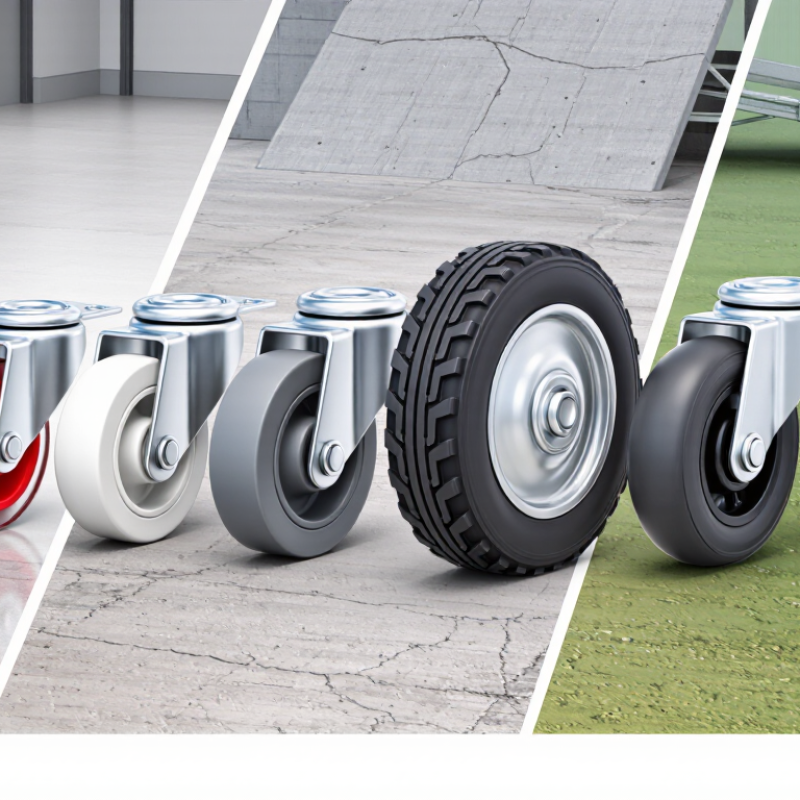
Caster trolley wheels are commonly selected by tread material, because the tread affects grip, noise, floor wear, and rolling resistance. Rubber treads cushion small bumps and run quietly on tile or concrete. They can be a sensible choice for indoor carts carrying fragile goods. However, soft rubber may wear faster under heavy loads or on rough floors.
Polyurethane offers a useful balance of load capacity, abrasion resistance, and quieter movement. It often suits warehouse carts that travel across smooth concrete for long shifts. Nylon treads roll easily and handle heavy loads, but they can feel hard and sound loud on uneven surfaces. Metal treads are durable for demanding environments, though they may damage floors and transmit vibration. No material is perfect. A neat comparison chart can miss how temperature, debris, and floor condition change performance.
Tips: Match the tread to the actual route, not just the trolley’s maximum load. Check the floor for seams, grit, and wet patches. Noise matters, too. If possible, test a loaded trolley over the same surface before choosing; a brief test can reveal issues that specifications do not show.
Caster trolley wheels use different tread profiles to suit the floor and the way a trolley turns. Flat treads provide a broad contact area, helping spread loads on smooth, level floors. They are a practical choice for warehouses and workshops. On soft or uneven surfaces, however, a flat wheel may roll less easily.
Rounded or crowned treads can turn with less sideways scrubbing, which helps on tight corners. Their smaller contact area may increase pressure on delicate flooring. Grooved and V-groove treads are designed to follow rails or tracks, not ordinary floors. A mismatched groove can wobble or bind. Wheel diameter and tread material also affect clearance, noise, grip, and rolling effort. Details matter.
Tips: Check the floor, load, and route before choosing a tread. Push a loaded trolley over the actual surface if possible. It is a simple test, but it can reveal vibration or poor tracking that specifications miss. No profile is ideal everywhere.
| Tread shape or design | Typical construction | How it rolls | Common applications | Points to consider |
|---|---|---|---|---|
| Flat tread | A broad, nearly level running surface; may be made from rubber, polyurethane, nylon, or other wheel materials. | Provides a larger contact area and generally rolls steadily on smooth, level floors. | General-purpose carts, material-handling trolleys, and equipment used on indoor floors. | Choose the tread material and wheel size to suit the floor, load, noise, and rolling-resistance requirements. |
| Crowned tread | A gently rounded or convex running surface, commonly used on narrower wheels. | Concentrates contact near the center of the tread and can help a wheel track on a guide or rail. | Guided trolley systems and applications where the wheel follows a defined path. | A crowned profile is less suited to carrying loads over soft or uneven floors than a broad, flat tread. |
| V-groove tread | A V-shaped groove runs around the wheel circumference and is designed to engage a compatible angle track. | The groove guides the wheel along the track and helps resist sideways movement when correctly matched. | Trolleys running on V-shaped rails or compatible angle-iron tracks. | Track dimensions and wheel groove geometry must be compatible; it is not intended as a general floor-running tread. |
| Flanged tread | One or two raised rims (flanges) sit beside the running surface to help keep the wheel on a rail. | The flanges provide lateral guidance when used with a compatible rail or track. | Rail-guided carts and trolley systems with fixed tracks. | Confirm rail width, flange spacing, and clearance. Flanges can interfere with ordinary floor travel. |
| Soft rubber tread | A resilient rubber tread, often bonded to a wheel core; available in different hardnesses and profiles. | Can cushion vibration and provide grip, with performance depending on the rubber compound and floor. | Indoor carts, noise-sensitive settings, and some floor surfaces that benefit from a softer tread. | Soft treads may require more pushing effort under load and may mark some floors; check chemical and temperature compatibility. |
| Resilient polyurethane tread | An elastic polyurethane layer over a wheel core, usually with a flat or slightly rounded profile. | Offers some cushioning while retaining more load-bearing stiffness than many soft rubber treads. | Indoor material-handling carts where a balance of floor protection, grip, and load capacity is needed. | Properties vary by formulation; confirm load rating, floor compatibility, and resistance to oils or other substances. |
| Hard nylon or other rigid tread | A relatively hard, rigid wheel body with a flat or modestly rounded running surface. | Can roll with low rolling resistance on smooth surfaces and support substantial loads for its size. | Industrial carts used on smooth, hard floors and in some wet or washdown environments, subject to material suitability. | Hard wheels transmit more vibration and may be noisy or damaging on delicate floors; check the specific material’s chemical and temperature limits. |
| Pneumatic tread | An air-filled tire with a relatively deep or patterned tread, mounted on a wheel rim. | The air-filled tire absorbs shocks and can travel over rougher ground than a typical solid caster wheel. | Outdoor trolleys and carts used on gravel, grass, or uneven surfaces. | Requires suitable inflation and can puncture; verify the load rating and tire pressure before use. |
| Solid resilient tread | A non-pneumatic elastic tread, often made from solid rubber or a resilient polymer. | Provides some shock absorption without needing air pressure and cannot be punctured like an air-filled tire. | Trolleys used on mixed or moderately uneven surfaces where puncture resistance is important. | Usually offers less cushioning than a pneumatic tire; check rolling effort, tread wear, and load capacity for the intended surface. |
Selection note: Match the tread profile to the floor or track, then check wheel diameter, load rating, operating environment, and the complete caster assembly’s capacity.
Caster trolley wheels are commonly classified as light-duty, medium-duty, heavy-duty, or extra-heavy-duty. These labels describe approximate load ranges, not universal standards. A light-duty wheel may suit a small service cart, while heavy-duty wheels are built for loaded workshop trolleys. Check the manufacturer’s rated capacity for each wheel. It matters more than the category name.
To estimate capacity, divide the trolley’s maximum loaded weight by the number of wheels, then allow for uneven floors and shifting loads. A four-wheel trolley may not share weight evenly, especially when one wheel crosses a floor joint. Choose a rating above the calculated load, and consider whether the trolley will move often or stay parked. A neat calculation can still mislead if the load sits off-center. That part is easy to overlook.
Tips: Check wheel capacity, not just trolley capacity. Include the weight of the cart itself, and inspect wheels for cracks or flat spots during routine checks.
Choosing caster trolley wheels starts with the floor beneath them. On smooth concrete, polyurethane wheels roll quietly and resist abrasion. They suit warehouses where loaded trolleys travel repeated routes. For delicate tiles or polished floors, softer rubber can reduce vibration and protect the surface. Noise matters.
Hard nylon wheels carry heavier loads on clean, even floors, but they can feel harsh over joints. Outdoors, pneumatic wheels cushion bumps from paving seams and small debris. They need more space and may require pressure checks. A larger diameter can also cross floor gaps more easily, though it raises the trolley slightly.
Operating conditions can change the choice. Damp areas call for materials that tolerate moisture, while hot or cold workspaces need wheels rated for those temperatures. Check the wheel’s load capacity against the trolley and its full cargo, not just an average load. Then consider turning: swivel casters help in tight aisles, while fixed wheels track more steadily over longer runs. In real use, there is rarely a perfect match. A quieter wheel may wear faster, or a durable one may mark a sensitive floor. Testing a trolley on the actual route can reveal problems a product chart misses. Sometimes that means revisiting the decision.
Caster trolley wheels commonly come in swivel, fixed, and braked options. Swivel wheels turn around a vertical pivot, helping a loaded trolley navigate tight aisles and workbench corners. They suit routes that change often. However, four swivel wheels may let a trolley drift sideways on a slope or during a quick push. It is an easy detail to overlook.
Fixed wheels stay aligned in one direction, so they help a trolley track steadily along corridors. A combination of fixed and swivel wheels can balance straight-line travel with easier steering. Wheel placement and load distribution affect handling, so check the trolley’s layout before selecting a set. No caster can compensate for an overloaded frame or a badly uneven floor.
Braked casters help prevent unwanted movement during loading or when the trolley is parked. Some brakes stop the wheel from rolling; others also lock its swivel. Check which action the brake provides, and make sure it is reachable without putting a foot under the trolley. Test it loaded. A brake may not hold every wheel, and slopes need extra care. The right choice depends on the surface, load, and how often the trolley stops.