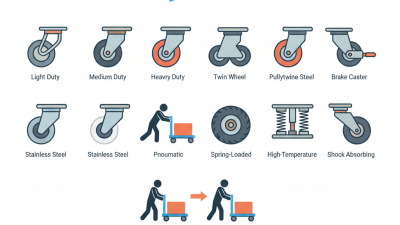
head_newbanner

10 Best Caster Swivel Wheels for Heavy Duty Use

Heavy-duty equipment depends on more than a strong frame. Its wheels must carry the load, turn smoothly, and stay predictable across the surfaces where work happens. A poorly matched Caster Swivel can make a loaded cart difficult to steer, leave marks on a finished floor, or add strain during routine moves. Small details matter.

This guide introduces ten caster swivel wheels designed for demanding applications. It compares practical factors such as rated capacity, wheel material, bearing design, mounting style, and brake options. These details help readers narrow their choices, but a product specification is only a starting point. A cart that rolls well on clean concrete may behave differently on rough flooring, over thresholds, or under an uneven load. Real conditions can be less tidy than a catalog suggests.

Before choosing, consider the total weight of the equipment and its contents, how often it moves, and whether it needs to remain parked securely. Check that the mounting plate or stem fits the equipment, and confirm the manufacturer’s stated load rating. A safety margin is sensible. There is no single wheel that suits every workplace, and even a well-reviewed model may disappoint when used on the wrong surface. This list aims to make comparisons clearer, not replace careful measurement or testing. The best choice is the one that fits the job, the floor, and the way people actually move the load.
10 Best Caster Swivel Wheels for Heavy Duty Use

What Defines a Heavy-Duty Swivel Caster Wheel

A heavy-duty swivel caster is defined by more than a large wheel or a high advertised capacity. Check the rated load per caster, frame strength, swivel raceway, axle, and wheel material. A useful sizing check is total loaded weight divided by the number of casters, with extra allowance for uneven floors and shock loads. Four wheels rarely share weight perfectly. That detail is easy to miss.

Wheel material changes how the caster behaves. Polyurethane can roll quietly on smooth concrete, while softer rubber may grip better but deform under sustained loads. Sealed bearings help in dusty areas, and a swivel lock can steady a cart during loading. Ask for documented load ratings and test conditions; “heavy-duty” has no single universal threshold. The U.S. Bureau of Labor Statistics reported 2.4 nonfatal injury and illness cases per 100 full-time private-industry workers in 2023. That figure is not caster-specific, but it underscores why stable, controllable carts matter.

Tips: Measure the narrowest doorway and check floor joints before choosing wheel diameter. Larger wheels cross thresholds more easily, but need more clearance. Recheck fasteners after early use; specifications cannot predict every rough patch.

How to Choose Casters for Load, Floor, and Operating Conditions

Choosing swivel casters starts with the real moving load, not the equipment’s empty weight. Add the cart, tools, materials, and any force applied while pushing. Divide that total by the number of casters, then allow extra capacity for uneven floors and sudden starts. Four wheels do not always share weight evenly. Check the rated load under conditions similar to your own.

Floor type changes the right wheel choice. Softer wheels can reduce noise and protect tile or finished concrete, but they may take more effort to roll. Harder wheels often move easily across smooth floors, yet can leave marks or transmit vibration. Check the route. A small threshold, metal joint, or patch of grit can make a wheel that seems suitable feel frustrating in daily use. Wheel diameter matters here: larger wheels usually cross small obstacles more readily.

Consider moisture, temperature, debris, and how often the cart turns. A swivel caster helps in tight aisles, though a heavy load may need more room to pivot. Brakes can hold equipment in place, but confirm they are accessible and match the wheel configuration. Bearing and mounting details also matter; the plate or stem must fit the frame securely. Specifications can look reassuring on paper. Still, a short trial on the actual floor may reveal a problem that measurements missed.

10 Best Caster Swivel Wheels for Heavy Duty Use — Choosing Casters for Load, Floor, and Operating Conditions

Example minimum load rating per caster for a four-caster cart, assuming only three casters share the load and applying a 1.5 design factor.

Calculation: gross cart load ÷ 3 load-bearing casters × 1.5. This gives example minimum ratings of 100, 250, and 400 kg per caster. Rough floors, thresholds, impacts, speed, and continuous operation can require a higher capacity; check the caster’s rated load and suitability for the actual floor and operating conditions.

Ten Heavy-Duty Swivel Caster Wheels Compared

A meaningful comparison of ten heavy-duty swivel caster wheels starts with the floor, load, and turning space—not the biggest capacity figure. Check each wheel’s rated load, then divide the cart’s loaded weight across its casters. Allow extra margin for uneven floors and sudden starts. Four wheels do not always share weight evenly. That matters. A steel wheel may carry heavy loads, but it can rattle over concrete and mark softer floors. Polyurethane often rolls more quietly and protects floor finishes, though heat, oil, and debris can affect its performance. Measure the mounting plate and bolt pattern before comparing options; a strong caster is useless if it does not fit.

Swivel action deserves equal attention. A tight turning radius helps in narrow aisles, while a well-supported swivel raceway can feel steadier under heavy equipment. Compare brake styles too: a wheel brake stops rolling, but a total-lock brake also restrains swiveling. Test both with the cart loaded, not empty. Some specifications omit useful details, such as wheel hardness or operating temperature, so request the data sheet instead of guessing. A softer wheel may roll smoothly but wear sooner on gritty routes. There is no perfect pick. Match the caster to the actual floor, route, and maintenance schedule, then inspect fasteners and tread regularly.

10 Best Caster Swivel Wheels for Heavy Duty Use - Ten Heavy-Duty Swivel Caster Wheels Compared
No. Caster Configuration Wheel Diameter Typical Capacity
(per caster)
Wheel Material Floor Performance Brake Option Common Applications
1 Medium-heavy-duty swivel caster 4 in (102 mm) Up to 700 lb (318 kg) Polyurethane on steel core Quiet rolling; resists abrasion and many oils; helps protect hard floors Total-lock brake available Workstations, carts, and equipment stands
2 Heavy-duty swivel caster 5 in (127 mm) Up to 1,000 lb (454 kg) Polyurethane on cast-iron core Durable tread with better impact absorption than a bare metal wheel Wheel brake or total-lock brake Industrial carts and material-handling equipment
3 Extra-heavy-duty swivel caster 6 in (152 mm) Up to 1,500 lb (680 kg) Forged steel High load capacity; best suited to smooth, hard floors Brake options vary by assembly Heavy machinery and steel fabrication equipment
4 Extra-heavy-duty swivel caster 8 in (203 mm) Up to 2,000 lb (907 kg) Forged steel Larger diameter rolls over floor joints and small obstacles more easily Brake options vary by assembly Heavy-load dollies and industrial machinery
5 Heavy-duty swivel caster 6 in (152 mm) Up to 1,000 lb (454 kg) Phenolic resin Hard, low-rolling-resistance tread; may be noisy and can mark some floors Wheel brake available Warehouses, institutional equipment, and dry environments
6 Heavy-duty swivel caster 6 in (152 mm) Up to 1,200 lb (544 kg) Nylon Resists moisture and many chemicals; performs best on smooth floors Wheel brake available Food-processing areas and washdown-compatible equipment
7 Extra-heavy-duty swivel caster 6 in (152 mm) Up to 1,500 lb (680 kg) Cast iron Handles high loads and heat; hard tread can be noisy and tough on floors Brake options vary by assembly Foundries, heavy shop equipment, and hot-work areas
8 Heavy-duty swivel caster 6 in (152 mm) Up to 600 lb (272 kg) Solid rubber Quieter ride and better shock absorption; higher rolling resistance under heavy loads Total-lock brake available Uneven floors, utility carts, and noise-sensitive areas
9 Heavy-duty swivel caster 8 in (203 mm) Up to 1,500 lb (680 kg) Polyurethane on steel core Good wear resistance and easier passage over floor joints than smaller wheels Wheel brake or total-lock brake Large carts, mobile work platforms, and production equipment
10 Corrosion-resistant heavy-duty swivel caster 5 in (127 mm) Up to 700 lb (318 kg) Polyurethane wheel with stainless-steel hardware Suitable for damp or corrosive settings when the full assembly is appropriately specified Brake availability depends on the assembly Laboratories, food-service areas, and humid environments

Note: Capacities shown are representative examples for common heavy-duty caster configurations, not guaranteed ratings for every caster of that type. Actual capacity depends on the complete caster assembly, mounting, wheel construction, floor conditions, and operating speed. Check the manufacturer’s rating and account for uneven load distribution when selecting casters.

Wheel Materials, Mounting Types, and Brake Options

For heavy-duty swivel casters, wheel material affects both travel and floor wear. Polyurethane often balances load capacity, quiet rolling, and protection for concrete or finished floors. Nylon rolls easily on smooth surfaces, but can be noisy and unforgiving over joints. Rubber cushions vibration, though it may take more effort to push under heavy loads. Small details matter: a hard wheel crossing a floor seam can jolt the cart and its contents.

Mounting style must match the equipment frame. A top plate spreads attachment across several bolts; a stem mount suits compatible sockets but depends on a secure fit. Check the caster’s rated capacity against the actual load, including uneven weight distribution. That last part is easy to misjudge. The U.S. Bureau of Labor Statistics reported 2.6 million nonfatal workplace injuries and illnesses in private industry in 2023. The figure is not specific to caster use, but it reinforces why stable, manageable material handling deserves attention.

Brake choice matters on slopes and during loading. A wheel brake stops the wheel from rolling, while a total-lock brake also restrains swivel movement. The latter can steady a cart beside a workbench. For frequent repositioning, however, it may slow operators down. Selection is rarely perfect; test a loaded cart on the actual floor, not just an empty one in a showroom.

Safe Installation and Maintenance of Swivel Casters

Safe installation starts with the load, not the wheel. Add the cart’s weight to its heaviest expected load, then allow extra capacity for bumps and uneven floors. Dividing the total by four can be misleading if one caster sits on a floor joint. Choose a suitable safety margin. Check that every mounting plate sits flat against a sound, level surface. Use hardware that matches the caster holes and frame thickness, and tighten fasteners to the maker’s specified torque. Over-tightening can distort a plate; loose bolts can let it shift. Small details matter. Before loading, swivel each wheel through a full turn and check for contact with the frame, cables, or nearby parts.

Maintenance is simple, but it needs a routine. Clear hair, thread, and grit from around the axle and swivel bearing; debris can cause drag or sudden steering changes. Look for cracked wheels, bent forks, loose fasteners, and flat spots. Test brakes on the actual floor, not just by pressing the pedal while the cart is empty. They should hold the load without rocking. Lubricate only where the caster instructions allow, since excess oil can collect dust. A common oversight is checking wheels but not the floor: a rough threshold can loosen hardware over time. If a caster binds or wobbles after cleaning and tightening, stop using the cart until the damaged part is replaced. I’d rather inspect it twice than trust a quiet wheel.