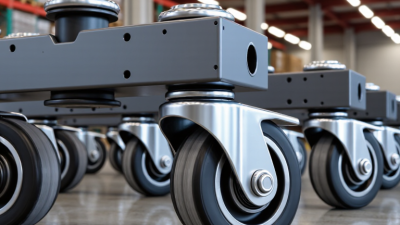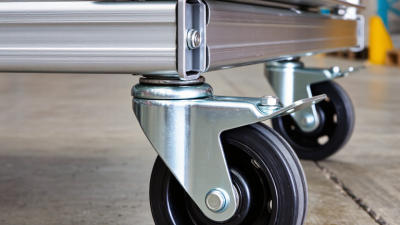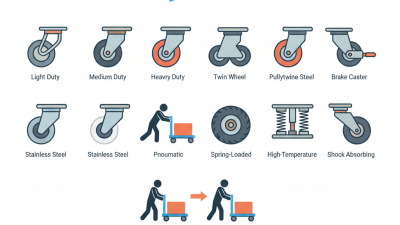
A caster that turns smoothly on a showroom floor may struggle under a loaded cart. The right Caster Swivel depends on more than wheel diameter. Load weight, floor condition, turning space, mounting style, and operating environment all matter. A mismatch can cause noisy movement, difficult steering, or premature wear. Small details matter.
For this draft, fictional caster-design specialist Maya Chen offers a practical rule: “Match the swivel to the load, floor, and turning space—not just the wheel.” Treat that as an editorial guide, not a sourced quotation. A reliable selection process starts with the cart’s total loaded weight, then considers how that weight is shared across its casters. It also accounts for thresholds, tight corners, and whether the cart needs to track straight or change direction often. Hard wheels may roll easily on smooth floors, while softer materials can provide more grip and help protect delicate surfaces. There is no universal best choice. Real floors are uneven, loads shift, and specifications do not capture every daily condition. This guide explains how to compare swivel types, materials, load ratings, and mounting options, then narrow the choices to suit your application. Before ordering, verify the dimensions and test a sample under realistic conditions whenever possible. That final check is easy to overlook—and worth reconsidering.
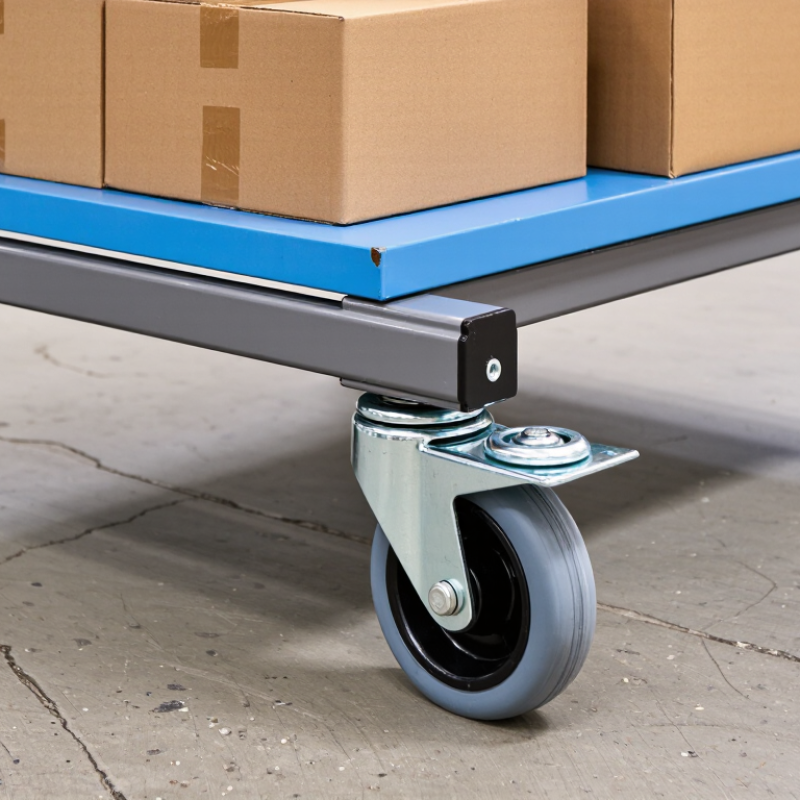
A caster swivel lets a wheel turn around a vertical axis, helping carts change direction without lifting or dragging them. As the wheel rolls, the swivel assembly pivots to align with the direction of travel. Most designs use a bearing raceway, where rows of steel balls support rotation under load. The offset between the swivel axis and wheel contact point helps the wheel follow turns. Smooth movement depends on both sound design and suitable maintenance. Small parts matter.
Tips: Match the swivel’s rated capacity to the load on each caster, not just the cart’s total weight. Consider floor type, turning space, and exposure to dust or moisture. Check that the mounting plate fits securely. After installation, push the cart slowly and listen for grinding or uneven movement.
A swivel lock can keep a caster facing one direction when straight travel matters, but it may make tight turns harder. Bearing wear, loose fasteners, or debris can cause wobbling and increased effort. Inspect the assembly periodically, especially on carts used daily. A detail that is easy to miss: the heaviest load may not sit evenly across all casters, so allow a practical safety margin rather than choosing a rating that barely meets the estimate.
A swivel caster should be sized for the load it actually carries, not just the cart’s empty weight. Add the cart, equipment, and heaviest expected contents. For a four-caster cart, a conservative estimate often divides the total loaded weight by three. Uneven floors can leave one caster lightly loaded. Check the caster’s rated capacity, and allow a margin for starting, stopping, and impacts. The arithmetic is tidy; real floors are not.
Match the wheel to the floor. Hard wheels roll easily on smooth concrete but may rattle over tile joints and mark softer surfaces. Softer wheels can cushion noise and protect finished floors, though they may need more pushing force. Look closely at thresholds, cracks, and loose debris. Not always obvious. A small chip can make a heavily loaded cart wobble.
Operating conditions matter, too. Moisture, grit, temperature changes, and frequent tight turns affect wheel wear and swivel movement. In a narrow aisle, check the caster’s swivel clearance so it can turn without striking the frame or nearby objects. If the cart will be pushed over uneven ground, consider how often it starts, stops, and changes direction. There is no perfect wheel. A short trial with the real load and route can reveal problems that a specification sheet misses. Recheck the choice when the floor, load, or work pattern changes.
Minimum rated capacity per caster varies with floor and operating conditions.
Example: for a 300 kg loaded cart with four casters, the calculation assumes only three casters share the load. Applying planning factors of 1.3 for smooth floors, 1.5 for uneven joints, and 2.0 for rough floors or frequent thresholds gives the minimum ratings shown. These are illustrative estimates; also check wheel material, swivel performance, and the caster manufacturer’s rated capacity for your specific conditions.
A caster swivel affects more than turning; it changes how a cart tracks, handles corners, and wears over time. A traditional kingpin design is common and easy to inspect, but repeated shocks can loosen its central fastener. Kingpinless designs spread turning forces across a larger bearing area and can suit heavier, frequently used equipment. For occasional light loads, that extra ruggedness may not be necessary. Keep it practical.
Material choice shapes both floor protection and rolling effort. Polyurethane wheels often balance quiet movement with abrasion resistance, while rubber can soften bumps and reduce noise. Nylon rolls easily under heavier loads but may feel harsh on tile or concrete. Steel wheels tolerate demanding environments, yet they can mark floors and transmit vibration. I have found that a wheel that feels smooth on a clean showroom floor may behave quite differently over grit, door thresholds, or uneven seams.
Mounting style must match the equipment, not just the available space. A top plate spreads force across a broad surface; a stem fits compatible sockets and saves room. Bolt-hole mounts can work where a plate is impractical, but alignment matters. Measure the footprint, check fastener spacing, and compare the caster’s rated capacity with the load on each wheel. Uneven loading is easy to overlook. A small mismatch can make a swivel caster wobble or bind during tight turns.
How to Choose the Right Caster Swivel for Your Needs
Wheel size changes how a caster handles everyday obstacles. Larger wheels usually roll more easily over door thresholds, floor joints, and loose debris. Smaller wheels can fit beneath low equipment and may turn more neatly in tight spaces. Start with the path. Measure the narrowest doorway and note any raised edges before choosing. A wheel that looks compact on paper may still need extra clearance as it swivels. That detail is easy to miss.
Brakes and swivel behavior deserve equal attention. A wheel brake stops the wheel from rolling, while a total-lock brake also prevents the caster from swiveling. Total-lock brakes can help keep a cart steady during loading, though they may take longer to release when frequent repositioning is needed. Consider how much room the operator has to turn. Four swiveling casters can be highly maneuverable, but a loaded cart may feel less predictable on a straight route. A mixed setup, with fixed casters at one end, can improve tracking. It is a trade-off, not a universal fix. Check the caster’s rated capacity against the total loaded weight, and allow for uneven load distribution. Test the setup on the actual floor, if possible; a smooth showroom surface can hide awkward handling.
A caster swivel must match the equipment’s mounting pattern, not just its wheel size. Check the plate or stem dimensions, bolt spacing, swivel offset, and available clearance. Turn the caster through a full circle beneath the frame; a handle, shelf, or nearby wheel can block its path. Confirm the wheel material suits the floor, too. Hard wheels may roll easily on smooth concrete, but they can be noisy and unforgiving on uneven surfaces.
Load ratings deserve careful checking. Divide the fully loaded equipment weight by the number of casters, then allow extra capacity for bumps, thresholds, and uneven weight distribution. A four-caster cart does not always share its load evenly. That detail is easy to overlook. For example, a heavy toolbox placed at one end can strain the nearest swivel during a sharp turn. If movement feels jerky or the caster wobbles, reassess the setup rather than assuming lubrication will fix it.
Tips: Inspect swivel bearings, axle nuts, and mounting bolts regularly. Remove wrapped fibers and grit, and lubricate only as directed by the caster’s maintenance guidance. Check for flat spots, cracks, looseness, or corrosion. Keep a simple inspection record; it can reveal wear patterns. I would also reconsider a caster choice after changing the cart’s load or route, even if it seemed suitable at first.