Top 10 Swivel Plate Caster Options for Your Needs?
In the world of material handling, choosing the right Swivel Plate Caster is crucial. Industry expert John Hargrove, known for his extensive work in logistics solutions, once said, "The right caster can transform your workflow." His insights highlight the importance of selecting casters that meet specific needs.
Swivel Plate Casters offer flexibility and ease of movement. They allow for smooth navigation in tight spaces. When evaluating different options, consider factors such as weight capacity, wheel material, and stem height. Each element plays a vital role in performance and durability.
However, not all Swivel Plate Casters are created equal. Many products on the market claim superiority. It is necessary to analyze user reviews and functionality. The right choice will greatly enhance efficiency. Yet, users often overlook critical specifications, leading to confusion. With careful selection, you can find a caster that perfectly fits your requirements.

Understanding Swivel Plate Casters: Features and Benefits
Swivel plate casters are essential tools in various environments. They provide mobility and ease of movement. Understanding their features helps in selecting the right option. These casters typically rotate 360 degrees, allowing for excellent maneuverability. This feature is ideal for tight spaces. For instance, using swivel casters on furniture can simplify moving recliners or heavy sofas.
When considering benefits, think about weight capacity and wheel material. Different materials offer unique advantages. Rubber wheels are quieter, while hard plastic wheels can support more weight. Pay attention to the surface where these casters will be used. Some can glide easily on smooth floors, while others struggle.
Users often overlook maintenance. Swivel casters require regular checks to ensure smooth operation. Dust and debris can hinder movement significantly. If they become stiff, a little lubricant can help. Choosing the right swivel plate caster can greatly improve daily tasks. It’s about matching the right features to specific needs, considering the environment and potential wear.
Top 10 Swivel Plate Caster Options for Your Needs?
| Caster Type |
Load Capacity (lbs) |
Wheel Diameter (inches) |
Material |
Swivel Radius (inches) |
| Standard Swivel |
350 |
4 |
Rubber |
5 |
| Heavy-Duty Swivel |
600 |
6 |
Polyurethane |
7 |
| Industrial Swivel |
800 |
8 |
Nylon |
8 |
| Medical Swivel |
300 |
5 |
Thermoplastic |
6 |
| Furniture Swivel |
200 |
3 |
Wood |
4 |
| Caster with Brake |
500 |
5 |
Polyolefin |
6 |
| Low Profile Swivel |
400 |
4 |
Rubber |
5 |
| Treaded Swivel |
450 |
5 |
Metal |
6 |
| Clear Poly Swivel |
350 |
4 |
Polycarbonate |
5 |
| Steering Swivel |
600 |
7 |
Steel |
8 |
Types of Swivel Plate Casters: A Comprehensive Overview
Swivel plate casters are essential for smooth mobility in various applications. They allow items to pivot easily, making transportation more efficient. Understanding the different types can help you choose the right one for your needs.
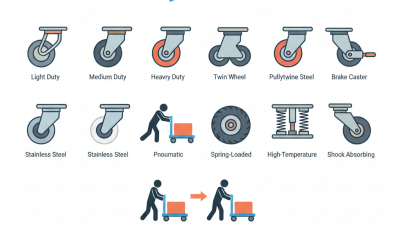
There are several types of swivel plate casters. Heavy-duty casters are designed for industrial use. They can support substantial weight, often found in warehouses or factories. Light-duty casters are more versatile and suited for office furniture or light equipment. Swivel locking casters are unique, allowing for easy maneuverability when unlocked and stability when locked.
Inspecting the materials used in casters is crucial. Some may wear out faster than others, impacting their reliability. Rubber wheels may provide quieter movement, yet they can degrade over time. Lastly, not all swivel plate casters are created equal. Assess your specific workload and environment to make an informed choice. You may find that what works for one application isn’t suitable for another.
Key Factors to Consider When Choosing Swivel Plate Casters
Choosing the right swivel plate casters requires careful consideration of several factors. Load capacity is essential; a caster must handle the weight of your application without failure. According to a study by the Industrial Fabrics Association International (IFAI), overloading casters can lead to premature wear and costly downtime. It’s crucial to evaluate the weight distribution, as this influences stability and performance.
Another key factor is wheel material. Harder materials like polycarbonate resist wear and work well on smooth surfaces. However, softer materials like rubber excel on uneven floors, reducing vibration. A survey from the Caster & Wheel Industry Association shows that 45% of users prefer wheels that combine durability with shock absorption. This selection impacts operational efficiency and user comfort.
Finally, consider swivel angle and locking mechanism. A wider swivel angle allows for greater maneuverability but may require skilled handling. Locking mechanisms enhance safety, particularly in workplaces with high foot traffic. Research indicates that 30% of workplace accidents stem from improper caster use. Proper education on these factors can lead to safer, more effective equipment usage.
Top 10 Recommended Swivel Plate Caster Products on the Market
When selecting a swivel plate caster, consider the weight capacity and wheel material. High-quality casters support heavy items while ensuring smooth movement. Swivel casters allow for easy maneuverability, which is essential in tight spaces. Durable options made from rubber or nylon provide the necessary grip and quiet operation.
Among the top recommendations, look for those that balance functionality with design. Some casters feature locking mechanisms for added safety. This is crucial when stability is needed. Pay attention to the installation process as well. Caster design should be straightforward, allowing for quick setups without advanced skills.
Not every option is perfect. Some might wear out faster under heavy loads. Regular maintenance can help prolong their lifespan. Be attentive to any signs of damage, as this can affect performance. Evaluating available options based on genuine reviews can enhance your purchasing decision. Your choice of swivel plate caster may greatly influence your workspace efficiency.
Maintenance Tips for Extending the Lifespan of Swivel Plate Casters
Caring for swivel plate casters is essential for their longevity. Regular maintenance can significantly enhance their lifespan and performance. Begin by keeping the casters clean. Dust and debris can accumulate in the wheel's tread and axles, causing unnecessary friction. Use a soft cloth and a mild cleaner to wipe down the surface. A vacuum can help remove dust from hard-to-reach areas.
Inspect the casters frequently for signs of wear and tear. Look for any cracks or deformities in the wheels. Check the bearings for smooth movement. If a caster feels stiff, it might need lubrication. Use a suitable lubricant designed for caster bearings. Applying grease can prevent rust and ensure better mobility. Remember, over-lubrication can attract dirt, so apply sparingly.
Also, consider the weight capacity of the casters. Using them beyond their limit can lead to damage. Reflect on the surfaces they traverse daily. Harsh terrains can lead to faster wear. Rotate the casters occasionally to promote even wear. This practice can extend their life and enhance their efficiency. Attention to these details might save you time and money in the long run.